- Jul 11, 2026
Seven Bangladeshi Scholars Return Home After Eight-Day Afghanistan Visit
- Sep 29, 2025
- Politics
Staff Reporter | PNN:
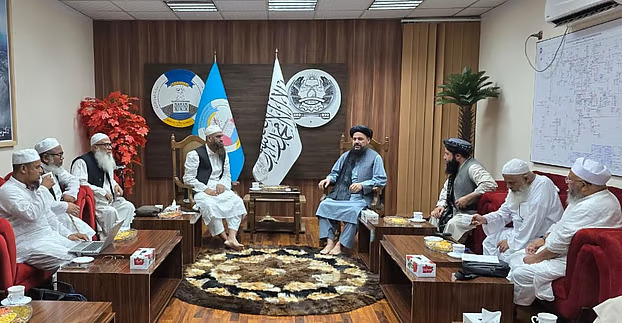
Seven Bangladeshi scholars have returned home after an eight-day visit to Afghanistan, where they held meetings with various ministers and officials of the Taliban government. The delegation included Maulana Mamunul Haque, Maulana Abdul Hamid, Maulana Abdul Awal, Maulana Abdul Haque, Maulana Habibullah Mahmud Qasemi, Maulana Monir Hossain Qasemi, and Maulana Mahbubur Rahman.
The trip was organized by the UK-based organization ‘Prosper Afghanistan’, which primarily works on human rights and support for war-torn Muslim communities. The organization had previously taken groups of Islamic scholars from Europe to Afghanistan, and this was the first delegation of scholars from Bangladesh.
Maulana Mamunul Haque stated that during the visit, they met with Afghanistan’s Foreign Minister Mulla Amir Khan Muttaqi, Water and Power Minister Mulla Abdul Latif Mansoor, Labor and Social Welfare Minister Mulla Abdul Mannan, and Chief Justice Abdul Hakim Haqqani. Additionally, they held discussions with the governor of Khost province.
The scholars claimed that Afghanistan has achieved significant development in a short period, and law and order in the country is “extremely stable.” Mamunul Haque said, “Even though 50 million people are armed, there has been no robbery or bloodshed in four years.”
According to the Afghan Foreign Minister, Afghanistan has already established diplomatic relations with 41 countries, but no diplomatic representative has yet been sent to Bangladesh. He expressed interest in discussing this matter with the Bangladesh government.
However, restrictions on women’s education during the visit were a concern for the scholars. Mamunul Haque said, “We discussed this matter with multiple ministries. They assured us that a separate education system for women is being established and positive developments will follow soon.”
The delegation also discussed Bangladesh’s recent ‘July mass uprising’, which Afghan officials reportedly viewed positively, believing it ended injustice and oppression.
The scholars confirmed that the visit was legally valid and did not require separate government approval. They traveled from Saudi Arabia to Kabul via Dubai, and special visa arrangements ensured they did not face any immigration issues.

প্লিজ লগইন পোস্টে মন্তব্য করুন!
আপনিও পছন্দ করতে পারেন

- Jul 11, 2026
NCP Suspends Several July March Programmes in...

- Jul 11, 2026
NCP Forms Emergency Crisis Response Team to S...
- Jul 11, 2026
NCP’s Public Trust Will Decline If It Fails t...
- Jul 06, 2026