- Apr 04, 2026
NCP Accuses BNP of Giving ‘Green Signal’ to Awami League Office Reopening
- Feb 20, 2026
- Politics
PNN News Desk, Dhaka
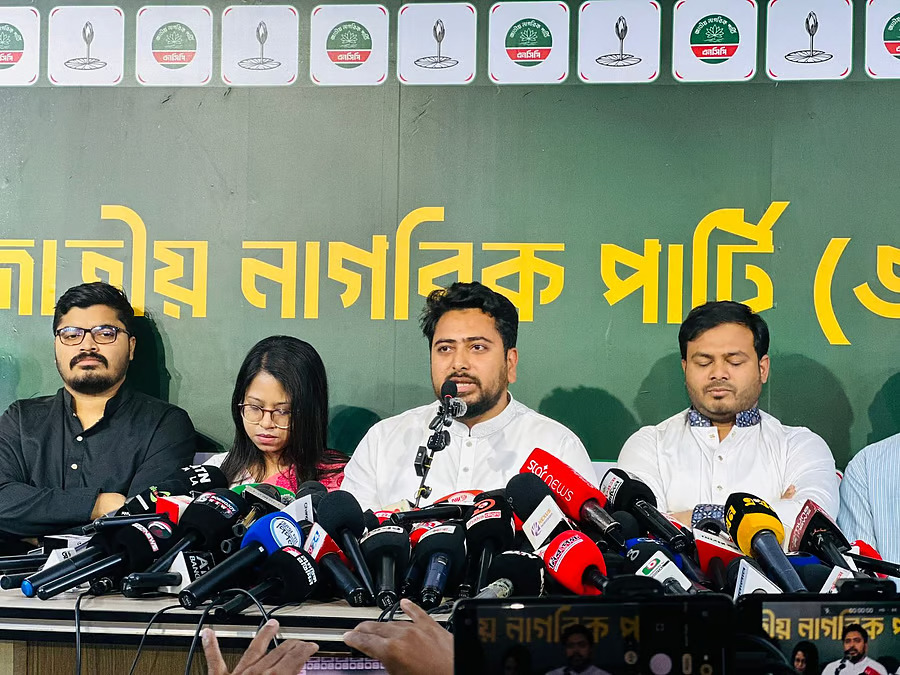
After the 13th national parliamentary elections, allegations have surfaced regarding the reopening of offices of the Bangladesh Awami League, declared inactive in various regions, prompting political controversy. The National Citizens Party (NCP) convener, Nahid Islam, claimed that the ruling BNP has given a “green signal” for these activities.
Speaking at a press conference on Thursday afternoon at NCP’s temporary central office in Banglamotor, Dhaka, Nahid Islam raised these allegations. The conference addressed the current political situation and the party’s stance on the new cabinet.
Nahid Islam stated that without BNP’s direct or indirect support, the Awami League could not have dared to conduct public activities. He alleged that there was a tacit understanding between India, the Awami League, and BNP in this election. He warned that any attempt to revive Awami League politics would be politically countered.
He demanded accountability from the authorities regarding the reopening of Awami League offices in different districts. Nahid Islam also expressed concern over media freedom, alleging attempts by the new government to influence media. He urged independent operation of media without politicization.
He further demanded rapid oath-taking for members of the Constitution Reform Council, a simultaneous convening of parliament and the council, establishment of the rule of law, removal of partisan influence in the police, women’s safety, suppression of mob culture, investigation into shrine destruction, and impartial inquiry into the Hatiya incident in Noakhali. He also urged effective measures to control commodity prices during the upcoming Ramadan.
Regarding the new 50-member cabinet, he criticized it for failing to reflect desired changes, noting insufficient regional balance, women and minority representation, and participation of diverse professions. However, he welcomed the inclusion of some experienced and positive individuals, but stated that the overall cabinet fails to deliver the message of desired reforms.
Answering a question on a potential referendum, he said that cancellation would raise questions on parliamentary elections and government legitimacy. He also cautioned about changes in the International Criminal Tribunal structure, advocating for capacity enhancement without arbitrary setup changes.

প্লিজ লগইন পোস্টে মন্তব্য করুন!
আপনিও পছন্দ করতে পারেন


- Apr 04, 2026
“We don’t want fascism in the country anymore...

- Apr 04, 2026
Islami Andolan Bangladesh criticizes BNP over...
- Apr 03, 2026
Parliamentary Committee Recommends 20 Ordinan...
- Apr 03, 2026