- Jul 03, 2026
Formal Trial of Sheikh Hasina Begins for Crimes Against Humanity; Injured Protester Testifies at Tribunal
- Aug 04, 2025
- Politics
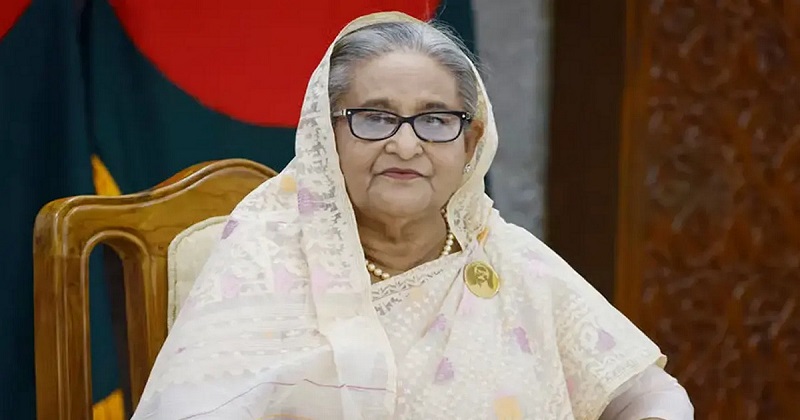
The formal trial of former Prime Minister of Bangladesh, Sheikh Hasina, has begun in connection with crimes against humanity committed during the July uprising. On Sunday, the International Crimes Tribunal-1 initiated proceedings with the opening statement and testimony from the first witness.
Along with Sheikh Hasina, the list of accused includes former Home Minister Asaduzzaman Khan and then-Inspector General of Police Chowdhury Abdullah Al-Mamun. Among them, Chowdhury Abdullah is the only one in custody and has already confessed to his role, turning state witness ("approver").
On the opening day, Attorney General Md. Asaduzzaman, in his statement, said:
“The violence and mass killings that took place during the July revolution mark a horrific chapter in history. In just 36 days, over 30,000 people were maimed and around 2,000 unarmed civilians were killed.”
He demanded the maximum punishment for the accused.
Chief Prosecutor Mohammad Tajul Islam stated:
“Sheikh Hasina was at the center of all decision-making. She ran the state in an authoritarian manner, and the law enforcement agencies operated under her direct command.”
He alleged that the three accused were involved under the doctrine of joint criminal enterprise and command responsibility.
The first witness to testify was Khokon Chandra Barman, who was critically injured after being shot during the movement last year.
“On August 5, police indiscriminately opened fire on us in Jatrabari. I was shot in my hands, legs, and face,” he said.
He removed his mask in court to show his disfigured face and mentioned that he had to be sent to Russia for medical treatment.
In his testimony, he held Sheikh Hasina, Asaduzzaman Khan, Obaidul Quader, Chowdhury Abdullah Al-Mamun, and Shamim Osman responsible for the killings.
State-appointed defense counsel for the fugitive accused, Md. Amir Hossain, cross-examined the witness, asking whether he had any written evidence to support his claims. Khokon replied:
“No, I don't have written proof. But I was shot in the body myself.”
He remained firm in his accusations against the police, stating,
“It was the police who opened fire, not the students.”
This case is the first to be tried under the reconstituted International Crimes Tribunal since October 14 of last year. Formal charges were framed on June 1, including abduction, murder, torture, and other crimes against humanity.
Tribunal sources say the case will be conducted based on 11 symbolic incidents that align with the international legal definitions of crimes against humanity.
Further hearings are scheduled for today (Monday), with more witness testimonies expected.
Analysts believe this trial could mark a turning point in ending political violence and the culture of impunity in Bangladesh. While the case has sparked mixed reactions in political circles, many view it as a critical test for establishing justice in the country.

প্লিজ লগইন পোস্টে মন্তব্য করুন!
আপনিও পছন্দ করতে পারেন


- Jul 03, 2026
NCP PREPARES FOR CONTESTING LOCAL GOVERNMENT...

- Jul 03, 2026
JAMAAT-E-ISLAMI STRENGTHENS FIELD PREPARATION...
- Jul 01, 2026
Cyber Security Act passed amid opposition cal...
- Jul 01, 2026