- Jul 01, 2026
Discussion on cultural crisis at State Reform Movement meeting
- Apr 14, 2026
- Politics
PNN News Desk, Dhaka
Leading thinkers and intellectuals have said that in the current context of the country, the tendency of establishing “cultural fascism” or control over culture is becoming more dangerous than political fascism.
According to them, political fascism limits people’s right to vote, but cultural fascism damages people’s identity, beliefs, and long-standing way of life.
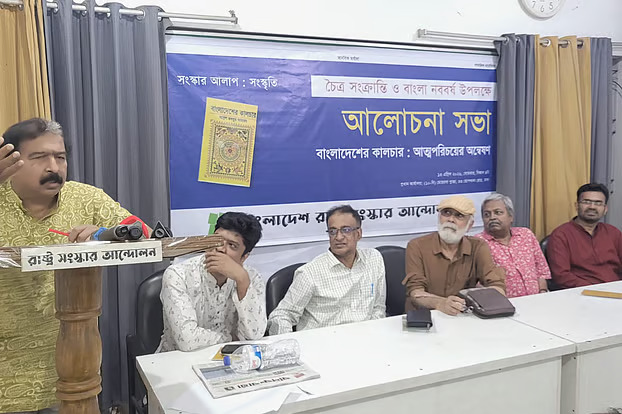
These opinions were expressed on Monday afternoon at a discussion titled “Bangladesh’s Culture: Search for Identity” held at the office of the Bangladesh State Reform Movement on Topkhana Road in the capital. The session was chaired by the organization’s coordinator Hasanath Kaiyum.
The main paper was presented by journalist and researcher Imran Mahfuz. He said that although a century has passed since the movement for intellectual freedom, freedom of expression in the country has been increasingly shrinking. He said that intolerance created under religious interpretation or social restrictions is weakening the country’s cultural foundation. He also mentioned that the absence of the word “culture” in recent political speeches indicates a deep crisis.
In his presidential speech, Hasanath Kaiyum said that long-standing divisive politics has now turned into a tendency to see dissent as an enemy. He added that without moving away from this culture, the path to state reform will become difficult. He also said that due to the increasing dominance of money and influence in current politics, the space for knowledge-based leadership has been shrinking.
Writer and columnist Selim Khan said that due to the influence of external ideologies and social changes, local culture is gradually weakening. He also commented that religious practices in many cases are becoming limited to formality.
Cultural personality and lyricist Shahidullah Farazi said that although Bangladesh is a nation-state, it is facing an identity crisis. He believes that failures of the state and unmet public expectations in different historical periods have affected culture.
West Bengal filmmaker and activist Soumitra Dastidar said that tension based on narrow issues is increasing in both Bengals. He added that mutual human relationships and common people’s culture can help overcome this deadlock.
Other speakers included Dhaka School of Economics teacher Shams Arefin, Professor Mizanur Rahman, researcher Nahid Hasan, and other leaders of the organization.
The speakers called for a cultural renaissance based on integrated and indigenous thinking and said that collective efforts from all levels of society are necessary to overcome this crisis.

প্লিজ লগইন পোস্টে মন্তব্য করুন!
আপনিও পছন্দ করতে পারেন
- Jul 01, 2026
Awami League leader Shah Alam attends mother’...
- Jul 01, 2026
Jamaat announces month-long programs for July...

- Jul 01, 2026
“July Memorial Museum must be opened by Augus...

- Jun 27, 2026