- Apr 25, 2026
Change Initiative Report: Bangladesh Faces Poverty and Sustainable Development Risks Amid Climate Debt Trap
- Sep 22, 2025
- Bangladesh
PNN Desk:
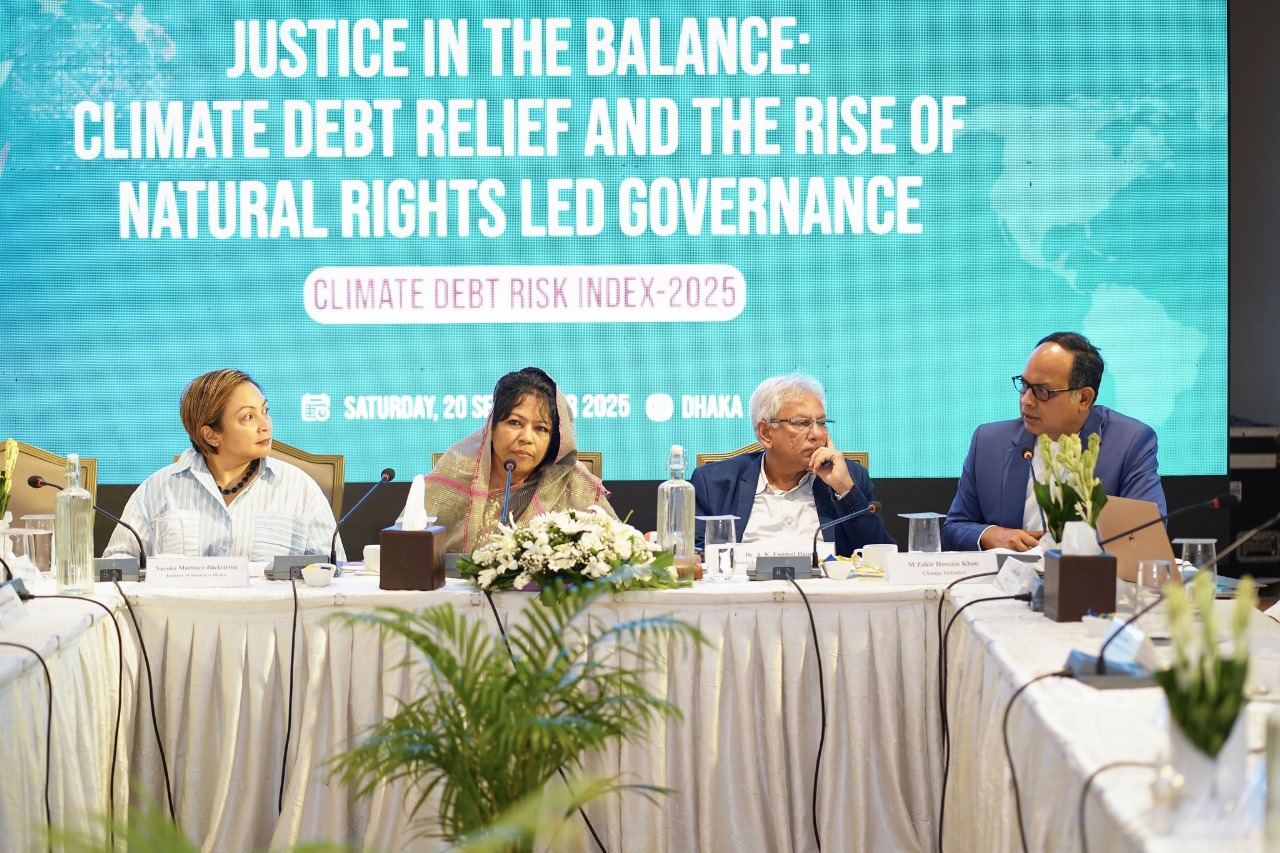
Bangladesh has been identified as one of the world’s most climate-vulnerable and debt-dependent countries. According to the Climate Debt Risk Index (CDRI-2025) published by Change Initiative, Bangladesh’s score stands at 65.37 out of 100, expected to rise to 65.63 by 2031, placing the country in the “high-risk” category.
Low Emissions, High Debt
Bangladesh contributes less than 0.5% to global carbon emissions. Yet, its per capita climate debt stands at $79.6, among the highest in the world.
Debt-to-Grant Ratio: 2.7 (nearly four times the LDC average of 0.7)
Multilateral Debt Ratio: 0.94 (nearly five times the LDC average of 0.19)
This indicates that Bangladesh relies far more on loans than grants for climate financing, increasing its risk of falling into a debt trap.
Adaptation Gap and Sustainable Development Risks
The adaptation-to-mitigation ratio in Bangladesh is only 0.42, less than half the LDC average. This suggests insufficient investment in climate adaptation measures, resulting in:
Loss of land in coastal areas and increased damage from salinity and cyclones.
Threats to agriculture and food security.
Increased rural-to-urban migration as vulnerable populations lose livelihoods.
Rising poverty rates.
Experts warn that if this trend continues, Bangladesh’s progress toward Sustainable Development Goals (SDGs) could be severely hampered.
Global Economic Context
Researchers note that developed countries prioritize loans over grants in climate funding. This forces climate-vulnerable nations like Bangladesh to carry a burden of debt rather than receive sustainable support.
M. Zakir Hossain Khan, leading the research, stated at a national presentation:
“The climate debt framework is inequitable. Developed countries are shirking responsibility. Urgent reform in global climate finance is needed.”
Co-researcher Tanmoy Saha added that without adequate investment in adaptation projects, the very existence of countries like Bangladesh could be at risk.
Recommended Actions
Experts suggest:
Increase grant-based funding rather than loan-based financing.
Boost budget allocation and global fund support for adaptation.
Transform climate finance into long-term investments to promote sustainable development and reduce poverty.
Bangladesh is already recognized as a “victim voice” in global climate discussions. However, without effective economic support, the country’s economy and the livelihoods of its people are expected to face greater risks in the coming decade.

প্লিজ লগইন পোস্টে মন্তব্য করুন!
আপনিও পছন্দ করতে পারেন
- Apr 25, 2026
Coast Guard seizes furnace oil in Karnaphuli...

- Apr 25, 2026
Youth killed by gunfire while returning home...
- Apr 25, 2026
Extortion demand made using BNP leader’s name...

- Apr 19, 2026