- Jul 15, 2026
Blue Origin’s New Glenn Rocket Booster Successfully Lands, Marks New Space Milestone
- Nov 14, 2025
- Technology
Staff Reporter | PNN:
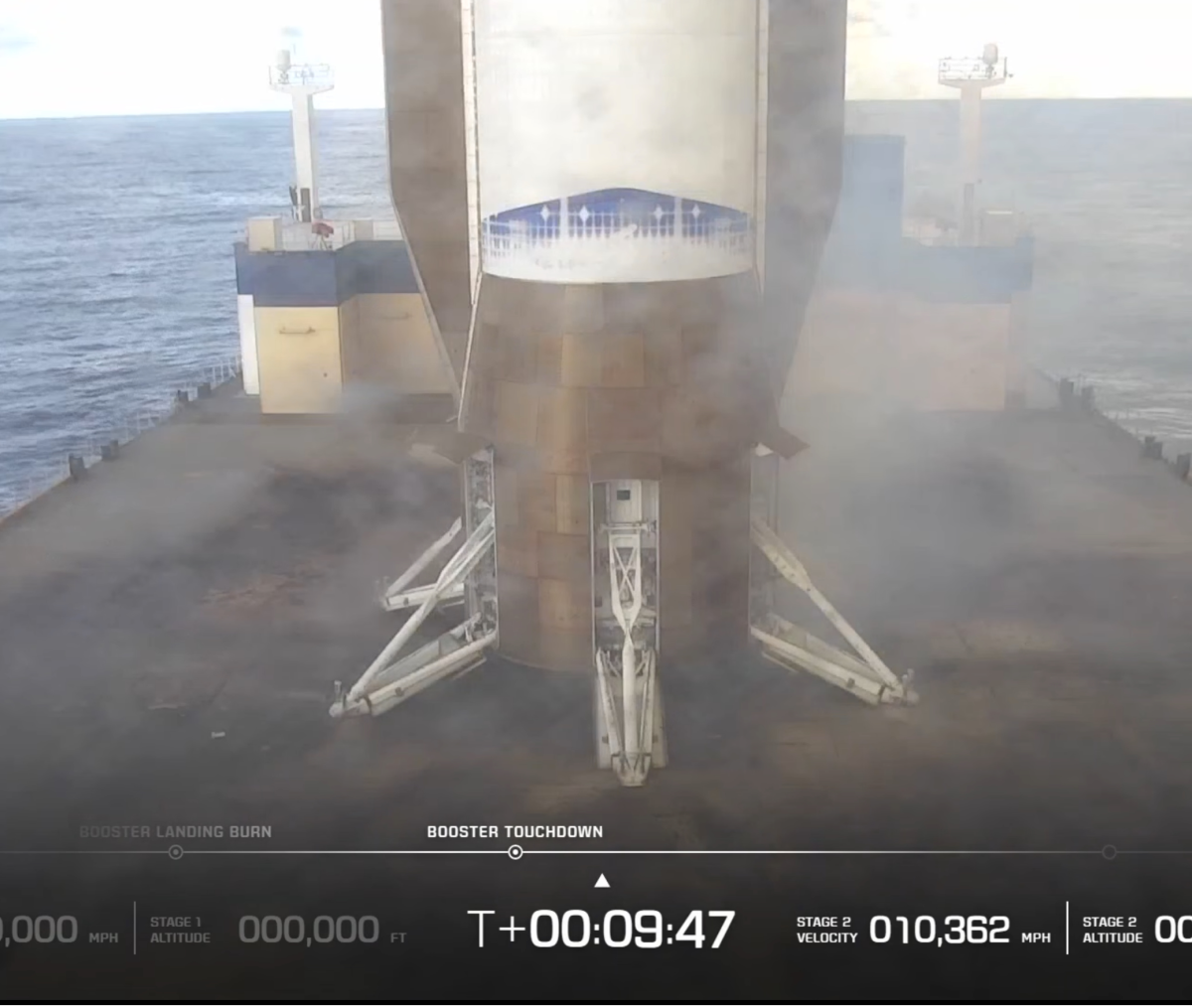
San Francisco: Jeff Bezos’ space company Blue Origin successfully landed the booster of its new New Glenn mega-rocket on a drone ship in the Atlantic Ocean on Thursday—only the second attempt ever. This milestone makes Blue Origin the second company, after SpaceX, to complete a reusable booster landing in space.
The success of the New Glenn rocket establishes Blue Origin as a new option for large payloads, lunar missions, and deeper space exploration. Approximately 34 minutes after launch, the rocket’s upper stage successfully released its first commercial payload—two spacecraft destined to study Mars’ atmosphere for NASA.
This second launch is highly significant as it positions Blue Origin to compete with SpaceX, which dominates the global launch market with Falcon 9, Falcon Heavy, and Starship rockets.
The first launch of New Glenn occurred in January. The second launch was delayed due to weather and solar storms but was successfully executed from Launch Complex 36 at Cape Canaveral, Florida, on Thursday evening. The second stage separated within 4 minutes, and the booster began its return to Earth, landing steadily on the drone ship about 10 minutes later.
Blue Origin had attempted a booster landing during the first launch, but it failed due to an explosion. The company, in coordination with the FAA, identified and resolved the issues.
Booster landing is a critical step in making the rocket system reusable, reducing costs. Blue Origin must now prove it can refurbish and relaunch the booster. The company has long-term plans for lunar missions and is developing a lunar lander, with NASA urging both Blue Origin and SpaceX to accelerate progress.
CEO Dave Limp stated, “We will do everything to enable NASA’s rapid return to the Moon.” Thursday’s launch represents a significant step toward that goal.

প্লিজ লগইন পোস্টে মন্তব্য করুন!
আপনিও পছন্দ করতে পারেন

- Jul 15, 2026
OpenAI Developing AI Smart Speaker, Bringing...
- Jul 11, 2026
SK Hynix Makes History in New York, Raises $2...
- Jul 11, 2026
Legal Complications Surround $110 Billion Par...

- Jul 06, 2026