- Jul 03, 2026
Awami League government played a role in burning installations during July uprising: Testimony by Asif Mahmud
- Oct 10, 2025
- Politics
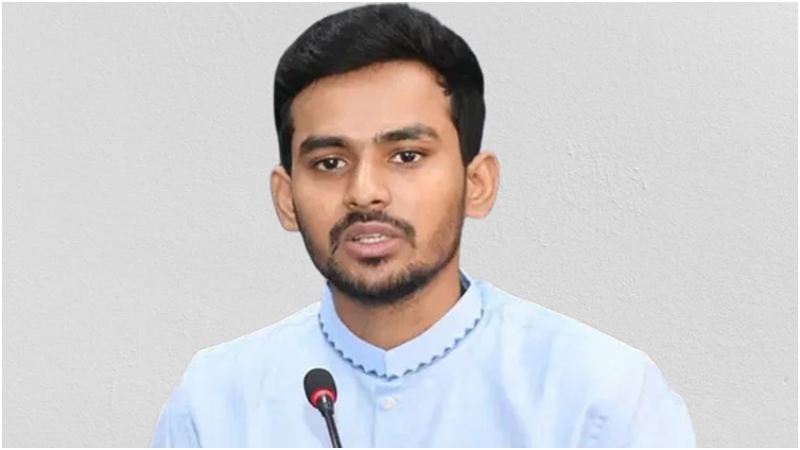
Staff Reporter | PNN:
Asif Mahmud Sajeeb Bhuiya, Local Government Adviser of the Interim Government, has stated that the then Awami League government played a role in burning important installations during the July mass uprising. He said the government deliberately orchestrated these arson incidents and then tried to shift the blame onto the protesters.
On Thursday, he gave testimony as the 19th witness at the International Crimes Tribunal-1 in the case concerning the killing of six people by gunfire in Chankharpul, a case of crimes against humanity. At that time, Asif Mahmud was serving as the coordinator of the anti-discrimination student movement, which played a key role in the July 2024 mass uprising.
In his testimony, he said that during the movement, the government conducted well-planned false cases and “block raids,” arresting large numbers of students and youth. “At that time, under the patronage of the Awami League government, a severe lawlessness was created in the country under the guise of suppression and persecution,” he said.
He further revealed that on July 19, 2024, he was taken from the Gulshan area by people posing as DB officers. He was pressured to issue a video message calling for the withdrawal of the movement. When he refused, he was rendered unconscious through injection. Later, during a visit to the Cantonment’s mirror room, he realized that he had been held there.
Asif Mahmud also stated that on July 26, he and other movement coordinators were taken from the Ganaswasthya Nagar Hospital by the DB. Officers Harun Or Rashid and Humayun Kabir informed them that they were being arrested under the orders of then Prime Minister Sheikh Hasina and Home Minister Asaduzzaman Khan. He said they were also threatened that they would not be kept alive if the movement did not stop.
He added that on August 4, police opened fire at a Shahbagh rally, killing four people. This led to nationwide protests and the announcement of a “March to Dhaka” program. To avoid obstruction from law enforcement and Awami League-supported organizations, the program was suddenly advanced to August 5. On that day, two protesters were killed by police gunfire right before his eyes at Chankharpul.
In the Chankharpul killings case, eight police officers are listed as accused, four of whom are in prison while four remain fugitives. The case is being tried by a three-member bench of the International Crimes Tribunal-1, led by Justice Md. Golam Mortuza Majumder. The other two members of the tribunal are Justice Md. Shafiul Alam Mahmud and Justice Md. Mohitul Haque Enam Chowdhury.

প্লিজ লগইন পোস্টে মন্তব্য করুন!
আপনিও পছন্দ করতে পারেন


- Jul 03, 2026
NCP PREPARES FOR CONTESTING LOCAL GOVERNMENT...

- Jul 03, 2026
JAMAAT-E-ISLAMI STRENGTHENS FIELD PREPARATION...
- Jul 01, 2026
Cyber Security Act passed amid opposition cal...
- Jul 01, 2026