- Nov 04, 2026
‘The Mass Uprising Was Not a Stepping Stone for Any Party to Seize Power’: Nasiruddin Patwary
- Oct 17, 2026
- Politics
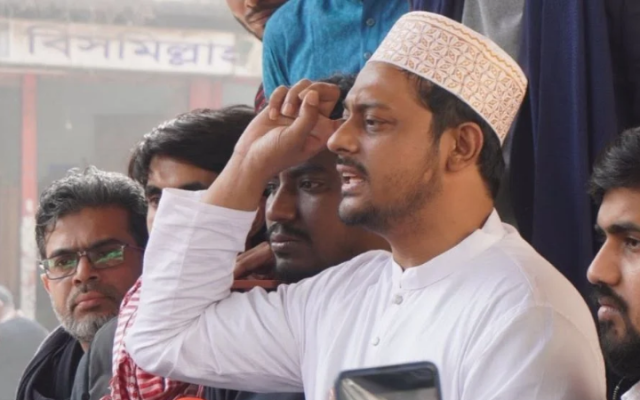
PNN News Desk | Dhaka
The objective of the 2024 mass uprising was not to bring any particular political party to power but to return ownership of the state to the people, said Nasiruddin Patwary, chief coordinator of the National Citizen Party (NCP). He warned that if the expectations for state reform remain unfulfilled even after the uprising, the old power-centred style of politics could re-emerge.
Patwary made the remarks in a lengthy post recently published on his personal Facebook profile. In the post, he questioned the reform initiatives of the BNP-led government, political accountability and whether the expectations of those who participated in the mass uprising were being fulfilled.
Patwary wrote that many questions about the BNP’s past activities were not raised during the movement against Sheikh Hasina’s authoritarian rule. At that time, the priority had been the fall of the authoritarian government. However, he questioned whether the sacrifices and expectations of the people would receive proper recognition if power-centred politics returned after the uprising.
In his post, he also referred to the circumstances surrounding the death of Colonel Taher, the political situation during the 2007-2008 period known as the one-eleven crisis, and the failure to fulfil public expectations following the 1990 mass uprising.
According to him, Bangladesh’s desire for change was not limited to the removal of a single ruler. Transforming the authoritarian structures of the state was also one of the principal objectives.
Questioning the government’s role in fulfilling the aspirations of the mass uprising, the NCP leader said key reform demands included establishing a balance of power under the Constitution, ensuring an independent judiciary, creating a neutral electoral system, making the administration accountable, preventing the abuse of police powers and establishing effective institutions to combat corruption.
He noted that the July National Charter of 2025 contained 84 reform proposals covering various sectors of the state. According to his account, uncertainty had emerged over the process and future of reform implementation after the BNP government, elected in February 2026, refused to take the oath as members of the Constitutional Reform Council.
He also referred to questions of accountability and institutional independence that arose in April of the same year concerning the future of various ordinances.
Nasiruddin Patwary said the BNP could have its own position and arguments. However, he said the government must answer whether it would fulfil its commitments to reforms in line with the expectations of the people.
In his post, Patwary said he did not oppose the BNP government’s various public welfare initiatives, including canal excavation projects and the Family Card programme. However, he argued that strengthening state institutions and making them accountable and effective were equally essential alongside such programmes.
He said the core aspirations of the mass uprising could not be fulfilled through temporary public welfare initiatives alone if the judiciary remained dependent, public confidence in the electoral system was not restored and the administration continued to be influenced by partisan interests.
He also highlighted the livelihoods of ordinary people and the interests of small business owners. According to him, there could be no moral justification for remaining silent when people’s livelihoods were threatened or small businesses suffered losses. He further argued that the people’s desire for change should not be sacrificed for the interests of any political party.
In his post, Patwary said the 2024 mass uprising had created an opportunity to transform the country’s old political system. If that opportunity was wasted, he warned, responsibility would rest not only with the rulers of the past but also with those currently in power.
In his view, accountability was necessary for the BNP’s past activities, just as the party must be held accountable for its actions while in government. No political party, he said, could claim exclusive ownership of the sacrifices made by the people. The state belongs to its citizens, he added.
Towards the end of his post, the NCP leader warned of the consequences of arrogance in power and disregard for public aspirations. He said no government could remain in power indefinitely by ignoring the expectations of the people.
Patwary cautioned that if the demands for reform that emerged from the mass uprising were ignored and the country returned to its old political practices, the public would once again demand accountability.
However, the post did not mention whether the BNP-led government had issued any response to the remarks made by Nasiruddin Patwary.

প্লিজ লগইন পোস্টে মন্তব্য করুন!
আপনিও পছন্দ করতে পারেন
- Nov 04, 2026
Workers' Movement Is Justified, Government Re...
- Nov 04, 2026
Government Has Failed to Address People's Pro...
- Nov 03, 2026
Jamaat Leader Akhtaruzzaman Released from Jai...
- Nov 03, 2026