- May 20, 2026
Syria’s Sweida Province Gripped by Unprecedented Casualties Amidst Fragile Calm and Deepening Humanitarian Crisis
- Jul 20, 2025
- Exclusive
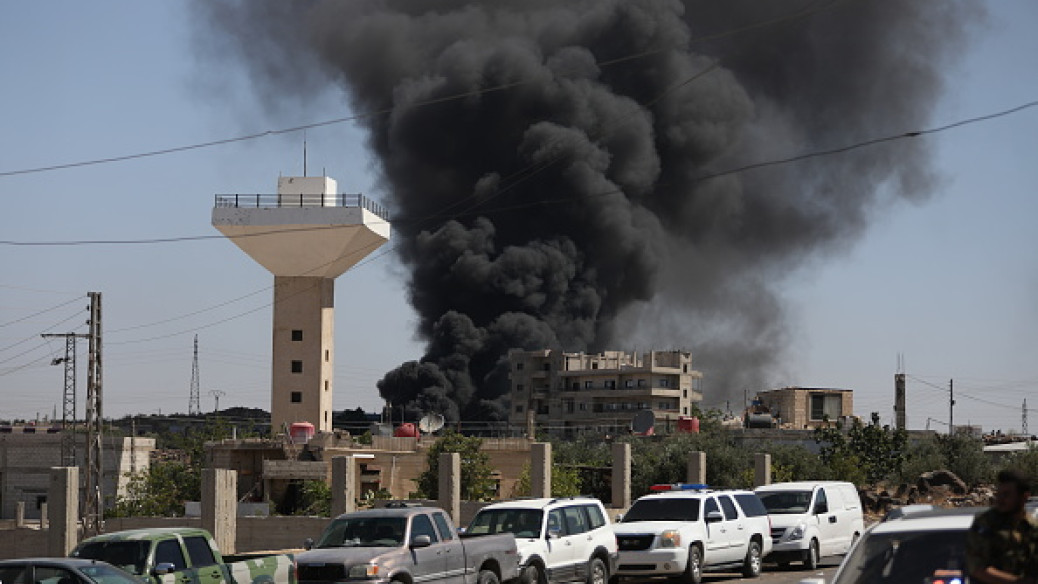
SWEIDA, SYRIA – July 20, 2025 – Southern Syria's Sweida province finds itself at the epicenter of a rapidly deteriorating security and humanitarian crisis, marked by persistent armed clashes between local Druze militias and Bedouin tribal groups. This internal conflict has been dramatically amplified by the complex involvement of the new interim Syrian government forces and a series of impactful Israeli airstrikes, igniting urgent calls from international bodies for immediate de-escalation and the paramount protection of civilian lives.
The catalyst for this renewed instability was an incident on July 11, 2025, involving the reported robbery and assault of a Druze vegetable merchant by elements of Bedouin tribes along the crucial Damascus-Sweida highway. This act swiftly triggered a reciprocal cycle of kidnappings and retaliatory armed actions between the two communities, escalating into widespread confrontations by July 13. These initial skirmishes underscored deep-seated local tensions related to land disputes, resource control, and criminal networks that have historically plagued the region.
A critical turning point occurred between July 14 and 16, when the new interim Syrian government, led by Ahmed al-Sharaa, deployed contingents of the Syrian Armed Forces into the province. While officially aimed at restoring order, reports from local sources and international monitors strongly suggest that government forces aligned themselves with Bedouin tribal factions against the Druze militias.
The human cost of this escalating conflict is dire and rapidly worsening. The UK-based Syrian Observatory for Human Rights (SOHR), a prominent war monitor, reports that since last Sunday, the death toll has tragically surpassed 1,000 individuals. This includes a staggering 336 Druze fighters and 298 Druze civilians, with 194 of these civilians reportedly summarily executed by personnel from the defense and interior ministries. The violence has also claimed the lives of 342 government security personnel and 21 Sunni Bedouin, three of whom were civilians "summarily executed by Druze fighters." Additionally, 15 government forces were killed in Israeli airstrikes, according to the SOHR. PNN has not yet been able to independently verify these figures.
The conflict's regional dimensions broadened considerably with a series of unprecedented Israeli airstrikes on Syrian territory. On July 14, Israeli forces targeted Syrian military assets, including tanks, near Sami' village in Sweida. The intensity of these strikes escalated on July 16, when Israeli warplanes conducted operations targeting the Syrian Defense Ministry headquarters and areas in close proximity to the presidential palace in central Damascus. Israel has justified these strikes as defensive measures to protect the Druze community, a significant and loyal minority within Israel. However, these actions have drawn widespread condemnation for infringing upon Syrian sovereignty and contributing to regional instability.
As of today, July 20, the humanitarian situation remains critical. The week of intense fighting has left Sweida province reeling from widespread power cuts and severe shortages of essential supplies. In response, the Syrian Red Crescent announced today that it is dispatching 32 trucks loaded with vital aid, including food, medicine, water, fuel, and other necessities, to the beleaguered province. The health ministry is also reportedly sending a convoy of trucks to bolster relief efforts.
However, the UN refugee agency, UNHCR, has issued stark warnings about acute water shortages exacerbated by electricity outages. Furthermore, many hospitals in the province are struggling to cope with the overwhelming influx of individuals injured from the clashes. Kenan Azzam, a local dentist, conveyed the dire state of affairs to Reuters by phone, stating, "The hospitals are a disaster and out of service, and there are still so many dead and wounded." Residents continue to grapple with the lack of basic services like water and electricity.
The "tense calm" reported by residents to Reuters comes after the Islamist-led government declared that Bedouin fighters had withdrawn from the city. Despite this, Syrian government troops remain amassed at security checkpoints outside Sweida city, actively preventing factional fighters from entering, underscoring the fragile nature of the current lull in direct confrontations.
International reactions have been swift and pointed. United Nations Secretary-General Antonio Guterres has unequivocally condemned all violence against civilians and Israeli "escalatory airstrikes," urging all parties to adhere strictly to international humanitarian law and the 1974 Disengagement of Forces Agreement. Russia has vehemently denounced the Israeli strikes as a "gross violation of the country's sovereignty and international law." The United States has also expressed "deep concern" regarding the escalating violence, urging all parties to exercise maximum restraint.
As of this report on July 20, 2025, the situation in Sweida remains profoundly volatile and unpredictable. The capacity of the new interim government to establish legitimate authority and foster national cohesion is being rigorously tested by these entrenched internal conflicts and mounting external pressures. Without a concerted and sustained effort towards de-escalation, political reconciliation, and comprehensive humanitarian assistance, the region faces the grim prospect of continued destabilization and a deepening human catastrophe.

প্লিজ লগইন পোস্টে মন্তব্য করুন!
আপনিও পছন্দ করতে পারেন

- Apr 26, 2026
EU AI Act: A New Standard for Trust, Safety,...
- Sep 24, 2025
Violence Breaks Out During Statehood Agitatio...
- Sep 04, 2025
Refugee Women in Sudanese Camp Cry Out: ‘Mone...

- Sep 03, 2025