- May 20, 2026
Refugee Women in Sudanese Camp Cry Out: ‘Money will not help. I want justice’
- Sep 04, 2025
- Exclusive
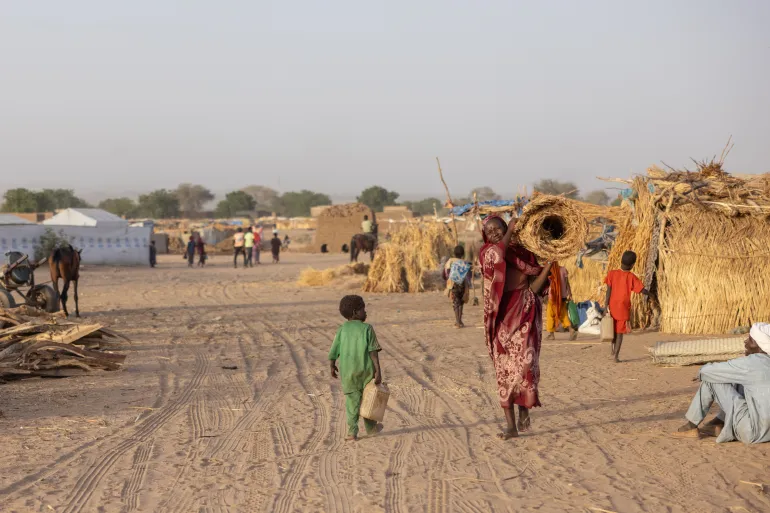
Adre (Chad), September 4, 2025
This story includes graphic descriptions of sexual violence, including against minors. Some readers may find this disturbing.
Islam (pseudonym), a 22-year-old who fled from El-Geneina in Sudan’s West Darfur, still breaks down in tears when she recalls that horrific night. In November 2023, an air strike destroyed their home. Even after surviving, her nightmare did not end — the Rapid Support Forces (RSF) abducted her and raped her repeatedly for two days.
“They should have killed me; that would have been better,” says Islam, who now lives with her mother in a refugee camp in Adre, an eastern border town of Chad.
New violence in the place of refuge
The bloody conflict between the Sudanese army and the RSF, which began in April 2023, has so far displaced nearly 13 million people. According to UN data, around 1.2 million women and children have sought refuge in Chad.
Adre’s population was only 40,000. But now this small border town is hosting 235,000 refugees. Along with severe food shortages, lack of water, and limited humanitarian assistance, insecurity has emerged as a new fear in their lives.
Many women like Islam have been subjected to sexual violence a second time after arriving in Chad. She says that while selling tea to earn money, she is constantly harassed.
Women surviving with harrowing experiences
Roua (pseudonym), 18, fled El-Geneina in June 2023. RSF forces burned her house and killed several of her family members. Later, she and eight of her schoolmates were abducted and raped. Now she lives in Adre, with a baby in her arms — the child’s father is a local police officer who also raped her.
Hanan (pseudonym) was recently raped while collecting firewood. Crying, she said, “I am the mother of six. If I have another child, how will I feed him?”
The most tragic case is that of three-year-old Helwa (pseudonym). In one of the camps in Adre, the little girl was raped by a neighbor. She now spends her days in fear and trauma.
Alarming statistics
According to the United Nations Population Fund (UNFPA), more than 4,000 cases of gender-based violence were recorded in Chad in 2024 alone. In eastern Chad, the demand for support services for rape and sexual violence survivors rose by nearly 288 percent in just one year.
However, local authorities deny these allegations. Officials responsible for security in Adre have claimed the town is “safe and stable.” Yet international organizations warn that women in the camps are becoming increasingly vulnerable.
Funding shortages and lack of justice
The UN refugee agency (UNHCR) has stated that only 20 percent of the required funds for refugees in eastern Chad have been received this year. As a result, health, education, and protection programs have been scaled back.
Human rights groups say that perpetrators go unpunished, leaving women deprived of justice. Local women’s leader Isa Dara Salama said, “We hold meetings with women to hear their complaints. Rape is the most frequent issue we encounter.”
The cry of the survivors
Stephanie Loiseau, a mental health officer with the International Committee of the Red Cross in Adre, said: “The refugees thought they would be safe here. But repeated violence has left them losing hope. The psychological trauma is the greatest pain.” Like thousands of others, Islam, Roua, or Lacham say humanitarian aid is not enough. What they demand is accountability and justice.
“Money will not help. I want justice,” cries Lacham, holding her little daughter Helwa tightly in her arms.
Source: Caitlin Kelly | Al Jazeera

প্লিজ লগইন পোস্টে মন্তব্য করুন!
আপনিও পছন্দ করতে পারেন

- Apr 26, 2026
EU AI Act: A New Standard for Trust, Safety,...
- Sep 24, 2025
Violence Breaks Out During Statehood Agitatio...

- Sep 03, 2025
Total Lunar Eclipse to Grace the Skies on Sep...
- Aug 12, 2025