- May 08, 2026
Political Parties Await Recommendations for Implementation of the July Accord
- Oct 21, 2025
- Politics
International Desk | PNN:
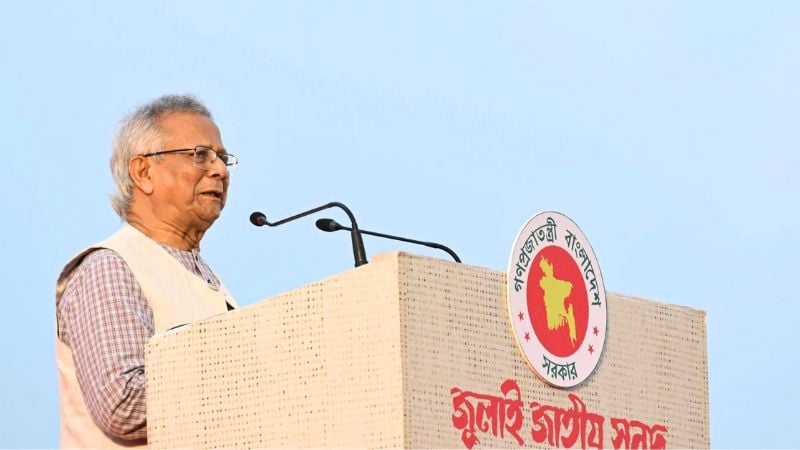
Last Friday, a signing ceremony for the July Accord was held at the South Plaza of the National Parliament House in Dhaka, in the presence of Professor Muhammad Yunus, chief advisor of the interim government.
Although 24 political parties and alliances signed the Accord, several parties have not signed yet.
While there is consensus among political parties on holding a referendum, disagreements remain on three key issues:
-
What will be the legal basis of the Accord?
-
When will the referendum be held?
-
How will proposals with differing opinions be implemented?
The National Consensus Commission aims to provide the interim government with a comprehensive and precise recommendation for implementing the July Accord within this week. Sources from the commission said that any proposal may leave some parties dissatisfied, but informal discussions with parties will continue until the final decision.
The commission’s tenure ends on October 31, and it plans to submit its final recommendations to the government by October 24.
BNP Standing Committee member Salahuddin Ahmed said, “It’s not appropriate to comment before the recommendations are finalized. The commission is preparing a complete proposal with the expert committee; we will give our opinion later.”
Jamaat-e-Islami and seven other like-minded parties have demanded that the referendum be held before the parliamentary election. Jamaat’s Assistant Secretary General Hamidur Rahman Azad said, “There is time and opportunity to hold the referendum. So why object to doing it first?”
Meanwhile, the National Citizens Party (NCP) has not yet signed the Accord. Senior Joint Convenor Ariful Islam Adib said, “We will decide whether to sign after reviewing the commission’s recommendations.”
CPB, BASAD, BASAD (Marxist), and Bangladesh JASAD have also not signed the Accord. In a memorandum to the commission, they stated that they could not sign without approval of four fundamental principles of the Constitution, changes to Article 150(2), and mention of the interim government under Article 106.
National Consensus Commission Vice-Chair Professor Ali Riaz said, “Based on opinions gathered from discussions with political parties, the recommendations will be made so that the government can take prompt action.”
An internal discussion in the commission has also considered an alternative approach: asking the referendum questions, “Do you support the implementation of the July Accord?” and “Do you support implementing proposals with differing opinions?”
Political analysts say the July Accord has now become a significant milestone in Bangladesh’s political arena, and how and when it is implemented will determine the future course of the country’s politics.

প্লিজ লগইন পোস্টে মন্তব্য করুন!
আপনিও পছন্দ করতে পারেন

- May 08, 2026
Nahid Islam calls for government accountabili...
- May 08, 2026
Attempts are being made to create instability...

- May 07, 2026
Meeting between Prime Minister Tarique Rahman...
- May 07, 2026