- Nov 04, 2026
Government Thought ‘Something Good Could Be Possible’ by Increasing Viva Marks: Zahed Ur Rahman
- Sep 08, 2026
- Campus
PNN News Desk, Dhaka
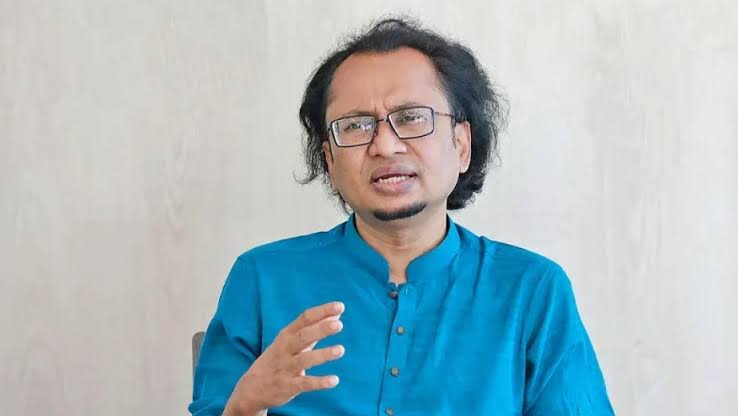
Dr. Zahed Ur Rahman, the Prime Minister’s Adviser on Information and Broadcasting, has linked the government’s decision to increase the marks allocated for the oral examination (viva) under the new draft rules for government jobs with efforts to improve the quality of the recruitment process. He said the government took the initiative to implement the new assessment system because it considered the approach comparatively better.
He made the remarks in response to questions from journalists at a press conference held on Tuesday (September 8) on the progress of various government activities.
Acknowledging concerns that allocating more marks to the viva could increase the scope for personal preferences or bias in favour of candidates, Zahed Ur Rahman said an oral examination is inherently a subjective or person-dependent assessment method. As a result, he said, there may comparatively be greater scope for giving someone special advantages. However, he believes this does not mean the decision to increase viva marks can automatically be viewed as an irregularity.
He said the government believes that the new assessment structure could produce better results in the recruitment process. At the same time, he claimed that the government is bringing the changes within the framework of existing laws and regulations and that no legal wrongdoing has been committed through the changes.
The government has taken an initiative to significantly increase the marks allocated to the oral examination for recruitment to government jobs in grades 11 to 20, while reducing the marks required to pass the written examination. Responding to a question from journalists about whether this change conflicts with the spirit of the anti-discrimination student movement, the Information Adviser questioned why the viva should be viewed solely from the perspective of the possibility of irregularities.
Citing an example from his own educational life, he said the viva was much more important than the written examination in medical education. Therefore, he said, he does not believe that the very existence of an oral examination is necessarily the cause of a problem.
According to Zahed Ur Rahman, knowledge demonstrated through a written examination alone does not provide a complete picture of a candidate’s qualifications for a job. The ability to perform responsibilities in the workplace, behaviour, communication skills and other competencies are also important. He believes that a viva can play an effective role in assessing these qualities.
Referring to his own recent experience, he said he had sat on several viva boards. There, he encountered some candidates whose written examination results may not have been as good as expected. However, during the oral examination, he noticed certain qualities in them that, after taking those qualities into consideration, made him believe they were suitable for employment.
He said people recruited to the administration cadre should not be assessed solely on the basis of examination results. In addition to book-based knowledge, an administrator needs several other skills and mental capabilities to perform their responsibilities. In his view, these qualities can be assessed comparatively better through a viva than through a written examination.
The Information Adviser also remarked that there is room to question the government’s intention behind the decision to increase viva marks. Addressing journalists, he said that if there are allegations that the government is making the change for a specific purpose or to appoint particular individuals, journalists can directly raise such questions.
At the same time, he urged the media to investigate and bring forward any specific allegations of irregularities or corruption that emerge after appointments are made.
Zahed Ur Rahman said the media should certainly raise questions if any actual irregularity occurs in the recruitment process. If specific allegations are received, the media can play a role not only by making them public but also by bringing the individuals concerned under accountability.

প্লিজ লগইন পোস্টে মন্তব্য করুন!
আপনিও পছন্দ করতে পারেন

- Nov 04, 2026
HSC Supplementary Examinations to Begin on De...

- Oct 31, 2026
Female Students Outperform Male Students in H...
- Oct 31, 2026
Questions Had to Be Reprinted Three Times on...
- Oct 25, 2026