- Apr 04, 2026
Call to make technical education market-oriented and modern: Education and Primary & Mass Education Minister
- Mar 04, 2026
- Campus
PNN News Desk, Dhaka
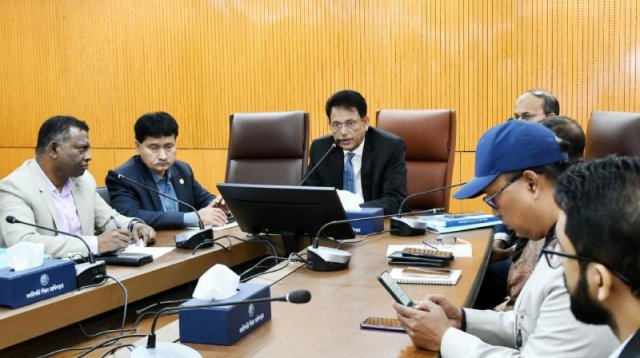
Focusing on transforming the country’s large population into skilled human resources, Education and Primary & Mass Education Minister Dr. A. N. M. Ehsanul Haque Milon emphasized the importance of making technical and vocational education timely and demand-driven according to market needs. He stated that in order to survive in a technology-driven world, there is no alternative to improving the quality of technical education and increasing practical training.
The minister made these remarks while delivering the keynote speech at a discussion meeting held on Wednesday (March 4) at the office of the Directorate of Technical Education. The meeting was chaired by Muhammad Rafiqul Islam, Secretary of the Technical and Madrasa Education Division. Various officers and employees of the Directorate participated in the meeting.
The minister mentioned that the indicators for measuring progress in technical education and performance indicators (KPIs) have been preliminarily reviewed. However, further in-depth analysis is required to formulate necessary reform plans. He pointed out that there are some gaps in strengthening public-private partnerships, increasing coordination between the industrial sector and educational institutions, and developing a modern curriculum, which need to be addressed quickly.
Addressing the officers and employees, he said that each department, project, and institution should determine on its own what developmental initiatives can be taken. He called for taking initiative through creative thinking and effective actions without merely waiting for directives from the ministry.
The minister further said that creating skilled human resources for nearly 180 million people in the country is a huge responsibility. With proper planning and training, this population can be transformed into economic strength. He also emphasized focusing on practical training rather than excessive theoretical instruction in technical, vocational, and polytechnic institutions. For this, he noted that a comprehensive evaluation of the existing curriculum and training system is necessary.
Referring to the international labor market, the minister said that coordination will be increased with the Ministry of Expatriates’ Welfare and Overseas Employment and other relevant agencies to expand opportunities for sending skilled manpower abroad. He expressed optimism that Bangladesh could play an important role by supplying skilled workers to countries where populations are declining.
He also said that it is necessary to move away from conventional work methods and take rapid and effective initiatives. Each officer must have their own work plan, targets, and responsibilities. He expressed the expectation that the technical education sector would play a significant role in achieving national employment creation goals and called on everyone to work in a coordinated manner.

প্লিজ লগইন পোস্টে মন্তব্য করুন!
আপনিও পছন্দ করতে পারেন
- Apr 04, 2026
National University’s new initiative to reduc...

- Apr 03, 2026
Three University Students Die Within Hours, T...
- Apr 03, 2026
National University Punishes 83 Students Incl...
- Apr 02, 2026