- Jun 20, 2026
At Least 104 Civilians Killed in Drone Strikes in Sudan’s Kordofan
- Dec 17, 2025
- International
International Desk: PNN
Sudan’s ongoing civil war has entered its third year and is escalating violently. In Kordofan, consecutive drone strikes have killed at least 104 civilians, according to local sources and international agencies. These attacks occurred from early December through Friday.
The recent violence intensified around the capture of a key military base. After a week of fierce fighting, the Rapid Support Forces (RSF), a paramilitary group, seized the base in western Kordofan, triggering further attacks across the region.
The deadliest attack occurred in Kalogi, South Kordofan, where a kindergarten and a hospital were hit, killing 89 people, including 43 children and 8 women. Volker Turk, UN Human Rights Chief, expressed deep concern, calling the attack on medical facilities a serious violation of international humanitarian law.
On December 13, six Bangladeshi peacekeepers were killed in a UN peacekeeping base attack in Kadugli, the capital of South Kordofan. UN Secretary-General António Guterres described the attack as “horrific,” noting it could constitute a war crime.
The following day, nine people were killed and 17 injured in an attack on Dilling Military Hospital. According to medical organizations, many of the deceased and injured were healthcare workers.
Sudan’s government-aligned army (SAF) blamed RSF for the attacks, but RSF has not officially responded.
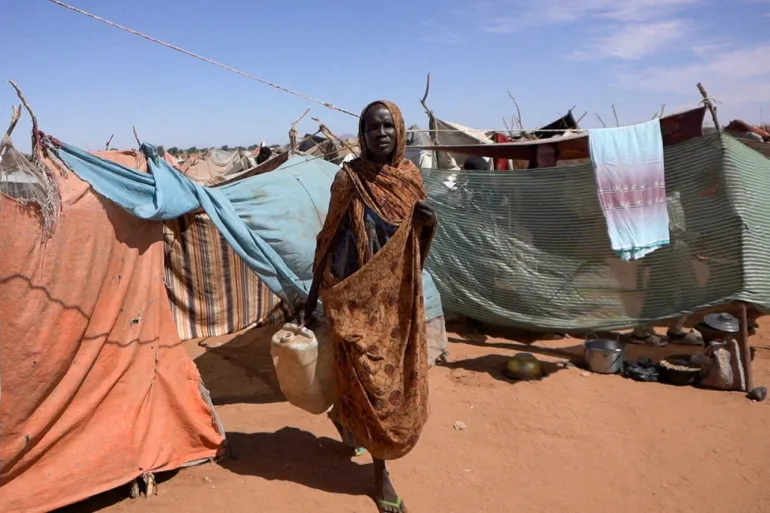
The conflict has created a severe humanitarian crisis. The North Kordofan Health Ministry reports over 13,000 cholera cases and 730 dengue patients. Around 30% of healthcare facilities are closed. At least 40,000 people have fled their homes, and thousands remain trapped in besieged cities like Kadugli and Dilling.
Analysts say the spread of conflict in Kordofan represents a dangerous new phase in Sudan’s war. Earlier, the fall of the last army base in West Darfur triggered similar expansion.
International efforts for peace have restarted. Sudanese army chief Abdel Fattah al-Burhan recently met Saudi Arabia’s crown prince expressing interest in peace talks. Egypt and the United States have jointly rejected any attempt to divide Sudan and called for a ceasefire.
Since April 2023, over 40,000 people have been killed, and at least 14 million displaced, according to the UN. Humanitarian groups estimate the actual toll may be much higher, making Sudan the world’s largest humanitarian crisis.

প্লিজ লগইন পোস্টে মন্তব্য করুন!
আপনিও পছন্দ করতে পারেন
- Jun 20, 2026
Somaliland president makes historic official...

- Jun 20, 2026
Australia confirms first H5N1 bird flu case o...
- Jun 20, 2026
Lebanon crisis casts shadow over U.S.–Iran pe...
- Jun 18, 2026