- Apr 08, 2026
Active Presence on the Ground After Election: Awami League Opens Offices to Gauge Government’s Stance
- Feb 28, 2026
- Politics
PNN News Desk: Dhaka
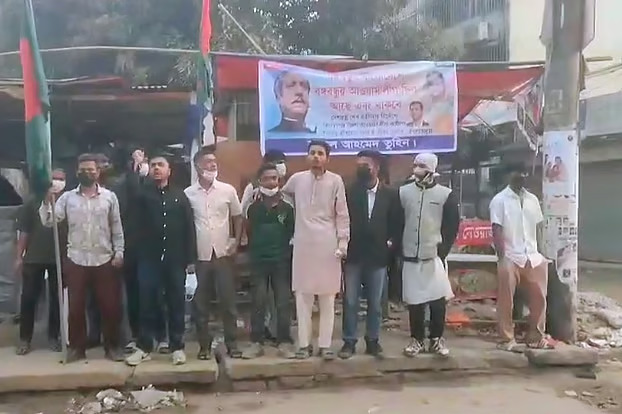
In the two weeks following the national parliamentary election, more than a dozen previously restricted Bangladesh Awami League offices have reopened across the country. In some locations, formal operations were attempted, while in others, activity was limited to gatherings and slogans outside the office. Several party sources stated that these steps are primarily intended to gauge the government’s stance.
Party leaders believe that this also helps assess how much obstruction occurs when seeking bail or release for imprisoned leaders and activists. Once mid- and lower-level leaders begin to obtain bail, organizational activity could gradually increase. A responsible party source mentioned that the party president Sheikh Hasina, who is currently in India, has instructed leaders and activists in the country to engage in limited activities. District and metropolitan offices are attempting to reopen as part of this directive, with third- and fourth-tier leaders playing a role.
However, internal disagreement exists within the party. Some feel that rapidly showing visible activity could create political discomfort, especially if the current ruling Bangladesh Nationalist Party (BNP) takes a strict public stance. Recent bail approvals for a few former MPs and leaders have provided some optimism among party leaders. The release of senior and ailing leaders is seen by some as a positive signal, though no significant progress has been made for top leaders involved in major cases.
Reports indicate office openings or symbolic presence in districts including Panchagarh, Barisal, and Noakhali. In some places, national and party flags were raised; in others, banners were hung. Political analysts suggest that the Awami League’s strategy is to demonstrate limited presence while monitoring government reactions. Analyst Mohiuddin Ahmed notes that the party expects some tolerance due to its large supporter base, but effective long-term politics will require capable leadership and coordination with new realities. Currently, the situation remains largely observational. Government stance, court decisions, and political negotiation prospects will be crucial for the party’s organizational path in the coming days.

প্লিজ লগইন পোস্টে মন্তব্য করুন!
আপনিও পছন্দ করতে পারেন
- Apr 08, 2026
Schedule announced for reserved women’s seats...
- Apr 04, 2026
BNP’s stance on constitutional amendment may...
- Apr 04, 2026
“We don’t want fascism in the country anymore...

- Apr 04, 2026