- Jun 27, 2026
114 Unknown Bodies of Martyrs from July Mass Uprising to be Exhumed Starting Tomorrow
- Aug 06, 2025
- Campus
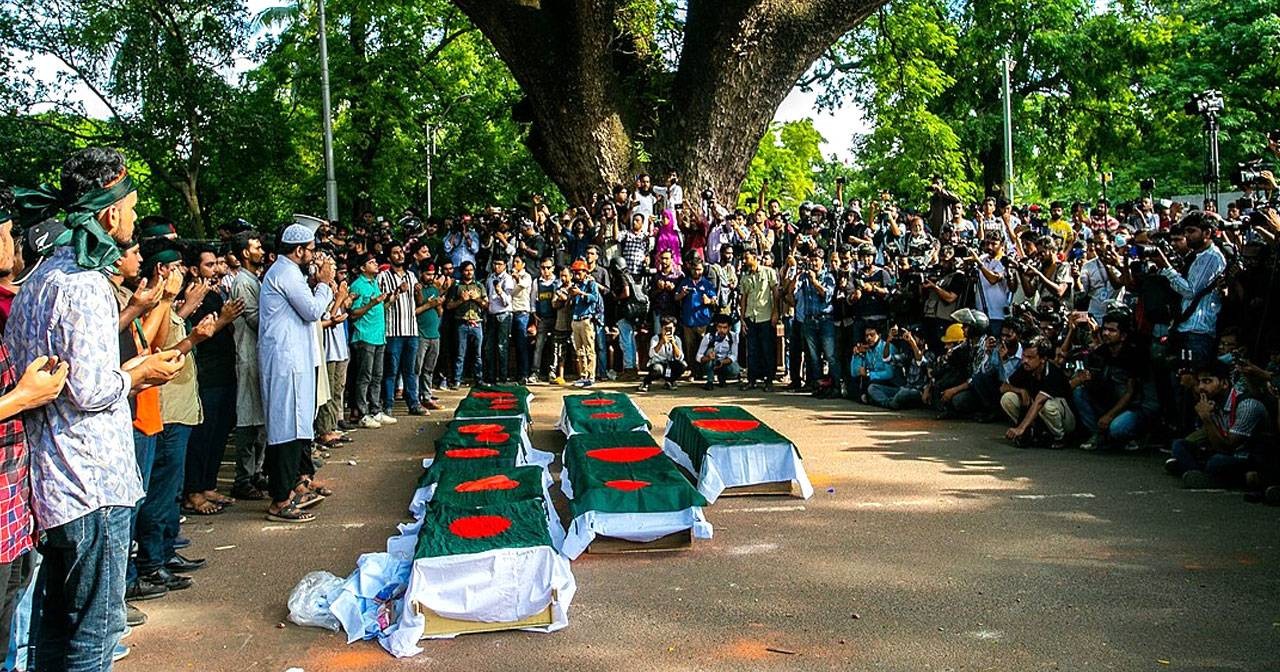
The exhumation of 114 unknown martyrs buried in the July mass uprising at the Rayerbazar graveyard in the capital will begin tomorrow, Wednesday. The government has taken this initiative to identify the bodies and investigate the true causes of their deaths.
According to the government’s decision, although court permission was obtained on Monday, the exhumation could not start on Tuesday due to delay in delivering the court order copy to the CID. Sources say all preparations are complete and the exhumation will formally begin tomorrow.
CID spokesperson and Special Superintendent of Police Jasim Uddin Khan said, “Since the court order was received at the last moment, work could not start today, but from tomorrow the exhumation from the Rayerbazar mass grave will commence.”
Juel Rana, Additional Deputy Commissioner of Dhaka Metropolitan Police’s Tejgaon division, stated, “After exhuming the bodies from the Rayerbazar mass grave, DNA samples will be collected and preserved for future identification and determination of the true causes of death.”
The exhumation process will be overseen by an Executive Magistrate, with forensic teams from the CID and specialist doctors from Sohrawardy Medical College Hospital responsible for the work.
On August 2, Home Affairs Adviser Lieutenant General (Retd.) Jahangir Alam Chowdhury inspected the site and said that more than 100 martyrs were buried there, many of whom remain unidentified. Although families were reluctant for a long time, they have now consented to the exhumation.
Mohammadpur Police Sub-Inspector Mahidul Islam, in court, stated that during last year’s anti-discrimination student movement, 114 men and women killed in clashes across Dhaka were buried anonymously in Rayerbazar. Through exhumation and autopsy, their identities will be confirmed, and arrangements will be made to hand over the bodies to their families.
Martyrs’ families and human rights organizations have welcomed this initiative, seeing it as a positive step toward uncovering historical truth and demonstrating the state’s responsibility toward the martyrs.

প্লিজ লগইন পোস্টে মন্তব্য করুন!
আপনিও পছন্দ করতে পারেন


- Jun 27, 2026
Thousands of Students in Uncertainty Due to N...
- Jun 20, 2026
National University likely to begin first rel...
- Jun 20, 2026
BUET expected to play key role in global lead...
- Jun 17, 2026