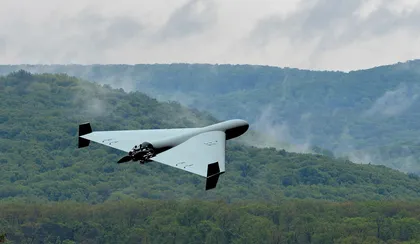
File Photo: Drones are displayed during a ceremony marking the induction of new unmanned aerial vehicles into the Iranian Army at a secret location in Iran, in an image obtained in January 2025. (Courtesy: Al Jazeera / Iranian Army / WANA)
U.S. intelligence agencies have launched an investigation into whether Russia played a role in Iran's recent drone attacks targeting several CIA-linked facilities across the Gulf region. Investigators are examining whether Moscow provided intelligence, targeting data, or advanced drone technology that may have assisted Iran in carrying out the strikes.
According to multiple sources familiar with U.S. intelligence operations, investigators have not yet reached any definitive conclusions regarding Russia's involvement. However, the precision of the attacks, the sophistication of the drone technology employed, and the long-standing military partnership between Russia and Iran have made the issue a major focus of the investigation.
Officials say that at least two CIA-related facilities were struck during drone attacks in March this year. One of the targets was the CIA station located inside the U.S. Embassy compound in Riyadh, Saudi Arabia, while another facility was located in eastern Iraq. Sources also indicated that several additional sites were targeted, although their identities remain classified for security reasons.
An internal assessment prepared by a Western intelligence agency reportedly suggests that Russia may have played some role in helping identify the targets. Although the assessment has not been publicly released, the allegations are being treated seriously by Western security officials.
Two Western officials stationed in the Gulf region stated that Iran used Shahed-series drones during the attack on the U.S. Embassy compound in Saudi Arabia. Analysts believe these drones may have been upgraded with Russian technological assistance. According to the officials, one drone struck the exterior of the embassy building, creating an opening that allowed a second drone to enter and explode inside. No casualties or injuries were reported.
Investigators are also examining whether Russia supplied Iran with advanced satellite navigation technology to improve the accuracy of its drones. Particular attention is being given to the Kometa-M navigation system, which experts say offers greater precision and stronger resistance to electronic interference than conventional guidance systems.
Some officials involved in the investigation have cautioned that the intended target may not have been the CIA station itself but rather the broader U.S. Embassy complex. If that proves to be the case, the CIA facility may have been struck incidentally. Investigators say all possible scenarios remain under consideration.
The White House referred requests for comment to the CIA, which has declined to issue an official statement. Similarly, Iran's mission to the United Nations, Russia's Ministry of Defense, and the Saudi government have not publicly commented on the allegations.
Former CIA official Daniel Hoffman said that close strategic ties between Moscow and Tehran make intelligence cooperation against U.S. interests entirely plausible. According to Hoffman, both countries have long shared the objective of reducing American influence in their respective regions.
Analysts believe that if investigators ultimately uncover direct Russian involvement, the findings could significantly escalate tensions not only in the Middle East and the Ukraine conflict but also in relations between Washington and Moscow. U.S. intelligence agencies continue to analyze technical evidence, intelligence reports, and the capabilities of the drones involved in an effort to establish the full circumstances surrounding the attacks.