- Jul 23, 2026
Modi Announces Fast-Track Courts to Tackle Exam Paper Leaks; Protesters Demand Education Minister's Resignation
- Jul 23, 2026
- International
International Desk | PNN
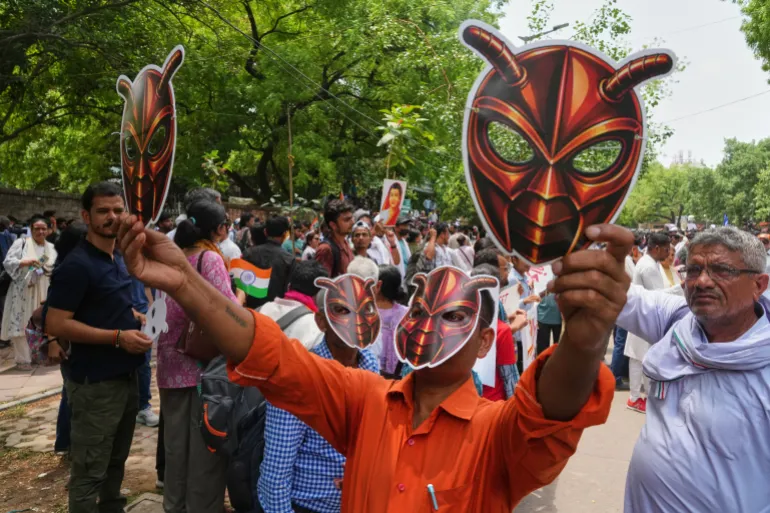
Indian Prime Minister Narendra Modi has publicly responded for the first time to the nationwide protests over repeated government examination paper leaks, announcing the creation of special fast-track courts to ensure swift trials for those responsible. Protest leaders, however, dismissed the announcement, insisting that Education Minister Dharmendra Pradhan must resign before any meaningful reforms can begin.
In a message posted on social media on Thursday, Modi said there was nothing more important than protecting the future of India's youth. He announced that special courts would be established to deliver rapid justice against individuals involved in leaking examination papers and undermining students' futures.
Despite the announcement, demonstrations continued across New Delhi and several other cities. Opposition parties disrupted parliamentary proceedings for a fourth consecutive day by demanding the resignation of the education minister, forcing repeated adjournments of Parliament.
The movement is being led by the Cockroach Janata Party (CJP), whose leaders argue that merely promising faster trials will not solve the underlying problem. They say the government must explain why examination papers continue to leak repeatedly despite previous assurances.
CJP spokesperson Ashutosh Ranka said India has established fast-track courts in several sectors before, but those courts have not permanently resolved systemic problems. He argued that addressing only the judicial process while ignoring the root causes would fail to end the crisis.
CJP founder Abhijit Dipke made it clear that protests would continue until Education Minister Dharmendra Pradhan steps down.
The opposition Congress Party has also backed the protesters' demands. Senior Congress leader Rahul Gandhi accused the government of failing India's youth, saying the administration could not escape responsibility for a crisis that has severely damaged students' futures.
On Wednesday night, clashes erupted between protesters and police in New Delhi. Police fired tear gas and used batons to disperse demonstrators after authorities claimed that some protesters threw stones and plastic bottles, injuring several police officers who later required hospitalization.
Thousands of protesters again gathered at Jantar Mantar on Thursday, chanting anti-government slogans. Authorities deployed large numbers of security personnel to maintain order. As a precautionary measure, at least 16 Delhi Metro stations were temporarily closed, causing widespread disruption for commuters.
The government has already held one round of talks with representatives of the protesters, promising reforms to the examination system. However, protest leaders say those assurances fall far short of what is needed.
Political analysts believe this has become the largest youth-led protest movement faced by Prime Minister Modi since he came to power in 2014. The examination paper leak scandal, which has affected nearly two million students, has triggered nationwide anger. Long-standing concerns over unemployment and irregularities in recruitment examinations have further intensified public frustration.
Analysts also suggest the movement has evolved beyond an education issue and now represents a major political challenge for the Modi government as it seeks to retain the confidence of young voters.

প্লিজ লগইন পোস্টে মন্তব্য করুন!
আপনিও পছন্দ করতে পারেন

- Jul 23, 2026
At Least 20 Killed in Brutal Gunmen Attack on...
- Jul 23, 2026
$1.15 Trillion Defense Bill Sparks Debate as...

- Jul 15, 2026
Gaza Doctor Hassan Al-Muqayed Held by Israel...
- Jul 15, 2026