- Nov 04, 2026
US Adopts New Strategy to Expand Influence in Central Asia, with Human Rights Losing Priority
- Oct 17, 2026
- International
International Desk | PNN
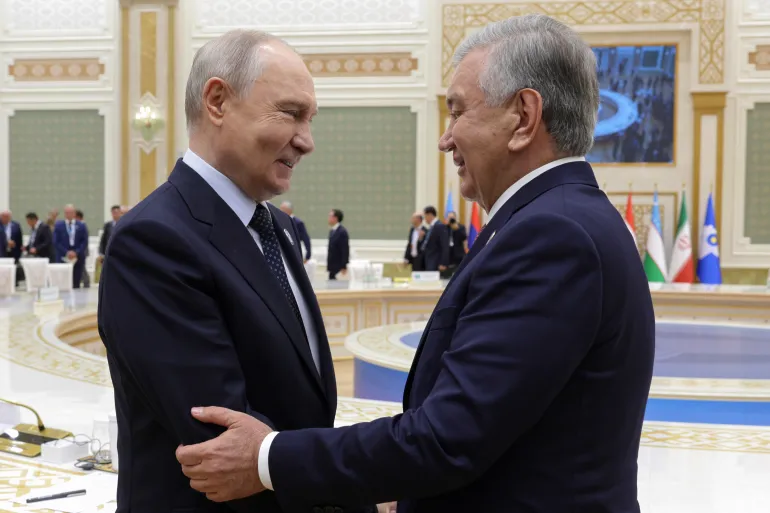
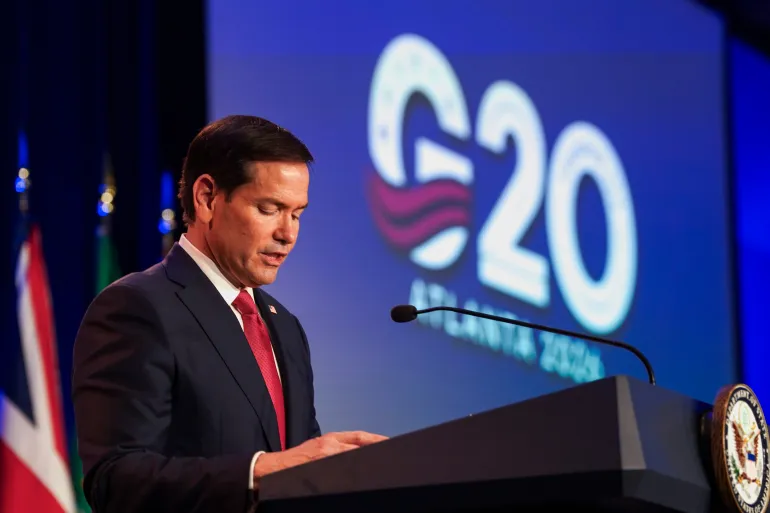
The United States has launched renewed efforts to strengthen its diplomatic and strategic position in Central Asia. This time, however, Washington is placing greater emphasis on economic interests, military strategy and geopolitical competition rather than making democracy, human rights or political reform conditions for cooperation. Against the backdrop of this policy shift under US President Donald Trump’s administration, Secretary of State Marco Rubio is expected to arrive in Samarkand, the historic city in Uzbekistan.
At the C5+1 summit, scheduled to run from Saturday to Tuesday, the United States is expected to hold discussions with representatives of the five Central Asian countries: Kazakhstan, Kyrgyzstan, Tajikistan, Turkmenistan and Uzbekistan. The summit is being viewed as a reflection of Washington’s new approach to the region, which was formerly part of the Soviet Union. According to analysts, one of the United States’ main objectives is to consolidate its position in Central Asia, a region situated within the spheres of influence of Russia and China.
After the collapse of the Soviet Union in 1991, Central Asian countries faced economic crises, unemployment and poverty. Diplomats and businesspeople from the United States and Europe became increasingly active in the region. Alongside economic development, investment and technological cooperation, political reform, democratisation and the decentralisation of power were also important subjects in Western discussions.
At the time, Western countries sent a clear message to regional leaders: to secure investment, technology and international recognition, they would need to move away from the authoritarian systems of governance inherited from the Soviet era. Workshops and discussions on human rights and democracy were organised, while initiatives were also launched to send students and government officials to Western educational institutions.
However, tensions developed between Western countries and several Central Asian governments amid allegations that ruling authorities were suppressing political opponents, extending their time in power through constitutional amendments and appointing relatives to important positions. In some cases, Western governments threatened sanctions.
Galiya Ibragimova, a regional analyst born in Uzbekistan who is currently based in Moldova, told Al Jazeera that when Western countries began lecturing Central Asian leaders on democracy and human rights, those leaders quickly turned towards China or Russia.
Uzbekistan, the most populous country in Central Asia, offers an example of the impact of Western policies on the region. The country’s former president, Islam Karimov, allowed the United States to establish a military base on Uzbek territory in 2001. However, in 2005, hundreds of unarmed civilians were reportedly killed when an uprising in the eastern city of Andijan was violently suppressed. Washington criticised the incident, after which Karimov decided to close the US military base.
At around the same time, Karimov’s daughter Gulnara faced allegations of using her influence to seize lucrative business opportunities. In a leaked US diplomatic cable, she was described as a “robber baron.” At one point, she was also considered a potential successor to her father.
According to analysts, Russia’s full-scale military invasion of Ukraine in 2022 raised fresh concerns about Moscow’s role in Central Asia. Russia continues to maintain substantial cultural and political influence in the region through films, music, theatre festivals and Russian media.
Alongside its economic relationships, the Kremlin has also sought to portray Central Asia as part of Russia’s close sphere of influence through the concept of the “Russian world.” In 2014, Russian President Vladimir Putin claimed that Kazakhstan had never previously had statehood. Several individuals known to be close to Russia have also threatened to seize the Russian-speaking northern regions of Kazakhstan.
The report states that Kazakhstan began supplying gas to Russia this year and has taken steps to extradite critics of the Kremlin. In January, Russian state media presenter Vladimir Solovyov proposed launching a “special military operation” in Central Asia and Armenia. His use of the same terminology employed in the Russia-Ukraine war heightened concerns in the region.
Meanwhile, many migrant workers from Central Asia have reportedly been recruited to fight in the war in Ukraine through inducements or coercion. The report also states that Russia is using companies in the region to obtain microchips, communications equipment and components that are being used in the production of drones and missiles.
According to Ibragimova, the roles of the United States and Russia appear to have been reversed. In the past, Western countries spoke about democracy and human rights, while Russia is now attempting to build relationships by presenting itself as a source of moral and political guidance.
Analysts believe that since Donald Trump returned to power, US foreign policy has placed less emphasis on democracy and human rights than before. They view Washington’s current position in Central Asia as primarily transactional and focused on practical interests.
Ibragimova said business and mutual interests had become the central elements of the Trump administration’s relationships in Central Asia. She added that the administration had little interest in interfering in other countries’ internal affairs over human rights or political reform.
Earlier this month, Trump welcomed Saida Mirziyoyeva, daughter of Uzbek President Shavkat Mirziyoyev. A year earlier, Mirziyoyev had pledged to invest up to $100 billion in the US economy, purchase Boeing aircraft and import cotton produced in the United States. Uzbekistan itself, however, is one of the world’s largest cotton-producing countries.
According to the report, Washington has made no significant public criticism of the Mirziyoyev government over its alleged repression of critics or the growing political influence of the president’s daughter.
Central Asia received relatively little attention during Trump’s first term, but the United States is now taking steps to increase its presence in the region. Alisher Ilkhamov, head of the London-based research organisation Central Asia Due Diligence, believes the region’s geographical position in an area of strategic interest to Russia and China makes it militarily and geopolitically important to Washington.
Ilkhamov believes the United States may also consider establishing military bases in Central Asia as a preventive measure to counter China’s influence in the future.
Rare earth minerals and other critical materials are among the main areas of US economic interest in Central Asia. Demand for these minerals is increasing because they are essential for producing modern technologies. Although the region possesses reserves of such resources, extracting and commercially utilising them requires investment, technology and infrastructure development.
Competition with China has further increased the importance of these resources. China’s influence over rare earth supply chains has become a strategic concern for the United States. Securing access to Central Asia’s resources could therefore form part of Washington’s long-term economic calculations.
However, observers have criticised what they see as declining US interest in human rights violations, including the imprisonment of political opponents, the detention of independent journalists and restrictions on freedom of expression.
Ilkhamov said that since Trump returned to the White House, human rights issues had effectively disappeared from the priorities of US foreign policy. He believes these concerns are consequently unlikely to receive much attention during Marco Rubio’s visit to Central Asia.
Iver Dale, a senior policy adviser at the Norwegian Helsinki Committee, said there were some uncomfortable similarities between Trump’s worldview and the authoritarian systems of government in countries such as Tajikistan and Turkmenistan. However, he believes Rubio may have a clearer understanding of Central Asia and its challenges than US Vice-President JD Vance and Defence Secretary Pete Hegseth.
According to Dale, the US State Department will need to give human rights renewed importance if the C5+1 framework is to remain effective and credible in the future.
The next question is what progress will emerge from the Samarkand summit on economic affairs, security and regional cooperation. Analysts fear that if human rights and democracy remain outside the discussions, Washington’s new strategy in Central Asia may serve its short-term interests but will continue to face questions about its long-term credibility.
প্লিজ লগইন পোস্টে মন্তব্য করুন!
আপনিও পছন্দ করতে পারেন
- Nov 04, 2026
Republicans Suffer Major Defeat as Democrats...
- Nov 04, 2026
Democrats Win Control of Both Chambers of US...
- Nov 04, 2026
Abdul El-Sayed Set to Become First Muslim US...
- Oct 31, 2026