- Apr 04, 2026
Second Week of Iran–US War: Questions About Washington’s True Objectives
- Mar 10, 2026
- International
International Desk: PNN
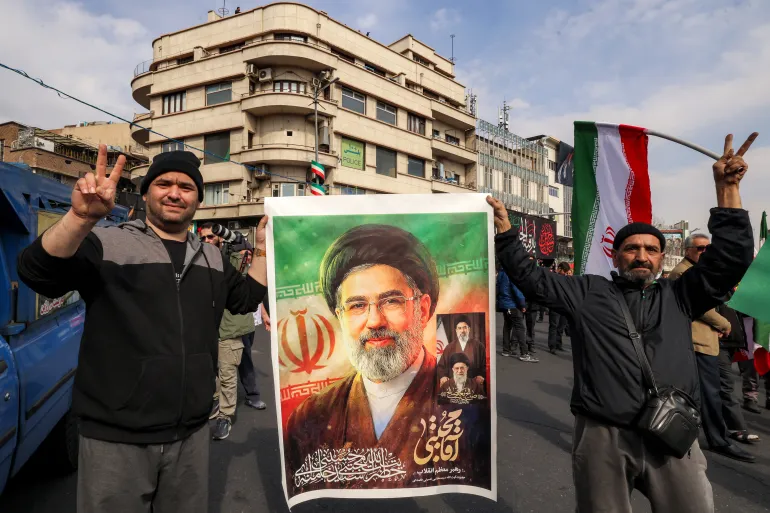
More than two decades after the Iraq War began in 2003, the Middle East is facing another major conflict. Currently, the United States and Israel are conducting joint military operations against Iran, which has now entered its second week. However, despite ongoing attacks, questions have arisen internationally about Washington’s true objectives.
Since the beginning of the war, U.S. forces have reportedly attacked nearly 2,000 targets inside Iran. Several top Iranian officials, including Ali Khamenei, who had been the country’s Supreme Leader for a long time, were killed. The targets included military facilities, oil refineries, infrastructure, and some civilian areas.
In response, Iran claimed to have launched hundreds of missile and thousands of drone attacks targeting U.S. assets in Israel and Gulf states.
Initially, the attacks focused on Iran’s top leadership. Analysts believe the aim was to destabilize the country’s power structure. However, shortly afterward, Iran appointed Mojtaba Khamenei, son of Ali Khamenei, as the new Supreme Leader, signaling political stability.
During the war, U.S. President Donald Trump called on Iran’s military and diplomats to surrender or change positions while simultaneously warning of stricter military operations, especially targeting the influential Islamic Revolutionary Guard Corps (IRGC).
Iranian officials, however, stated that they would not take any path of negotiation or surrender amidst the bombings. Analysts suggest that one of the U.S. and Israel’s primary objectives is to destroy Iran’s missile and naval capabilities. However, analysts also note that simply destroying military power does not ensure a political solution.
Iran’s Foreign Minister Abbas Araghchi stated that Iran is prepared for the possibility of a U.S. ground invasion, though analysts say that the experience of long wars in Afghanistan and Iraq, along with U.S. domestic political realities, makes a large-scale ground invasion unlikely.
From Israel’s perspective, Iran is a long-standing major rival. Many analysts believe Israel sees the recent conflict as an opportunity to reshape the regional balance of power. Ultimately, analysts suggest that the situation may move toward a political settlement, potentially imposing limitations on Iran’s military and nuclear activities while allowing the U.S. to claim that its objectives have been achieved. However, with both sides taking hardline positions, the duration and outcome of the war remain uncertain.

প্লিজ লগইন পোস্টে মন্তব্য করুন!
আপনিও পছন্দ করতে পারেন
- Apr 04, 2026
Iran executes two opposition group members; o...

- Apr 04, 2026
Fire at gas facility in UAE, 1 dead

- Apr 03, 2026
Israel’s Attacks in Lebanon Devastate Healthc...
- Apr 03, 2026