- Nov 04, 2026
Robotics Startup XDOF in Talks to Raise New Investment at $1.2 Billion Valuation
- Sep 05, 2026
- Technology
Staff Report: PNN
The robotics startup XDOF, which collects real-world data for robot training, has reached discussions to raise new investment at a valuation of approximately $1.2 billion, even though less than three months have passed since its public debut. According to several people familiar with the matter, venture capital firm 8VC could lead the potential Series B investment round.
However, there is still no confirmed information about the total amount of the new funding or whether the new investment is included in the $1.2 billion valuation. The terms currently under discussion have also not been finalised. As a result, the structure of the deal or the valuation could change at any time.
XDOF was founded in 2024 by University of California, Berkeley (UC Berkeley) researchers Philip Wu and Fred Shentu. Last June, the company raised $70 million in a Series A funding round. Thrive Capital, Andreessen Horowitz, Lux and Spark Capital participated in that financing round.
According to the company’s initial plans, XDOF was not expected to raise new funding so quickly. However, investors became increasingly interested as the company’s business grew rapidly. People familiar with the company claim that its annualised revenue is currently approaching $50 million.
XDOF is primarily building infrastructure that can be used to collect, manage and analyse real-world data for robot training. The company aims to provide this service in a way similar to an outsourced data-supply system for advanced artificial intelligence and robotics companies that may find it difficult to build such data-collection systems themselves.
When XDOF co-founder Philip Wu was pursuing his PhD at Berkeley, he was researching how robots learn from large datasets. However, the lack of sufficient real-world data became one of the biggest obstacles to his research.
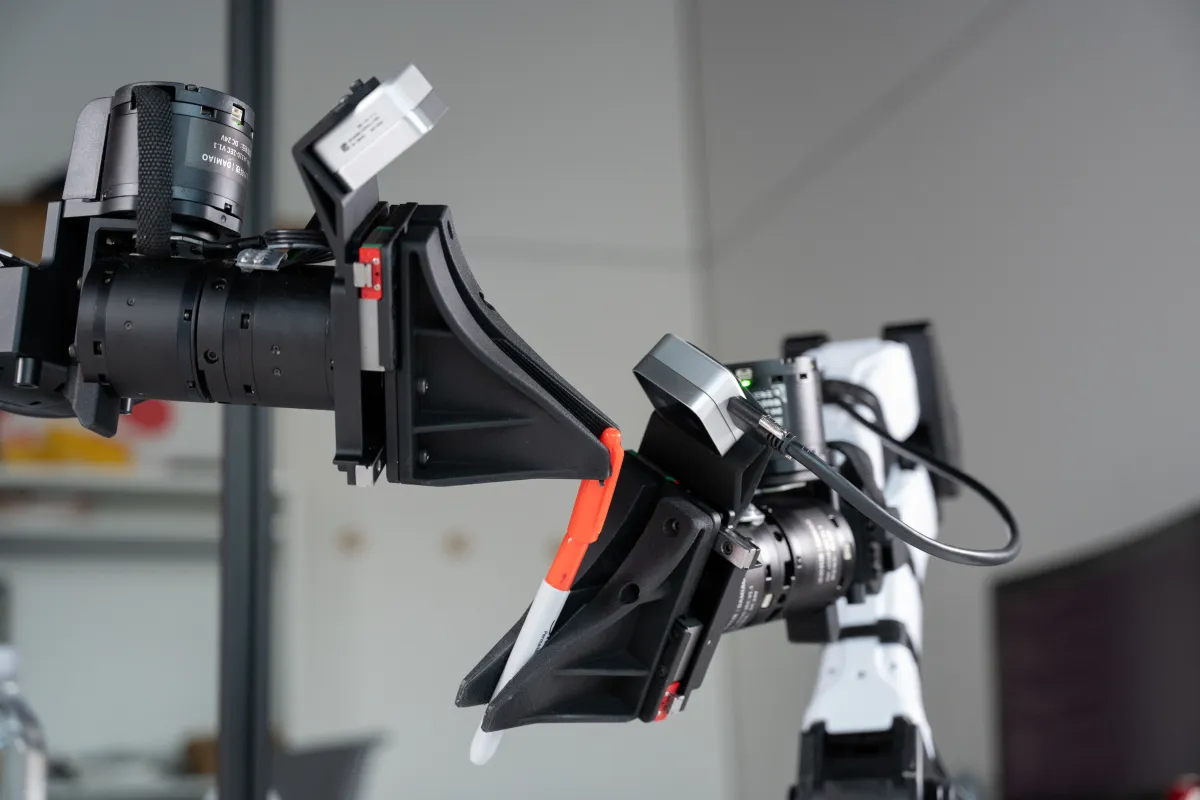
He subsequently began working with Fred Shentu on a low-cost teleoperation system called GELLO. Through this technology, a person can remotely control a robot arm, while data necessary for robot training can be collected from that process. Their research later had a significant impact on the robotics field.
XDOF was subsequently built on the foundation of that research. Some investors have compared the company to Scale AI or Mercor for physical robots. The reason is that, unlike language-based AI models, robots do not have access to massive ready-made datasets available across the internet for training. As a result, collecting information from real-world environments has become one of the major challenges in developing general-purpose robots.
XDOF said that, in partnership with the AI research laboratory at UC Berkeley, it is working to create a large robot-training dataset called ABC. The company claims that it could become one of the largest collections of high-quality robot-training data gathered so far.
The data collection process involves not only remotely operating robots but also recording the movements involved in people’s everyday activities. Data collectors use various sensors for this purpose. Ordinary tasks such as folding clothes and flattening cardboard boxes are also included in the data-collection process.
XDOF plans to recruit and train teams of data collectors in different countries around the world in the future. One group will remotely operate robots, while others will wear sensors on their bodies to collect data on people’s natural movements and activities.
XDOF claims that it is already working with around 20 customers. Several leading AI research laboratories are among those customers.
Several other companies are also operating alongside XDOF in the market for collecting real-world robot-training data. Mecka AI is one of the notable companies in this field. Meanwhile, Scale AI and Micro1, which are known for collecting and labelling human data, are also attempting to expand beyond large language models into the AI and robotics sectors.
To enable robots to work in a variety of environments in ways similar to humans, enormous amounts of real-world experiential data are required. As demand for such data continues to grow, the importance of data-focused startups such as XDOF is also increasing.
The potential new investment discussions therefore indicate not only the company’s rapid growth but also the growing demand for data across the robotics industry.

প্লিজ লগইন পোস্টে মন্তব্য করুন!
আপনিও পছন্দ করতে পারেন


- Nov 04, 2026
Retired Aircraft Jet Engines Repurposed to Ge...

- Oct 31, 2026
Password Embedded in App Code Put Applebee’s...

- Oct 31, 2026
Nvidia May Guarantee Loans for Anthropic Data...

- Oct 25, 2026