- Jun 18, 2026
Redistricting Alters Voting Balance, Concerns Over Political Representation of Muslims in Assam
- Apr 01, 2026
- International
International Desk: PNN
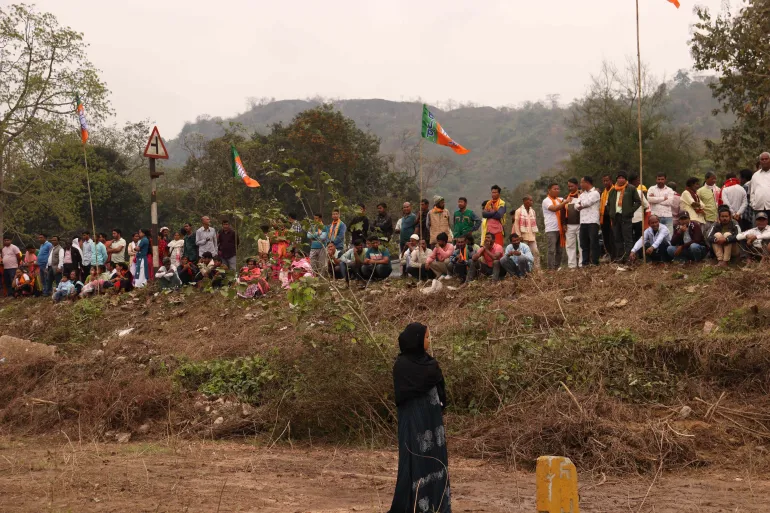
Ahead of the upcoming legislative assembly elections in Assam, the issue of redistricting (delimitation) has generated debate. Some local Muslim voters fear that the new boundaries reduce their political influence.
Islam Uddin, a retired teacher from Katigora, traditionally campaigns door-to-door to encourage voting. However, his enthusiasm has waned this election. He says, “We are unsure whether our votes hold the same importance as before.”
In 2023, the Election Commission of India redrew the boundaries of several constituencies in Assam, altering population balance in many areas. Previously, Hindus and Muslims were nearly equal in the Katigora constituency. With the addition of about 40,000 Hindu voters from neighboring areas, it has become a Hindu-majority seat. Local residents believe this reduces the chances of Muslim candidates being elected.
Experts note that this change is not limited to one constituency; similar adjustments were made in all 126 assembly seats. Previously, Muslims were the majority in about 35 constituencies, but now that number has dropped to approximately 20.
Some have described the process as ‘communal gerrymandering,’ where boundaries are drawn to reduce the political influence of a specific group. Opposition parties and analysts allege that Muslim-majority areas were split and merged with Hindu-majority constituencies, or multiple Muslim areas were combined, limiting representation.
The ruling Bharatiya Janata Party has denied these allegations, stating that the Election Commission independently determined the boundaries without communal intent.
In particular, in the Barak Valley region, several Muslim-majority seats have been reduced, diminishing political representation. Many constituencies now have Hindu candidates, whereas previously Muslim candidates were successful.
A local voter remarked, “Earlier, our area was represented by our people. Now it feels like our voice is fading.”
Assamese politics has long revolved around issues of immigration and ethnic identity. Analysts note that religious-based divisions have become more pronounced recently. A large portion of the Muslim population feels that their political position has weakened under the new electoral arrangement. One voter said, “We still have a path forward, but our opportunities to speak are reduced.”
Overall, the redistricting of Assam ahead of the elections has sparked renewed political tension.

প্লিজ লগইন পোস্টে মন্তব্য করুন!
আপনিও পছন্দ করতে পারেন
- Jun 18, 2026
All immigrants relocated from Florida’s ‘Alli...

- Jun 18, 2026
Trump faces criticism within his own party ov...
- Jun 17, 2026
Oil Prices Fall on Hopes of Iran–U.S. Agreeme...

- Jun 17, 2026