- Apr 04, 2026
Ramadan Begins in Gaza’s Bureij Refugee Camp: Hope and Challenges Amid a War-Torn Life
- Feb 18, 2026
- International
International Desk: PNN
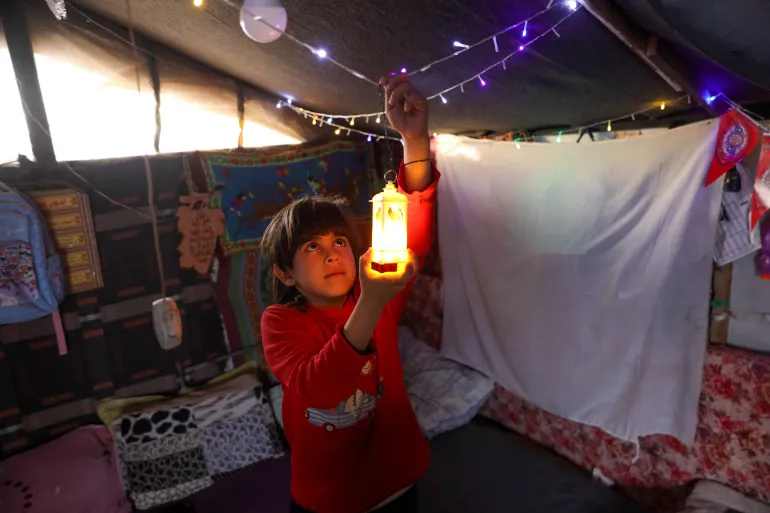
In the central Bureij refugee camp in Gaza, Maisun Al-Barbarawi is celebrating the arrival of Ramadan in his tent. Despite limited resources, he has created a festive environment for his two children using colorful lanterns, cloth walls decorated with children’s drawings, and simple decorations.
Maisun said, “My means are limited, but the most important thing is that the children feel joy.” He views this preparation as a way to escape the atmosphere of war and grief over the past two years. The 52-year-old father tries to live each day with gratitude amid hardship, caring for his two sons aged 15 and 9.
Due to the conflicts over the past few years, the people of Gaza cannot yet enjoy uninterrupted peace during Ramadan. Refugees seek small comforts amidst war-torn lives, food shortages, and limited resources. For families like Maisun’s, Ramadan means small gifts, prayers, and modest celebrations that preserve life’s beauty even in the midst of fear and scarcity.
In Bureij camp, Maisun and other locals participate in distributing bread, dates, and water before prayers. “Here, we share our joys and sorrows with neighbors and friends,” Maisun said.
Meanwhile, 55-year-old Hanan Al-Attar, a refugee from Beit Lahia, received a food assistance package on the first day of Ramadan. He said, “Today we got aid, which will help us prepare iftar. But our ability to buy bread, meat, and vegetables for cooking is limited.”
Although some commercial activities resume in Gaza’s markets during Ramadan, prices remain high, and many families still rely on humanitarian aid. While war, scarcity, and instability are not permanent, Ramadan and Eid bring visible hope, prayers, and the determination of refugees to support each other.
Both Maisun and Hanan view this Ramadan as a brief moment of peace and normalcy. Their prayer is simple: “May this Ramadan bring goodness and peace to everyone, and may we return to our homes and land.”

প্লিজ লগইন পোস্টে মন্তব্য করুন!
আপনিও পছন্দ করতে পারেন

- Apr 04, 2026
Iran executes two opposition group members; o...
- Apr 04, 2026
Fire at gas facility in UAE, 1 dead
- Apr 03, 2026
Israel’s Attacks in Lebanon Devastate Healthc...
- Apr 03, 2026