- Nov 04, 2026
Protests Erupt in India’s Ujjain Over Mosque Removal, Police Use Batons
- Sep 30, 2026
- International
International Desk | PNN
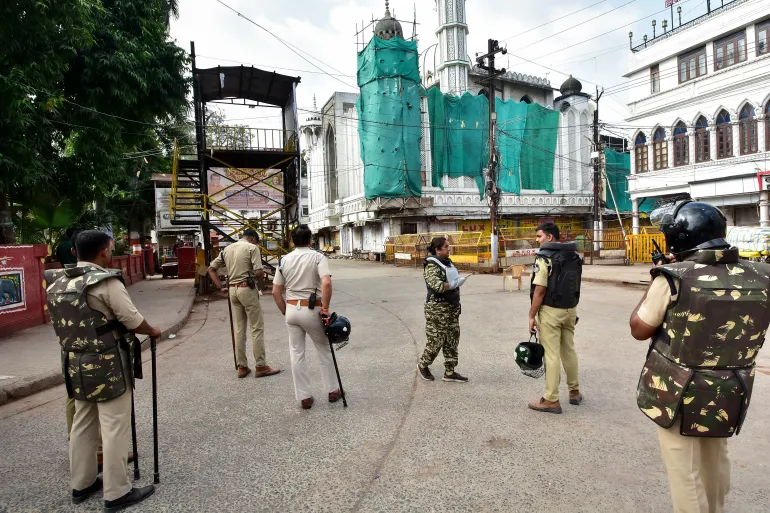
Tensions have escalated in Ujjain, Madhya Pradesh, India, over the partial removal of a historic mosque to facilitate road expansion. Local Muslims have been protesting for several days against the move to remove part of the mosque as part of preparations to widen roads ahead of the 2028 Simhastha Kumbh Mela. On Monday, police used tear gas and batons to disperse protesters, leaving at least 12 people injured and several others detained.
A large number of people began gathering around the Shahi Mosque in Ujjain’s Chhatri Chowk area on Sunday night. Local resident Zeeshan Khan said he had been unable to sleep properly for three consecutive nights because of fears that the mosque would be demolished.
According to him, around two months ago the Ujjain Municipal Corporation issued a notice to the mosque authorities. The notice stated that land belonging to the mosque would be acquired for road expansion. The authorities gave the mosque management until September 10 to remove the specified portion of the structure voluntarily. Otherwise, administrative action would be taken.
The mosque authorities subsequently held several rounds of discussions with the district administration. Local residents said an understanding was eventually reached to remove around three feet of the structure along the roadside, instead of the more than seven feet initially sought.
The situation became tense when bulldozers were brought near the mosque on Sunday night. The local administration claimed that rumors that the entire mosque would be demolished had spread through AI-generated social media posts created by some Muslim individuals. This led to a large gathering of people throughout the night.
However, Zeeshan Khan alleged that the administration surrounded the area and pressured local Muslims to demolish the mosque structure themselves. At one point, the mosque committee decided to remove part of the structure on its own. Several Muslim youths used hammers and iron rods to demolish part of the platform beside the mosque.
Khan said the act of demolishing part of the mosque with their own hands was extremely painful for local Muslims.
The situation became more tense on Monday morning, when police fired tear gas to disperse protesters. Local media reports said some protesters eventually threw stones at police. Police responded by using batons. At least a dozen people were injured and several others were detained.
Khan said that on Tuesday, the administration also removed part of the mosque’s minaret. However, he claimed that no demolition work had yet begun inside the main mosque building.
Authorities have now tightened security around the Shahi Mosque. The entire area has been cordoned off and additional police personnel have been deployed.
Local Muslims had filed a petition in the High Court against the decision to remove part of the mosque. However, the court dismissed the petition. In its observations, the court noted that a large number of people would attend the 2028 Simhastha Kumbh Mela and that additional space would be required to manage traffic.
According to the administration’s plan, roads are being widened ahead of the Hindu pilgrimage festival, which will be held along the banks of the Kshipra River in Ujjain.
Ujjain is located approximately 200 kilometers from Madhya Pradesh’s capital, Bhopal. The Bharatiya Janata Party (BJP) has been in power in the state for many years. The mosque removal has also brought renewed attention to ongoing debates over Muslim religious structures in several BJP-governed states.
Protests were also held in New Delhi on Tuesday against the demolition of mosques and other religious structures. Several Muslim members of Parliament and religious leaders participated in the program organized by the Indian Muslims Monitoring Committee.
Syed Saadatullah Hussaini, president of Jamaat-e-Islami Hind, said the issue was not limited to a single mosque or community. He said demolishing a place of worship without ensuring legal and constitutional protection raises questions about the rule of law.
Meanwhile, Asif Mujtaba, founder of a New Delhi-based charitable organization, said many Muslims in India were linking the recent incidents involving the removal of structures to the country’s political environment. He also said concerns were growing because of disputes surrounding mosques, pressure on madrasas and various controversies involving Muslim institutions.
Attempts to contact two BJP spokespersons in Madhya Pradesh for comment were unsuccessful.

প্লিজ লগইন পোস্টে মন্তব্য করুন!
আপনিও পছন্দ করতে পারেন

- Nov 04, 2026
Republicans Suffer Major Defeat as Democrats...
- Nov 04, 2026
Democrats Win Control of Both Chambers of US...

- Nov 04, 2026
Abdul El-Sayed Set to Become First Muslim US...
- Oct 31, 2026