- May 02, 2026
New Crisis for Venezuela’s Military Following Maduro’s Ouster
- Jan 10, 2026
- International
International Desk: PNN
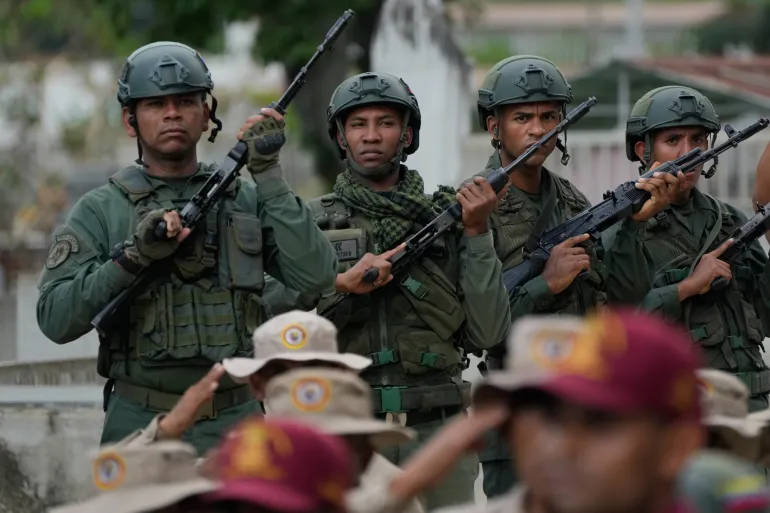
For nearly three decades, Venezuela’s military—National Bolivarian Armed Forces (FANB)—has been the most reliable support for the country’s ruling powers. From the late Hugo Chávez to Nicolás Maduro, the military actively supported authoritarian governance over Western-style liberal democracy. In return, the military gained unprecedented powers, including ministerial positions, provincial governorships, diplomatic roles, and control over state-owned institutions.
However, last Saturday, U.S. special forces removed and detained Maduro, shaking this strong position. The removal of Maduro from the highly secure military base Fuerte Tiuna exposed vulnerabilities in Venezuela’s defense system. Analysts suggest that the military now faces difficult choices: cooperating with the U.S. and interim President Delsi Rodríguez in political transition or risking further American pressure and loss of power.
Historically, FANB’s influence extended beyond the military into law enforcement. Following the controversial July 28, 2024, elections and allegations of voter fraud, the government turned Venezuela into a highly surveilled state, with the military enforcing crackdowns on opposition. A “civil-military-police unity” framework consolidated government control during this period.
Even after Maduro’s removal, the military’s role in Venezuela’s political future remains crucial. Analysts believe any government, whether democratic or authoritarian, cannot effectively govern without military support. Interim President Rodríguez also relies heavily on military backing, reassuring the U.S. in delegating the political transition.
Nevertheless, Maduro’s detainment revealed the military’s weaknesses. Compared to U.S. forces, FANB’s capabilities fall significantly short, exposing Venezuela to potential future attacks, though no new U.S. operation has yet been announced. Analysts note that to maintain political standing, the military may need to distance itself from drug trafficking, comply with new U.S. oil agreements, reduce domestic repression, and support interim President Rodríguez. This compromise could help the military present itself as a stabilizing force in the post-Maduro era.
প্লিজ লগইন পোস্টে মন্তব্য করুন!
আপনিও পছন্দ করতে পারেন
- May 02, 2026
China calls for reconsideration of UN peaceke...
- Apr 30, 2026
New discussion on EU joint defense clause ami...
- Apr 30, 2026
Israeli forces block aid convoy in internatio...
- Apr 30, 2026