- Nov 04, 2026
Homes to Be Submerged Without Compensation, Indian Women Protest by Lying on Funeral Pyres
- Aug 15, 2026
- International
International Desk | PNN
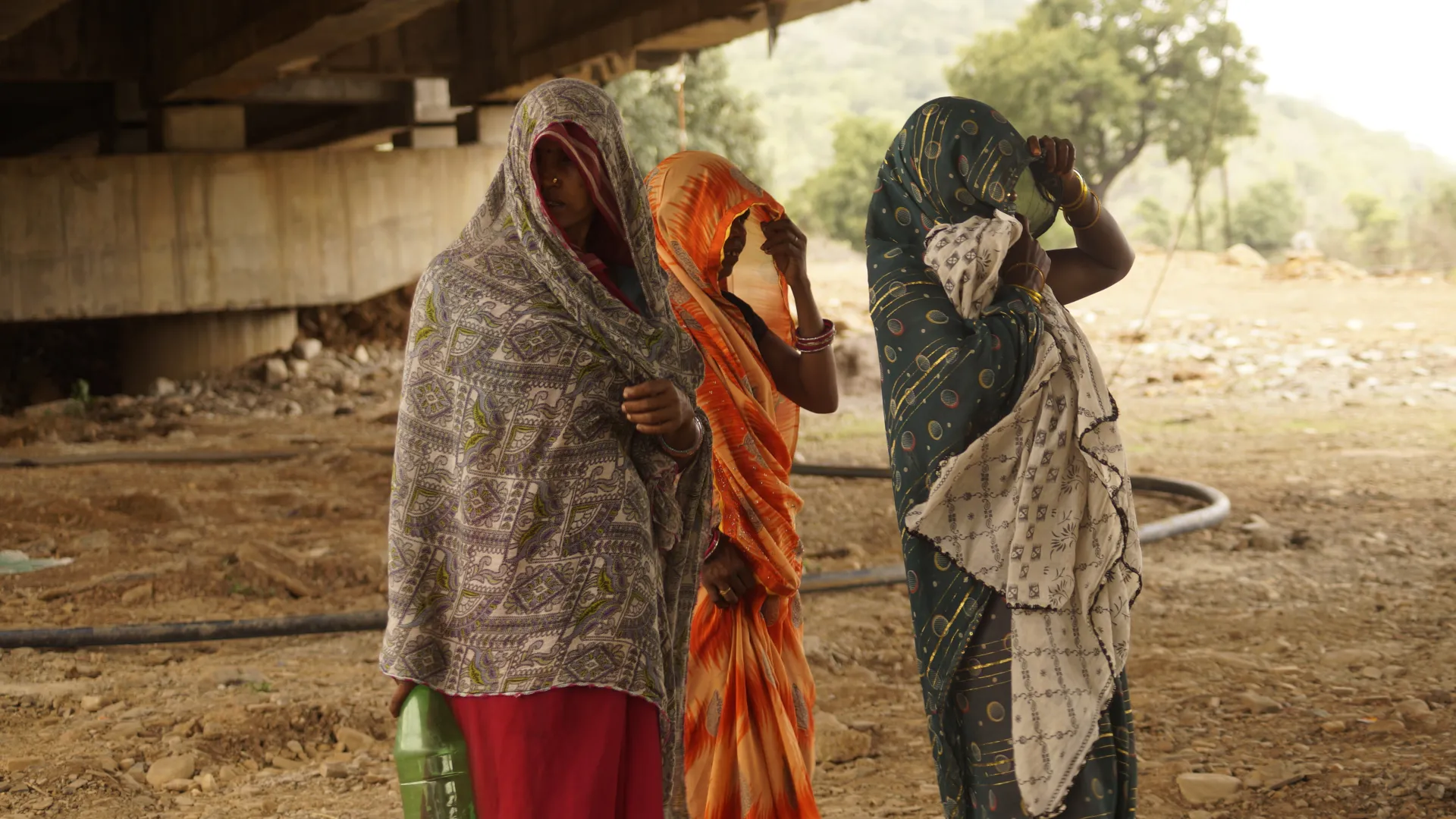
Thousands of people living around India’s Panna Tiger Reserve are facing displacement because of development projects in the area. But local women have taken the strongest position in demanding compensation and rehabilitation. As part of their protest, they have now staged a symbolic demonstration by lying on funeral pyres.
Recently, around 30 women gathered beneath a bridge over the Barna River near Kupi village in Madhya Pradesh. Several funeral pyres had been constructed using wood. They were not set on fire. The women said that if they were displaced without compensation and land guarantees, their future would effectively be no different from death. The protest, known as the “Chita Andolan,” was organized to convey that message.
Several settlements inside and around the Panna Tiger Reserve are at risk of being submerged because of the construction of the Daudhan Dam, part of India’s Ken-Betwa river-linking project. If the project is completed, around 10 settlements could go underwater and several thousand families would have to be relocated.
Among those at the protest was 50-year-old Gond tribal woman Gyan Rani Gond, who lay on one of the symbolic funeral pyres. Her family’s agricultural land and homes are also at risk of being affected by the project.
Gyan Rani’s family claims that while her husband and eldest son received rehabilitation compensation, the adult women in the family did not receive separate compensation. Gyan Rani, her 18-year-old daughter Muliya and her 21-year-old daughter-in-law Pooja, whose husband has died, have all allegedly been excluded from receiving compensation in their own names.
According to Gyan Rani, one of their houses has already been demolished. Their second house is also waiting to be demolished. But they have not been given any clear answer about where they will go after losing their home.
She says that if the government cannot provide compensation, it should at least arrange alternative accommodation for them. She alleges that despite being citizens and voters of the country, they are being deprived of their rights.
India’s 2013 Land Acquisition, Fair Compensation and Rehabilitation Act provides scope for adult men and women to be treated as separate families. This means adult women members may also be entitled to individual compensation.
However, local women allege that in practice, the traditional family structure is being given greater importance when compensation is determined. Many women are reportedly being excluded because their names are not included on land documents or government lists.
Development economist and environmental researcher Bina Agarwal says that although one part of the law defines a family in traditional terms, subsequent interpretations provide for each adult to be treated as a separate family. She believes compensation should be deposited separately into the bank accounts of all adult members of a family, while equal ownership rights for women should also be ensured over land provided for rehabilitation.
Pooja Gond is among those facing the greatest uncertainty on the list of affected people. She married only a year ago. Her husband, Parshuram, later died. Their only child subsequently also died.
After her husband’s death, Pooja tried to have her name included on the compensation list. But she claims officials told her that her name was not on the list. She also alleges that she was asked for 100,000 rupees to have her name added.
Unable to afford that amount, Pooja visited various government offices with the necessary documents. At one point, she even traveled to the district headquarters at her own expense. But she says she received no result.
One of Pooja’s houses has already been demolished. She is now living in the remaining mud house belonging to her in-laws. She fears that this house too could soon be demolished.
She says she wants more than just cash compensation. According to Pooja, if they were given land instead of money, they could rebuild their lives. She wants to remain close to their familiar environment rather than moving to a city far away from the forest.
Many families in Kupi and surrounding villages belong to the Gond tribal community. Their livelihoods depend on agriculture as well as collecting mahua, chironji and other forest products.
The women in Gyan Rani’s family also collect mahua from the forest every year. For them, the forest is not merely a source of income; it is also an important part of their food supply, traditions and social life.
Local residents therefore believe that simply providing cash compensation will not be enough to make up for the loss of their way of life. They are demanding agricultural land, residential plots and livelihood opportunities at their new locations.
Amit Bhatnagar, a leader of the farmers’ rights organization Jai Kisan Sangathan, has been campaigning for people affected by the Ken-Betwa project for years. He claims that several years can pass between the preparation of compensation lists and the actual displacement. During that period, the age, marital status, death or family structure of affected people may change, while old lists are often still used.
He claims that hundreds of women, particularly widows and adult daughters, have been left out of compensation lists. However, this figure has not been independently verified.
Bhatnagar also went on a hunger strike demanding compensation and rehabilitation. He was later detained in July along with several hundred protesters. Authorities cited various reasons for the action, including rising water levels during the monsoon.
The Madhya Pradesh government, however, has presented a different picture regarding compensation. State Revenue Minister Karan Singh Verma told the state assembly in July that eligible families in Panna and Chhatarpur districts had received compensation and rehabilitation benefits.
Following the protests, the Prime Minister’s Office has also sought a report from the state government on the issue. It has asked officials to examine whether compensation money in some cases may have been deposited into the accounts of intermediaries instead of the actual beneficiaries.
On August 6, India’s Union Minister of State for Tribal Affairs Durgadas Uikey told Parliament that his ministry had not received any specific complaint that compensation money distributed to beneficiaries had failed to reach them.
Meanwhile, construction of the Daudhan Dam is moving forward.
The Ken-Betwa project is the first project under India’s national river-linking plan. The country has plans for around 30 such river-linking projects. As a result, the compensation and rehabilitation process being followed under this project could have implications for future projects as well.
The government argues that the project will play an important role in providing irrigation, drinking water and electricity to the drought-prone Bundelkhand region. Environmental groups and some local residents, on the other hand, have long raised concerns about the project’s environmental impact and the rehabilitation of displaced people.
Further inside Panna, along the road from Kupi, lies the village of Pathapur. In some places, only half of a house wall remains standing; elsewhere, homes are still intact. Piles of tiles and bricks lie beside demolished houses. Standing in front of the rain-soaked ruins, local residents have one question: if they must leave their homes in the name of development, where is the guarantee that they will be able to build a new life?
For Pooja, there is still no answer to that question. She knows that her remaining house will eventually be demolished. But where she will go after that remains unknown.

প্লিজ লগইন পোস্টে মন্তব্য করুন!
আপনিও পছন্দ করতে পারেন


- Nov 04, 2026
Republicans Suffer Major Defeat as Democrats...

- Nov 04, 2026
Democrats Win Control of Both Chambers of US...

- Nov 04, 2026
Abdul El-Sayed Set to Become First Muslim US...

- Oct 31, 2026