- Nov 04, 2026
US Warns It Could Maintain Blockade of Iranian Ports Indefinitely
- Aug 15, 2026
- International
International Desk | PNN
With ceasefire talks with Iran at a standstill, the United States has warned that it could maintain its naval blockade of Iranian ports indefinitely. Washington has also signaled plans to impose unprecedented economic pressure on Tehran. However, questions have emerged within the United States itself over whether Washington has the capacity to sustain such a blockade for an extended period.
US Defense Secretary Pete Hegseth said Thursday that the US Navy could maintain its presence around Iranian ports indefinitely if necessary. He said the operation could continue by rotating ships in and out.
On the same day, US Treasury Secretary Scott Bessent also indicated that Washington was preparing new measures aimed at economically isolating Iran. According to him, some unprecedented economic measures could be announced next week.
US President Donald Trump has claimed that the United States has full control over the strategically important Strait of Hormuz. Iran, however, has rejected that claim, saying the strait remains under its control and that it will not fully reopen the waterway until its conditions are met.
Iran’s Persian Gulf Strait authorities have said statements by US officials have not changed the situation on the ground. According to reports, only a small number of vessels have been able to pass through the strait this week.
The Strait of Hormuz is one of the world’s most important energy transportation routes. A prolonged disruption there could therefore have a major impact not only on Iran but also on international oil and gas markets.
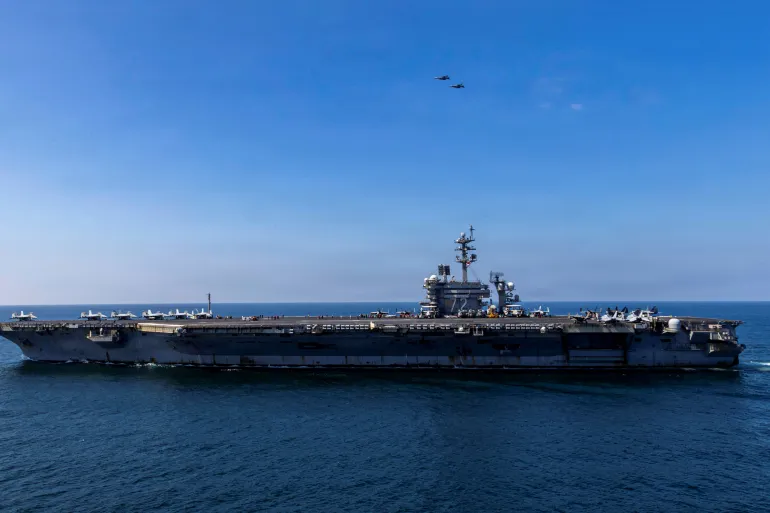
Meanwhile, concerns have also emerged over the prolonged deployment at sea of the USS Abraham Lincoln, the US aircraft carrier involved in the blockade operation against Iran. Reports published by several US media outlets have raised concerns about the mental strain and fatigue faced by the ship’s sailors, as well as shortages of supplies and questions surrounding safety.
A US senator wrote to the defense secretary, saying the aircraft carrier had been continuously deployed at sea for nearly seven months. The senator raised concerns about the mental health of the sailors and the operational capability of the vessel.
The US Department of Defense, however, has described those allegations as exaggerated and misleading. US Central Command has also said that no service member aboard the carrier has been killed. It said that a sailor who fell overboard on August 3 was quickly rescued and brought to safety.
Military experts say that advanced nuclear-powered aircraft carriers need to be brought into port periodically for routine maintenance. The longer such vessels remain continuously at sea, the greater the pressure can become on maintenance and the ability to maintain combat readiness.
The primary objective of the United States is to put Iran’s economy under pressure and force Tehran back to the negotiating table. One of the main goals of the blockade is to disrupt Iran’s oil exports, which are among the country’s most important sources of foreign revenue.
Various reports have claimed that US sanctions and the naval blockade have already reduced Iran’s oil revenues by several billion dollars. President Trump has also pointed to Iran’s economic difficulties and described the blockade as an effective tool for exerting pressure.
However, some analysts believe it will not be easy to force Tehran to surrender simply through economic pressure. There are concerns that Iran could retaliate by increasing pressure on US military installations or regional energy infrastructure.
According to analysts, the Strait of Hormuz is one of the most powerful strategic tools available to Iran. Since a significant share of global energy transportation passes through the strait, Tehran could use its control over the waterway to exert economic pressure not only on the United States but also on Gulf countries.
Iranian officials have already said they will not agree to fully reopen the Strait of Hormuz until the US naval blockade is lifted, sanctions are withdrawn and frozen assets are returned.
On the other hand, if the United States maintains a long-term blockade, pressure will also increase on the US Navy itself. Issues surrounding ship maintenance, sailors’ mental health and the cost of prolonged military operations could become increasingly significant.
As a result, the Iran-US conflict is no longer limited to a contest of military power. Energy, trade and economic pressure, as well as the long-term strategies of both sides, are becoming increasingly important around the Strait of Hormuz. If the ceasefire talks fail to reach a solution soon, the standoff could create even greater risks for regional and global economies.

প্লিজ লগইন পোস্টে মন্তব্য করুন!
আপনিও পছন্দ করতে পারেন


- Nov 04, 2026
Republicans Suffer Major Defeat as Democrats...
- Nov 04, 2026
Democrats Win Control of Both Chambers of US...

- Nov 04, 2026
Abdul El-Sayed Set to Become First Muslim US...
- Oct 31, 2026