- Jul 03, 2026
Global Military Rule and Martial Law: Impact on Citizens
- Dec 03, 2025
- International
International Desk, PNN
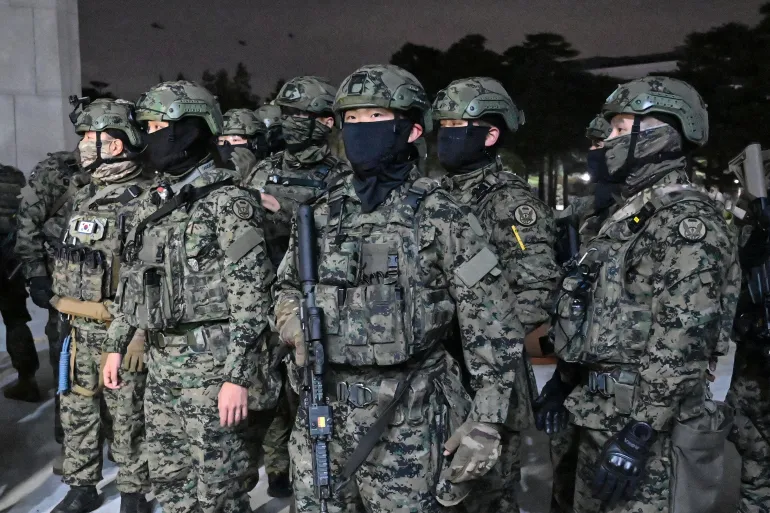
On December 3, 2024, South Korea faced a political crisis when then-President Yoon Suk-yeol declared martial law, citing national security threats and civil unrest. The military was deployed, opposition lawmakers were detained, and key government institutions came under military control. Although press freedom was restricted, journalists continued reporting in protest, and citizens demanded the decree be revoked.
Within six hours, protesters surrounded the National Assembly, and politicians voted to annul the decree, forcing the president to retract it. The Supreme Court later deemed it unconstitutional, and the president was impeached a few weeks later.
Martial law is an emergency administrative measure in which the military assumes partial or full control over civilian administration. Typically, constitutional rights are suspended, curfews imposed, movement restricted, military courts operate, media controlled, and assembly curtailed. Civilian institutions are sometimes temporarily replaced by the military.
Governments usually justify martial law citing war, conflict, rebellion, or national stability threats. Human rights organizations warn it is often used to suppress dissent, centralize power, or bypass democratic processes.
In Ukraine, national martial law has been in effect since February 24, 2022, due to full-scale Russian aggression. Although civilian administration remains, the military has broad powers under wartime law. Men aged 18–60 are restricted from leaving the country, political activity is limited, public assembly requires approval, and press publication is restricted.
In February 2021, Myanmar’s military ousted Aung San Suu Kyi’s elected government. Martial law was imposed in Yangon, Mandalay, and conflict areas, with military courts punishing civilians. Human rights groups report over 6,000 deaths and millions detained.
In Thailand, there is no nationwide martial law, but emergency laws are in effect in southern provinces and border districts like Pattani, Yala, and Narathiwat, where the military has substantial authority to suppress insurgency.
Other countries with military control include Guinea-Bissau, where the army seized the election commission before recent presidential elections, and Madagascar, where the military took control of the capital during protests in 2025.
Although the extent of martial law varies, its impact on ordinary citizens is severe: freedoms, political participation, and daily life are restricted, and basic rights and security are often at risk.
Source: Farah Najjar/Al Jazeera

প্লিজ লগইন পোস্টে মন্তব্য করুন!
আপনিও পছন্দ করতে পারেন
- Jul 01, 2026
Record Ocean Heat in June as Global Sea Tempe...
- Jul 01, 2026
Pakistan–Afghanistan Border Tensions Escalate...
- Jul 01, 2026
UN Seeks $100 Million to Support Palestinian...
- Jun 27, 2026