- May 02, 2026
From AI Targeting to Logistic Rewards: Economic Transformation of Technology on the Ukrainian Battlefield
- Nov 03, 2025
- International
International Desk | PNN
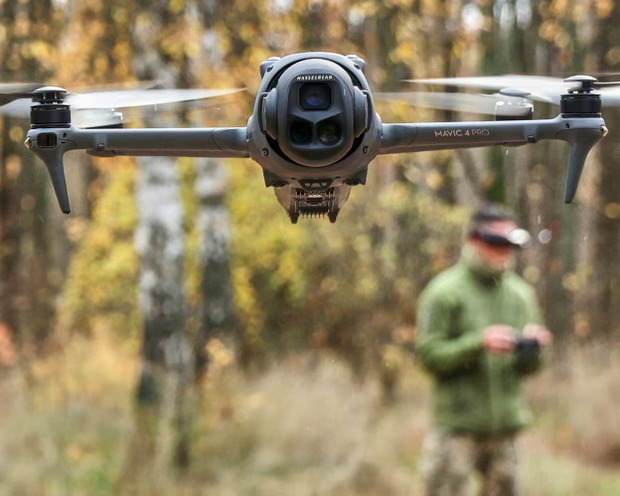
A peculiar and effective trend is emerging in Ukraine’s war system — measuring battlefield outcomes in points, which can then be used to manually purchase new equipment. Ukraine’s First Deputy Prime Minister Mykhailo Fedorov told The Guardian, “The initiative called the ‘Army of Drones Bonus System’ has quickly gained popularity among military units and has expanded beyond attacks to reconnaissance, capturing prisoners, and logistics.”
According to government records, drone teams earned points in September alone for killing or injuring around 18,000 Russian soldiers. The number of participating drone units rose from 95 in August to nearly 400 units. Points are not merely symbolic — they can be exchanged in an online marketplace called “Brave1,” where over 100 types of drones, autonomous vehicles, and other military equipment can be purchased.
The system is not limited to drone strikes. Artillery units now earn points for successful strikes; reconnaissance teams for identifying targets; and logistics teams for delivering supplies using autonomous vehicles. Even AI-assisted software helps drones select targets and control the final moments of strikes, improving accuracy, officials claim.
Fedorov himself noted that the system is showing signs of being “self-reinforcing” — more kills lead to more points, more points lead to more drones, and thus greater destructive capability. He added that the method has made the evaluation of human life technologically detached — decisions can be harsh, as the reality of war is unforgiving.
Brave1 also features a leaderboard, with some teams rising to the top with names like “Achilles” and “Phoenix.” Sometimes, drone operators are positioned very close to the front lines (about 250 meters), while other times they operate from safe distances using controllers. Operators sometimes compete with each other, but during major strikes, they reportedly work together cohesively.
However, experts caution that drone-dependent strategies should not be applied everywhere. Russian defense systems are becoming increasingly sophisticated, and some analysts argue that such “gamification” may not suit NATO-level forces. Recommendations include refocusing on conventional artillery and air operations.
Point values have also been adjusted in recent months — for example, points for neutralizing regular soldiers were doubled to 12. Eliminating a drone operator earns 25 points, and capturing an enemy soldier alive can earn up to 120 points — the higher value reflecting the operational need for prisoners in exchanges or negotiations.
Another significant advantage of this system is data. Videos of every successful strike must be uploaded, allowing analysis of strike locations, contact line issues, and effective drone types. As a result, units learn from each other, effective technologies spread rapidly, and small-scale innovations emerge from the ground up.
Questions about the ethics of war naturally arise; however, planners operate within the realities of the battlefield and strategy. No low-value target is destroyed purely for points — decisions follow recent tactical goals. Team commanders emphasize, “The primary objective is completing the mission; points are secondary.”
Overall, Ukraine’s point-based system has quickly changed the behavior and technological use in war — blending competitive gamification, economic incentives, and data-driven decision-making. Whether other nations and powers will adopt this model remains to be seen; for now, innovation in battlefield reality and technology integration continues.

প্লিজ লগইন পোস্টে মন্তব্য করুন!
আপনিও পছন্দ করতে পারেন
- May 02, 2026
China calls for reconsideration of UN peaceke...
- Apr 30, 2026
New discussion on EU joint defense clause ami...

- Apr 30, 2026
Israeli forces block aid convoy in internatio...
- Apr 30, 2026