- Nov 04, 2026
From a dating app romance to a mysterious death: The unanswered questions surrounding Trisha Sharma’s final months
- Aug 20, 2026
- Entertainment
Staff Report: PNN
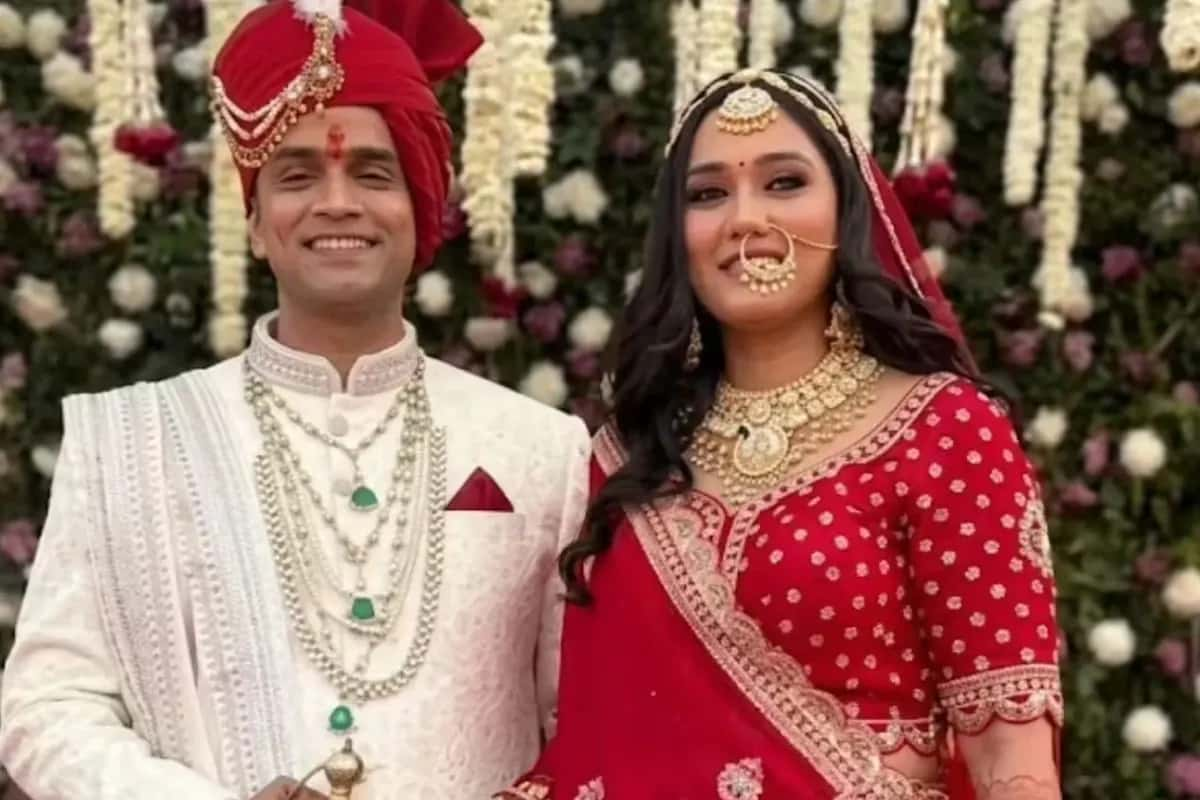
An introduction on a dating app led to romance, followed by a wedding with the consent of both families. A new home was built around big dreams. Yet, merely months after the marriage, the discovery of Trisha Sharma's hanging body at her in-laws' residence in Bhopal turned that story into a deep mystery. Whether it was suicide or an extreme step taken under prolonged abuse—investigators are still searching for answers surrounding Trisha's death.
Trisha was a model, actress, and corporate professional. After winning the "Miss Pune" title in 2012, she worked in acting alongside modeling. After completing her MBA, she was also engaged in corporate employment. In 2024, she met lawyer Samarth Singh through a dating app. Their connection grew into love, culminating in a wedding with the consent of both families in December 2025.
However, according to Trisha's family, the situation changed within months of the marriage.
The family alleges that Trisha was subjected to mental harassment after the wedding. Allegations of dowry demands were also raised. They further claim that during conversations with family members, Trisha had expressed deep dissatisfaction regarding her married life.
At one stage, she begged her mother to retrieve her from Bhopal. According to the family, plans were being made to bring her back, but the tragic event unfolded before that could happen.
On the other hand, Trisha's in-laws denied these allegations and brought her personal and psychological issues to the forefront. They made various claims regarding her mental health, including medical treatment and medication use.
Consequently, from the onset of the investigation, two completely conflicting narratives emerged from both sides.
On May 12, 2026, Trisha was found hanging at her in-laws' residence in Bhopal. Upon being rushed to the hospital, doctors declared her dead on arrival.
Questions surrounding her death surfaced immediately after the incident. Investigators initiated a probe to determine who she spoke to before her death, what messages she sent, who was present at home, and what precisely occurred during the incident.
The investigation revealed that Trisha had planned to leave Bhopal on the day of her death. The charge sheet notes that she requested money from her father to travel to Nasirabad, Rajasthan, and had even booked a train ticket.
Prior to this, initiatives had also been taken regarding marital counseling with her husband Samarth. The record of their meeting with a psychiatrist has also surfaced in the investigation documents.
Phone calls and messages from the hours leading up to Trisha's death are being treated as vital evidence in the investigation. Following the evening, she spoke with family members multiple times. At one point, she informed her mother that it was no longer possible to sustain the relationship and that she wanted to leave Bhopal.
It is alleged that while speaking over the phone with her sister-in-law Rashi Abrol after 9:00 PM, she broke down in tears. Shortly after, she sent a message expressing her desire to be at peace.
According to CCTV footage details, Trisha was seen heading alone toward the rooftop after 9:30 PM. Shortly afterward, she called her father, expressed fear over her husband's behavior, and urged her parents to arrive quickly.
Later, she spoke with her mother as well, after which further communication could not be established. Members of the family went up to the terrace after 10:00 PM and subsequently brought Trisha down to take her to the hospital. Doctors declared her dead at around 10:55 PM.
Unsatisfied with the initial autopsy findings, Trisha's family demanded a second post-mortem. The case was subsequently examined by a board of experts from AIIMS, Delhi.
According to investigation-related details, the forensic examination classified Trisha's death as suicide by hanging. The report also indicated that no significant marks of severe assault were detected on her body.
However, in the eyes of the investigators, the scope was not limited merely to establishing the cause of death. Whether Trisha was pushed into a psychological state that abetted her suicide became a crucial aspect of the probe.
As disputes and accusations intensified surrounding the case, questions were raised regarding the impartiality of the investigation. Subsequently, following the intervention of the Supreme Court of India, the investigation was transferred to the Central Bureau of Investigation (CBI).
Following this, forensic examinations of Trisha’s digital devices—including her phone and laptop—call records, messages, CCTV footage, and forensic data commenced. Communications made before and after her death were brought under scrutiny.
Charges have been framed against Trisha's husband, Samarth Singh, and her mother-in-law, Giribala Singh, in the investigation. The core of the CBI's charge is not murder, but driving Trisha to suicide through mental torture and cruel behavior.
However, the trial for the case has not yet concluded. Until charges are proven in court, the accused cannot be pronounced guilty.
Although several key details have emerged during the probe into Trisha’s death, complete answers to all questions surrounding the incident remain elusive. Forensic analysis of her iPhone and technical examination of the house's CCTV recorder are ongoing components of the investigation. Simultaneously, the allegations regarding dowry demands are being investigated separately.
While Trisha's family continues to point to marital abuse, her in-laws maintain focus on her mental and personal struggles. Meanwhile, investigators continue their search for the true sequence of events lying between these two narratives.
How a young woman, who just months before her wedding was moving forward with her career and future, met such a fate is the question that the probe into Trisha Sharma’s death continues to answer.

প্লিজ লগইন পোস্টে মন্তব্য করুন!
আপনিও পছন্দ করতে পারেন


- Nov 04, 2026
Spanish Crime Thriller ‘Collision Course’ Top...
- Nov 03, 2026
Tusshar Kapoor Threatened, Rs 5 Crore Extorti...

- Nov 03, 2026
‘Nobody Wants This’ Returns to Spotlight with...

- Oct 31, 2026