- Nov 04, 2026
Eight Technical Institutions in Bangladesh to Be Modernised with China’s Support; New University Planned
- Oct 17, 2026
- Campus
PNN News Desk | Dhaka
Bangladesh is expanding cooperation with China to improve the quality of technical and vocational education and develop a skilled workforce. To this end, a memorandum of understanding (MoU) has been signed between the two countries. Bangladesh has also expressed support for the proposed Framework of World Vocational and Technical Education Standards, known as the “Beijing Agreement,” which aims to establish global standards for technical and vocational education.
Under this cooperation, plans include modernising eight technical educational institutions in Bangladesh, introducing joint academic programmes, expanding scholarship opportunities and taking initiatives to establish a new technical and technology university. At the same time, emphasis is being placed on creating training and employment opportunities for Bangladeshi technical students at leading Chinese industrial enterprises.
The framework for global education cooperation was announced on Saturday (October 17) at the closing ceremony of the 2026 World Conference on the Development of Technical and Vocational Education in Tianjin, China. The previous night, a high-level bilateral meeting was held on the sidelines of the conference between a delegation from Bangladesh’s Ministry of Education and Ministry of Primary and Mass Education and senior representatives of China’s Ministry of Education. During the meeting, the two countries reached an understanding on nine important areas of educational cooperation.
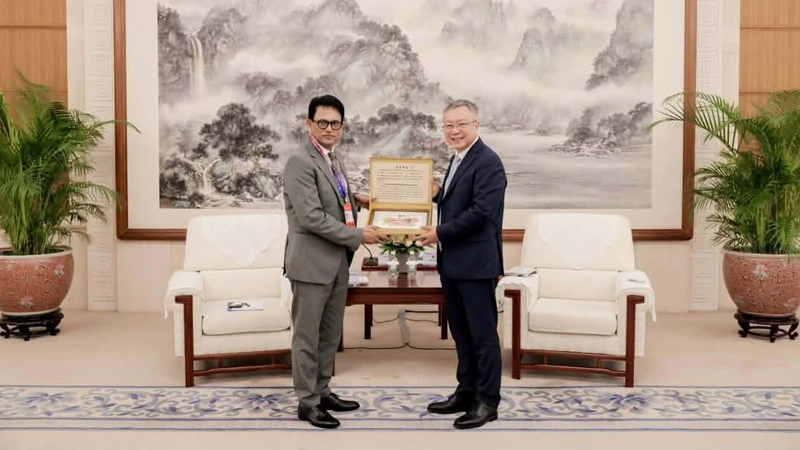
Bangladesh’s delegation was led by Education and Primary and Mass Education Minister Dr A N M Ehsanul Hoque Milon. At the joint signing ceremony, Bangladesh’s education minister and Chinese Vice Minister of Education Wang Guangyan signed the memorandum of understanding.
Under the agreement, Bangladesh plans to improve the infrastructure and educational standards of eight technical institutions by drawing on China’s experience in technical curricula, teaching methods and practical training. Alongside the introduction of modern training facilities, smart classrooms and advanced laboratories, discussions have also taken place on launching diploma-level technical education programmes that follow Chinese standards.
In addition, the two countries plan to introduce joint academic programmes under the “2+2” and “3+1” models. These programmes could expand opportunities for students to study in both countries, acquire practical skills and prepare themselves for the international job market.
The first initiative agreed upon by the two countries is the formation of a “Bangladesh-China Joint TVET Team” to work on technical education, curriculum development, teacher training and national skills certification. TVET stands for technical and vocational education and training.
The second initiative involves plans to establish a model technical and vocational college in Bangladesh with Chinese technical assistance, modern laboratories and the participation of industrial enterprises. Under the third initiative, Chinese experts will assess the quality of education, teaching methods and overall operations of existing technical colleges in Bangladesh and recommend measures for improvement.
The fourth area places emphasis on establishing direct partnerships between Chinese industrial enterprises and Bangladeshi technical educational institutions. The objective is to strengthen the connection between classroom learning and practical work experience in industrial settings.
The fifth initiative envisages introducing integrated training in “Chinese language and technical skills” across various sectors, including engineering, manufacturing, construction, healthcare and services. This could create opportunities for students and trainees to develop language proficiency alongside the occupational skills needed for specific professions.
The sixth area involves developing a comprehensive plan to create opportunities for vocational training, recognised certification, industrial internships and long-term employment for students. The seventh initiative includes regular teacher-exchange programmes and institutional capacity-building activities for Bangladeshi technical teachers and education administrators.
The eighth area focuses on expanding cooperation in higher education through joint research, faculty and student exchanges, and collaboration between universities in the two countries. Under the ninth initiative, a formal monitoring and evaluation system will be established to review programme progress, students’ employment outcomes and the overall results of bilateral cooperation.
If these initiatives are implemented, opportunities for modern technology-based and industry-oriented training in Bangladesh’s technical education sector could expand. In particular, establishing direct links between educational institutions and industrial enterprises could make it easier to prepare students with the skills required in the workplace.
At the same time, expanding opportunities to learn Chinese and creating prospects for training and employment at Chinese companies could help skilled Bangladeshi workers enter international labour markets.
However, to realise the benefits of these plans, it will be important to ensure the effective implementation of the initiatives under the agreement, adequate financing, quality training and practical employment arrangements. If China’s experience can be effectively integrated with Bangladesh’s technical education system and labour market requirements, the cooperation could contribute to developing a skilled workforce.

প্লিজ লগইন পোস্টে মন্তব্য করুন!
আপনিও পছন্দ করতে পারেন
- Nov 04, 2026
HSC Supplementary Examinations to Begin on De...
- Oct 31, 2026
Female Students Outperform Male Students in H...
- Oct 31, 2026
Questions Had to Be Reprinted Three Times on...
- Oct 25, 2026