- Nov 04, 2026
‘Debanking’ over pro-Palestinian positions: Complaints grow in UK
- Sep 12, 2026
- International
International Desk | PNN
A new controversy has emerged in the United Kingdom over allegations that the bank accounts of individuals and organizations supporting Palestine are being closed or that they are being denied access to loans. In recent times, several pro-Palestinian activists, writers, politicians and media organizations have come forward with accounts of being denied banking services.
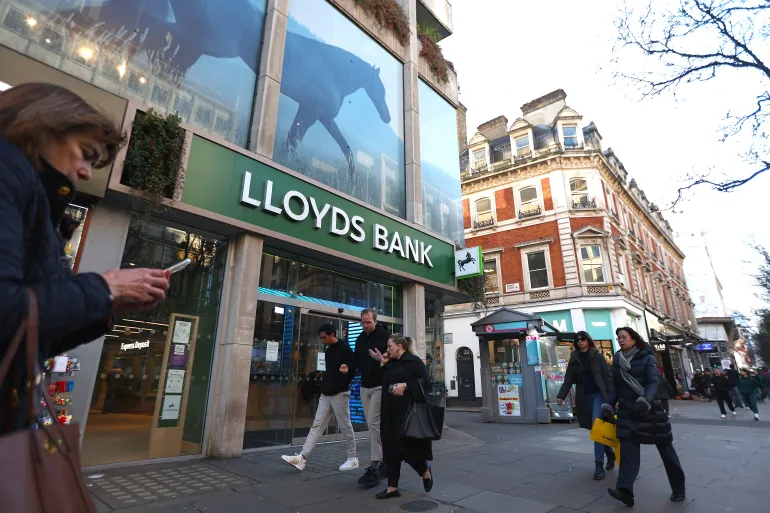
Emma Kamio, a small-business owner in South Wales, claims that Lloyds Bank rejected her application to refinance her commercial properties in April this year. She says the bank cited “adverse media,” or information published in negative media coverage, as the reason.
Kamio said the decision had placed her in serious difficulty. She had to reduce her responsibilities in the family business and her sister had to take on additional duties. However, she said that more important to her now than the business is securing the release of her daughter, who is in prison.
Kamio’s daughter, Leona “Ellie” Kamio, is imprisoned in connection with a case involving her alleged association with the organization Palestine Action. It has been claimed that Lloyds also closed her bank account in February 2025 while she was being held pending trial. The bank did not disclose a specific reason for closing the account at that time either.
Meanwhile, Scottish politician and broadcaster George Galloway alleged last week that Bank of Scotland had closed his personal bank account, which he had used for 39 years, without providing any explanation or prior notice. He said his parliamentary and pension payments were deposited into the account and that instalments for his family home loan were also paid from it.
In late June, left-wing media outlet The Canary also reported a similar action by Lloyds. The organization claimed that the bank had not explained why the account was closed despite repeated attempts to contact it.
Then on Wednesday, Pakistani-British writer Tariq Ali also alleged that a bank had refused to accept a transfer of money into his account because of his “views.” He did not identify the bank. He said that by “views” he was referring specifically to his position on the issue of Palestine.
The report notes that Ellie Kamio’s bank account was closed before the UK government banned Palestine Action as a “terrorist” organization. Similarly, the bank reportedly took the decision before she was convicted in a criminal-damage case relating to an attack on a factory operated by Israeli defence company Elbit in Filton, Bristol, in August 2024.
Four members of Palestine Action, including Kamio, have appealed their prison sentences. Their lawyers argue that the judge’s decision to link the criminal-damage incidents to terrorism was legally incorrect.
The report claims that since the organization was banned, more than 2,700 people have been arrested under counterterrorism laws for allegedly taking part in protests and demonstrations in support of it.
However, regarding these allegations, Lloyds Bank said it does not close customers’ accounts or make lending decisions based on political or personal beliefs. The bank said such decisions are made on the basis of applicable laws, regulations, account terms and lending requirements. The institution declined to comment on individual customers.
The debate over “debanking” in the United Kingdom is not new. Rights activists and various organizations allege that the loss of banking services because of political ideology or positions considered controversial is becoming increasingly common.
Anas Mustafa, an official at CAGE, an organization campaigning against the misuse of counterterrorism policies, said the tendency to exclude pro-Palestinian voices from banking services is no longer an isolated phenomenon but has become a systemic problem. He claimed that CAGE itself lost access to banking services more than a decade ago without an explanation.
The debanking issue also received widespread attention in 2023. At the time, Muslim individuals and organizations in the UK, as well as Reform Party leader Nigel Farage, also alleged that their bank accounts had been closed.
Anas Al-Tikriti, head of the London-based Cordoba Foundation, claimed that the withdrawal of banking services was in many cases being used as a “tool of repression.” According to him, although a large number of bank accounts are closed every year, there is little transparency regarding the actual reasons behind such decisions.
Al-Tikriti also claimed that his own name had once been identified as “terrorist” in a banking database. According to him, the designation was added on the basis of an allegation from the United Arab Emirates, but UK authorities did not independently verify it.
In his view, the use of the word “terrorism” is now extending into political or controversial opinions in many cases. Once such a designation becomes associated with a person’s name, its impact can be long-lasting and can affect various aspects of life, including access to banking services.
Al-Tikriti said that once a person is classified in such a way, the information can remain on record for a long time. As a result, its effects may extend far beyond the closure of a single bank account and potentially affect a person’s entire financial and social life.
Amid political tensions in the UK over the Palestine issue and the government’s ban on Palestine Action, these renewed allegations of “debanking” have once again raised questions about the relationship between freedom of expression, access to banking services and political positions in the country.

প্লিজ লগইন পোস্টে মন্তব্য করুন!
আপনিও পছন্দ করতে পারেন
- Nov 04, 2026
Republicans Suffer Major Defeat as Democrats...
- Nov 04, 2026
Democrats Win Control of Both Chambers of US...
- Nov 04, 2026
Abdul El-Sayed Set to Become First Muslim US...
- Oct 31, 2026