- Jun 20, 2026
Australia to Recognise Palestinian State, Says PM Albanese
- Aug 11, 2025
- International
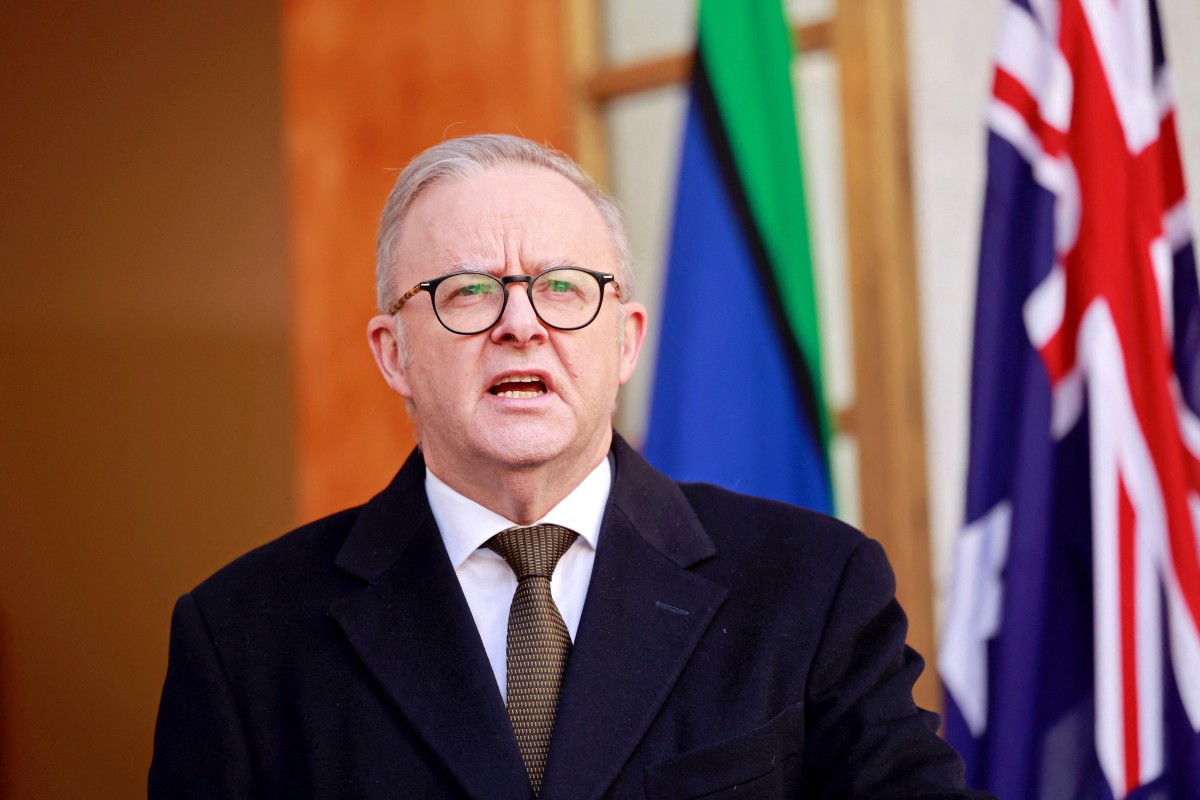
Australian Prime Minister Anthony Albanese has announced that his government will formally recognize the State of Palestine at the upcoming United Nations General Assembly (UNGA) session in September. Speaking at a press conference in Canberra on Monday, he said, “A two-state solution is humanity’s best hope to break the cycle of violence in the Middle East and to bring an end to the conflict, suffering and starvation in Gaza.”
Australia’s decision comes at a time when Canada, France, and the United Kingdom are also preparing to recognize Palestine at next month’s UNGA meeting in New York. The vast majority of UN member states have already recognized Palestine.
Strong Reaction from Israel
Israel has strongly criticised the announcement. Israeli Ambassador to Australia Amir Maimon said that unilateral recognition of a Palestinian state will do nothing to end the war in Gaza. Israeli President Isaac Herzog also described the move as a “reward” for Hamas’s attack on October 7, 2023.
Protest Background
The announcement came about a week after millions of Australians marched across the Sydney Harbour Bridge protesting Israel’s war in Gaza. The day after the protest, Australian Foreign Minister Penny Wong warned, “There is a risk there will be no Palestine left to recognise.” She further added that the question was “when,” not “if.”
Domestic Political Response
Australia’s main opposition, the Liberal Party, criticised the move, saying it goes against the position of the United States and undermines bipartisan consensus. Liberal Party leader Sussan Ley stated, “Hamas still controls Gaza and hostages remain in captivity — recognising Palestine in these circumstances will achieve one of Hamas’s strategic objectives.”
Meanwhile, the country’s fourth-largest political party, the Greens, welcomed the recognition but said it fell short of public demands for concrete action. Greens Senator David Shoebridge said, “Millions of Australians have taken to the streets, calling for sanctions and an end to the arms trade with Israel. But the Albanese Government has still ignored this call.”
Palestinian Side’s Reaction and Conditions
The Australian Palestine Advocacy Network (APAN) criticised the announcement as a “political fig leaf” and accused Australia of being complicit in Israeli war crimes. They stated, “Palestinian rights are not a gift to be granted by Western states; they are an inherent birthright.”
Prime Minister Albanese said recognition of the Palestinian state will be based on certain commitments made by the Palestinian Authority (PA). These include recognising Israel’s right to exist in peace and security, committing to demilitarisation, and holding general elections.
The PA has administered parts of the West Bank since the mid-1990s but has not held parliamentary elections since 2006. Since a brief conflict in 2007, Gaza has been under Hamas control.
Albanese said, “These commitments offer an opportunity to deliver self-determination for the Palestinian people in a way that isolates Hamas, disarms it, and removes it from the region once and for all.”

প্লিজ লগইন পোস্টে মন্তব্য করুন!
আপনিও পছন্দ করতে পারেন
- Jun 20, 2026
Somaliland president makes historic official...
- Jun 20, 2026
Australia confirms first H5N1 bird flu case o...
- Jun 20, 2026
Lebanon crisis casts shadow over U.S.–Iran pe...
- Jun 18, 2026