- Nov 04, 2026
Around 300 people spend nights on Rome streets amid 40°C heatwave, 140 families wait to return home
- Aug 08, 2026
- International
International Desk. PNN
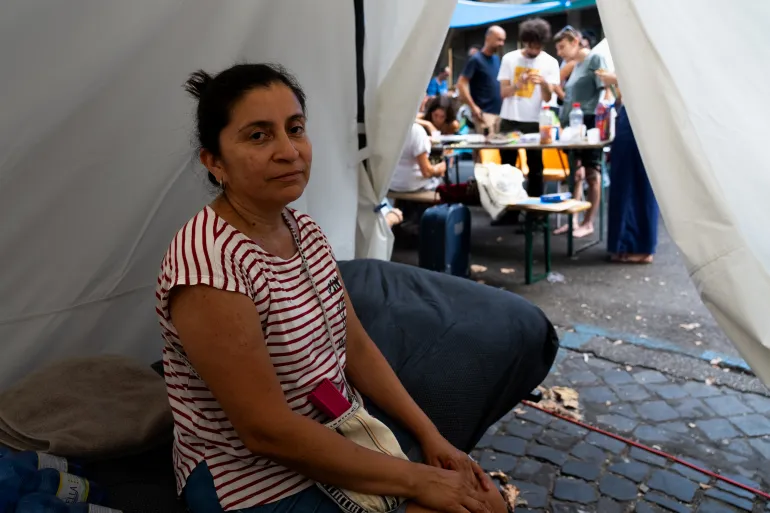
Around 300 people, including nearly 100 children, are spending their nights on the pavement amid an intense heatwave in Rome, the capital of Italy. They have been staying outside a building near the city’s Termini railway station since July 29.
With daytime temperatures exceeding 40 degrees Celsius, the suffering of those living in the open has intensified. Anna Vizhdoaka, 68, a former resident of the building, said that after spending several nights without sleep, they have now given up hope of even finding mattresses to sleep on the pavement. In her words, “Our hearts have been torn to pieces.”
The building outside which they are staying is known as “Spin Time.” The seven-storey building was occupied in 2013 and gradually developed into a large residential and social community. Around 140 families from more than 20 countries lived there. To the residents, the building was not merely a place to live; it had become like a family.
On July 29, a fire briefly broke out in an empty room on the ground floor of the building. The residents brought the fire under control within a few minutes. Firefighters later arrived at the scene. Although the fire did not cause major damage, police evacuated the building, and it was subsequently seized under a court order.
The building was later declared unfit for habitation. At present, residents are being allowed to enter the building one at a time under police escort to collect essential documents and personal belongings before leaving again.
Since then, the pavement in front of the building has become their temporary shelter.
Local volunteers arrive every day with food, water, mattresses and clothing. Thousands of people have stood by them over the past few days. Alongside politicians, musicians and actors have also visited the site to express solidarity. Arrangements have also been made for children to watch films outdoors in the evenings.
The first night after the building was evacuated was even more horrifying. Many residents did not even have shoes on their feet. In the early hours of the morning, they were informed that they would no longer be allowed to return to the building.
Maria Cabrera, who had lived there for nearly 11 years, said, “Some of us stood on our feet for almost 40 hours. It was horrifying to see children sleeping on cardboard lying on the street.”
On August 6, the situation became even more alarming. A two-year-old child fell unconscious in the arms of a Red Cross nurse after becoming ill due to the extreme heat.
A Kurdish resident said he cried for nearly two hours after witnessing the incident. His brother also lived in the building. He is visually impaired and uses a wheelchair. Previously, neighbours regularly checked on him. After the building was evacuated, he has been forced to sit outside in the intense heat.
Maria Cabrera said she sought shelter at Spin Time after losing her job and becoming unable to pay rent. Initially, living together with people from different countries was not easy. Over time, however, they became dependent on one another.
Spin Time was not merely a residential building. It offered free co-working space and hosted a newspaper run by young people, concerts, theatre performances and various cultural events. Cabrera said it was at the building that she attended a classical music performance for the first time in her life, something she could not afford to attend elsewhere.
The building came into international attention in 2019. After its electricity was disconnected over a huge unpaid bill, Cardinal Konrad Krajewski, who was responsible for the Pope’s charitable activities, personally went down into a manhole to help restore the electricity connection.
In an effort to find a way to return the residents to the building, Rome Mayor Roberto Gualtieri proposed purchasing the property. On August 3, a meeting was held involving the mayor, the police chief, the housing official and Cardinal Baldassare Reina, Vicar General of the Diocese of Rome.
The city’s proposal was to allow the residents to return to the building under an interim arrangement until the purchase process was completed.
However, after a second meeting on Thursday, the mayor said the property owner had rejected the proposal.
Investire SGR, which is responsible for managing the building, said in a statement that after 13 years of occupation, the building no longer meets current safety standards. Therefore, it is not legally possible to transfer possession of the building to the city authorities. However, the company said it remains interested in continuing discussions over the sale of the building.
Mayor Gualtieri said the city would have the capacity to arrange alternative accommodation for the building’s residents starting next Monday.
However, the long-term residents are unwilling to accept the proposal. They insist that they want to return to Spin Time. They have announced that they will continue their sit-in protest against the decision to evacuate the building.
The building has also become the centre of a growing political dispute. There have long been plans to construct a luxury hotel there. Meanwhile, the ruling right-wing Brothers of Italy party has opposed the purchase of the building with public funds. Its argument is that when thousands of people are waiting for public housing, public money should not be spent to reward an illegal occupation.
The Vatican is also monitoring the situation. Pope Leo XIV recently met with several residents of Spin Time. Cardinal Reina said the Pope is being regularly updated on the latest developments.
If the residents are permanently evicted, Spin Time could become the site of Italy’s largest residential eviction from an occupied building.
At this point, the residents have one demand: they want to return to their homes.
Cabrera said, “I am waiting for a miracle. I do not believe that being poor is a crime.”
In her words, from the outside the building may look like an ordinary structure. But to them, it is the place where they spent years of their lives, built relationships and created memories.
“We built four walls. For us, that was home. And we want to return to that home,” she said.

Please Login to comment in the post!
you may also like


- Nov 04, 2026
Republicans Suffer Major Defeat as Democrats...

- Nov 04, 2026
Democrats Win Control of Both Chambers of US...

- Nov 04, 2026
Abdul El-Sayed Set to Become First Muslim US...

- Oct 31, 2026