- Nov 04, 2026
After Decades of Conflict, Bangsamoro Votes in First Parliamentary Election
- Sep 14, 2026
- International
International Desk | PNN
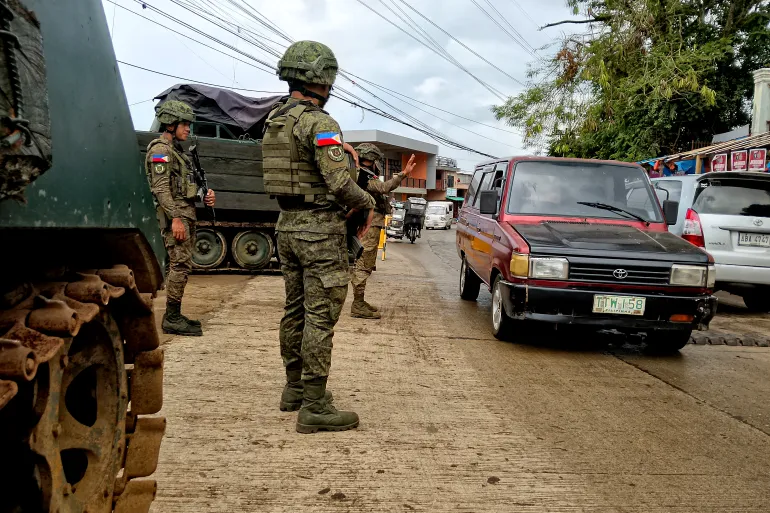
After several decades of rebellion, conflict and violence, the Muslim-majority Bangsamoro region in the southern Philippines is taking an important step toward self-government. For the first time since the establishment of the Bangsamoro Autonomous Region in Muslim Mindanao (BARMM) in 2019, parliamentary elections are being held there.
Voting began in the BARMM on Monday, September 14. More than 2.3 million voters have the opportunity to elect their representatives. After elections were postponed for a long period, the election commission has set a target of achieving an 80 percent voter turnout.
The election will form an 80-member regional parliament. Of these, 40 seats are reserved for political party representatives, 32 for representatives from different districts and eight for representatives from various sectors.
The chief minister, who will head the executive branch of the region, will be elected during the first session of the newly elected parliament. Therefore, this election is not merely about forming a legislature; it will also play a major role in determining Bangsamoro’s future leadership and structure of self-government.
However, concerns emerged after violence occurred just a day before the historic election. Election Commission Chairman George Garcia said the commission took control of Cotabato City after three people were killed and 15 others injured in a shooting there on Sunday night.
There were reports of further violence in separate incidents in the city. In one incident, a person carrying an improvised explosive device was injured. In another incident, gunfire was reported, although no one was injured, according to election officials.
Meanwhile, allegations of irregularities also emerged in Maluso town in Basilan province. The election commission took control of the area after pre-marked ballots were found in 36 of the 68 polling stations. The commission ordered new ballots to be printed for the affected polling centres. As a result, voting at those centres may be delayed somewhat.
Election Commission Chairman Garcia announced that action would be taken against anyone attempting to create violence, buy votes or obstruct the electoral process.
People in Bangsamoro view the election as the result of several generations of struggle. After decades of conflict, land loss, discrimination and political instability, voters consider the opportunity to choose their own leaders a major achievement.
Al Jazeera reporter Barnaby Lo, reporting from Marawi, said many voters were saying that the election should have taken place much earlier. They hope that the elected leaders will play an effective role in establishing lasting peace.
However, there are also security concerns surrounding the election. The region has historically experienced widespread election-related violence. The easy availability of firearms at the local level and longstanding disputes between various groups have made the situation more complicated.
Although the election commission and law enforcement agencies imposed a weapons ban and strengthened security for several weeks, violence still occurred before voting began.
Voting is scheduled to end at 7pm local time.
The Bangsamoro parliamentary election is paving the way for an elected regional government, ending the transitional governance system that has existed since 2019. Until now, the region had been administered by the Bangsamoro Transition Authority (BTA).
The initiative to establish Bangsamoro autonomy was launched under a 2014 peace agreement. As part of the process, former rebels of the Moro Islamic Liberation Front (MILF) agreed to surrender their weapons and undergo a disarmament process, while also abandoning their demand for the establishment of an independent Muslim state.
The peace process aimed in part to create a framework for greater autonomy for the Muslim-majority southern region in the predominantly Catholic Philippines.
Around 150,000 people have died in the conflict that began in the 1970s. Once known as a stronghold of various extremist armed groups, Bangsamoro has seen a significant reduction in violence in recent years.
The biggest question now is whether this election can give the peace process a more lasting political foundation. Voters hope the elected parliament and new regional government will play an effective role in development, political participation and lasting peace.

প্লিজ লগইন পোস্টে মন্তব্য করুন!
আপনিও পছন্দ করতে পারেন
- Nov 04, 2026
Republicans Suffer Major Defeat as Democrats...
- Nov 04, 2026
Democrats Win Control of Both Chambers of US...
- Nov 04, 2026
Abdul El-Sayed Set to Become First Muslim US...
- Oct 31, 2026