Although new employment opportunities for Bangladeshi workers are emerging in various countries, the state-owned Bangladesh Overseas Employment and Services Limited (BOESL) has not yet been able to fully utilize the potential.
While BOESL’s operations officially cover 36 countries, most workers sent through the organization have gone mainly to only three destinations — Jordan, South Korea, and Brunei.
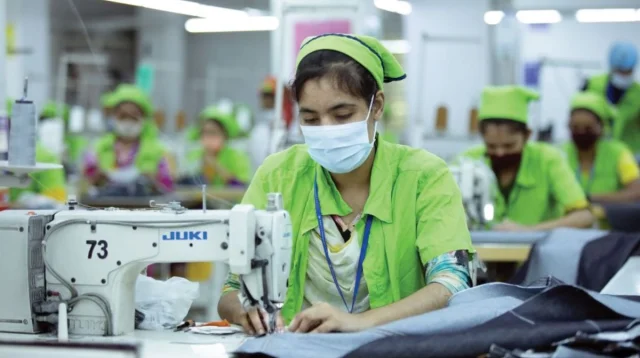
Experts say shortages of skilled manpower, language barriers, gaps between worker skills and employer demands, and limited recruitment networks are preventing Bangladesh from expanding into promising international labour markets.
BOESL data shows that since its establishment until March this year, the highest number of workers were sent to Jordan, South Korea, and Brunei. Meanwhile, several listed countries have received very few Bangladeshi workers, and in some cases, none at all during certain years.
Migration experts say simply adding new countries to the list does not guarantee labour market expansion. Sustainable growth requires workers trained according to the specific needs of each destination.
In recent years, BOESL has entered new labour markets including Romania, Croatia, Bulgaria, Maldives, Fiji, and Russia. However, worker deployment to these destinations remains comparatively low.
The global labour market is increasingly demanding skilled professionals such as welders, electricians, machine operators, caregivers, nurses, hospitality workers, and IT specialists.
European countries, in particular, are facing labour shortages due to ageing populations, creating opportunities for foreign workers. However, experts say international-standard skills, language ability, and certification are essential to benefit from these opportunities.
Officials say Bangladesh’s biggest challenge is producing sufficient numbers of internationally skilled workers.
BOESL Executive Director (Joint Secretary) Md. Shawkat Ali said Bangladesh has no shortage of manpower, but skill gaps and lack of practical experience prevent workers from competing effectively in global markets.
He said BOESL is working not only to develop skilled workers but also to explore new employment destinations beyond traditional Middle Eastern markets.
The government is also focusing on expanding overseas employment opportunities through skill development, technical training, and language education.
Experts believe that creating suitable workers for international markets is now a bigger challenge than simply finding new destinations.
If Bangladesh can improve technical training, provide internationally recognized certification, and develop demand-based skill programs, BOESL could send more workers to a wider range of countries.
This would increase overseas employment opportunities and strengthen Bangladesh’s remittance earnings through sustainable skilled migration.