- Nov 07, 2026
Private Sector Credit Growth Hits Lowest Level in Three Decades as Investment Stagnates, Putting Economy Under Pressure
- Nov 07, 2026
- Business
PNN News Desk | Dhaka
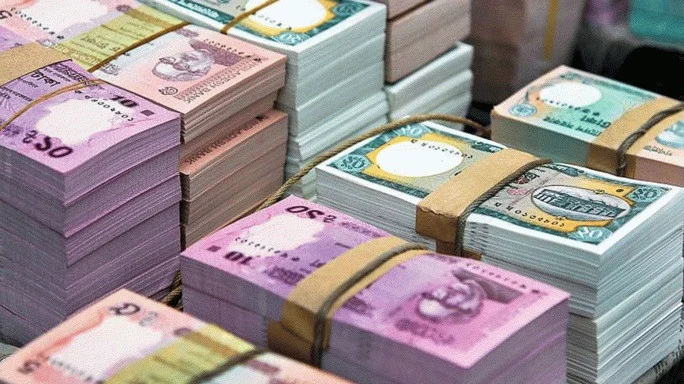
Investment momentum in Bangladesh's private sector is slowing down increasingly. Entrepreneurs are showing less interest than before in establishing new industrial enterprises or expanding production and business operations at existing factories. High interest rates, energy shortages, rising production costs and uncertainty over the business environment are discouraging them from making new investment decisions. The impact has become directly visible in demand for bank loans.
The latest statistics from Bangladesh Bank show that private sector credit growth fell to just 4.17 percent in September. This is the lowest growth rate recorded in more than three decades.
According to central bank data, private sector credit growth has remained below 5 percent for seven consecutive months since March this year. The growth rate stood at 4.72 percent in March. It increased slightly to 4.75 percent in April and 4.98 percent in May before declining to 4.47 percent in June. After reaching 4.62 percent and 4.75 percent in July and August respectively, it dropped again to 4.17 percent in September.
Although deposits in the banking sector have increased, the pace of lending to the private sector has remained significantly slower. According to a report by the General Economics Division (GED) of the Planning Commission, total bank deposits increased to Tk 21.31 trillion in August. This represented a 12 percent increase compared with the same period of the previous year. However, private sector credit growth during that month stood at only 4.75 percent.
In other words, although the amount of money deposited in banks is increasing, a substantial portion of those funds is not being channelled into new investments. Declining demand for loans, alongside banks' cautious approach to lending, is being viewed as one of the reasons behind the situation.
In an effort to increase the flow of credit, Bangladesh Bank reduced the policy interest rate by 50 basis points to 9.50 percent on July 30. However, the decision failed to stimulate demand for private sector loans. Inflation in the country stood at 8.34 percent in September. Against this backdrop, the decline in credit growth to 4.17 percent has heightened concerns about the pace of investment and production expansion in the economy.
Business leaders believe that simply reducing lending interest rates will not be enough to improve the investment situation. They say uninterrupted gas and electricity supplies to industrial facilities, improvements in law and order, and stability in the tax and VAT systems are essential. Without visible progress in these areas, entrepreneurs will remain reluctant to take the risk of investing money in new projects.
People involved in the relevant sectors say that rising business operating costs and uncertainty over future conditions have further complicated the situation. High bank loan interest rates, increasing energy prices, complexities related to taxes and VAT, and concerns over law and order have added to entrepreneurs' worries.
According to information provided by business representatives, more than 400 factories have shut down since January this year. They also believe that there is little reason to expect a significant improvement in the electricity situation before 2030. As a result, many entrepreneurs are postponing their new investment plans.
Banks' cautious approach has also contributed to the decline in private sector lending. As the volume of defaulted loans has increased, banks are placing greater emphasis on risk assessment when approving new loans.
According to Bangladesh Bank data, the volume of non-performing loans (NPLs) in the banking sector reached Tk 6.06555 trillion at the end of June. As much as 32.78 percent of the total disbursed loans had turned into defaulted loans. The enormous volume of non-performing loans has put pressure on banks' ability and willingness to provide new financing.
The downward trend in private sector credit growth has become more pronounced since the political changeover in August 2024. During this period, several major industrial establishments shut down their factories. Production at many operational factories has also declined by 30 to 40 percent. As production has fallen, the need for new loans to purchase raw materials, machinery or expand business operations has also decreased for many companies.
Abu Ahmed, chairman of the Investment Corporation of Bangladesh (ICB) and a retired professor of the Department of Economics at the University of Dhaka, believes that stagnation in private investment did not emerge suddenly. According to him, the problems have been affecting the economy for several years.
Speaking to the daily Ittefaq, he said a new government had taken office following the political transition. Meanwhile, many businesspeople had already become loan defaulters. He said the government would have to ensure a genuinely business-friendly environment if it wanted to increase investment.
Referring to the government's efforts to attract investment, Abu Ahmed said initiatives were being taken to draw foreign investors through visits to different countries, and such efforts could increase further in the future. However, he emphasized that the government would also need to consider interest rates.
According to him, high interest rates and pressure from the VAT and tax systems are preventing businesspeople from obtaining the benefits they need to operate and expand their businesses.
Economists and business leaders believe that reducing loan interest rates alone will not be sufficient to revive private investment. Coordinated initiatives are needed to ensure energy supplies, improve law and order, establish predictable tax policies and restore confidence in the banking sector.
Otherwise, even if bank deposits continue to increase, it will be difficult to translate those funds into new industrialization, employment generation and production expansion.

Please Login to comment in the post!
you may also like

- Nov 04, 2026
First Meeting of Wage Board for Garment Worke...

- Nov 04, 2026
LPG Prices in Bangladesh Higher Than in Neigh...
- Oct 31, 2026
Gold Prices Reduced by Tk 1,633 per Bhori in...
- Oct 31, 2026