- Nov 04, 2026
Vegetable Prices Also on Fire, Some Products Rise by 268% in Nine Years
- Aug 15, 2026
- Business
PNN News Desk, Dhaka
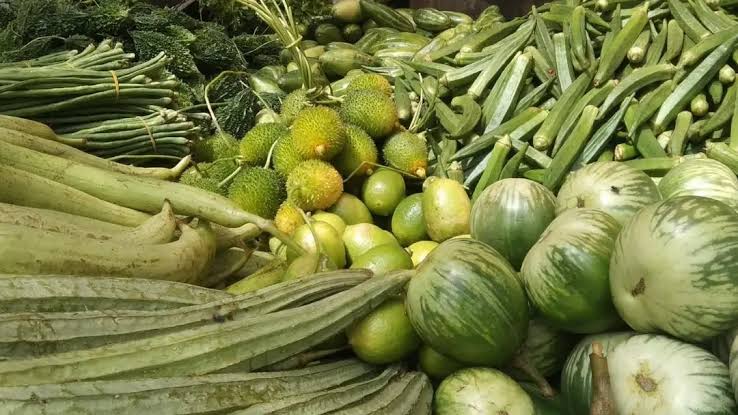
Nearly a decade ago, a person could buy a substantial amount of vegetables with Tk 1,000. Today, even half of that quantity cannot be purchased with the same amount of money. Compared with 2017, prices of most vegetables in the capital’s markets have increased two to three times, and in some cases even more. As a result, following fish and meat, vegetables have now become a major burden on the monthly shopping budgets of low- and lower-middle-income families.
A comparison between the 2017 national average retail prices published by the Department of Agricultural Marketing and Friday’s current market prices shows that eggplant has recorded the highest increase. Nine years ago, the average price of eggplant was Tk 40.71 per kilogram. Currently, round eggplants are being sold at around Tk 150 per kilogram in markets in the capital, while long eggplants are selling for around Tk 120 per kilogram. Based on these figures, the price of round eggplant has increased by approximately 268 percent.
Cucumber ranks second in terms of price increase. In 2017, the average price of cucumber was Tk 29.78 per kilogram. It is currently selling for Tk 80 to Tk 100 per kilogram. At the highest current price, the increase in cucumber prices is approximately 236 percent.
The price of ridge gourd has also increased from Tk 29.15 to Tk 80 per kilogram, while yardlong beans have risen from Tk 39.03 to Tk 80–100. Bitter gourd has increased from Tk 39.72 to Tk 80–100 per kilogram. During the same period, pointed gourd has risen from Tk 33.48 to Tk 80, taro stems from Tk 35.56 to Tk 80, and spiny gourd from Tk 45.67 to Tk 80–90 per kilogram.
A similar situation can be seen in the tomato market. In 2017, the average price of tomatoes was Tk 59.85 per kilogram. Currently, tomatoes are being sold at Tk 120 to Tk 140 per kilogram in different markets across the capital.
However, vegetable prices have not increased at the same rate across the board. The price of local potatoes has risen from Tk 21.35 to around Tk 30 per kilogram over the past nine years, representing an increase of approximately 41 percent. The price of papaya has also risen from Tk 23.09 to Tk 40 per kilogram.
To illustrate the impact of rising prices, a calculation involving seven common vegetables has also been presented. In 2017, a family would have spent approximately Tk 1,050 to purchase four kilograms each of potatoes, eggplant, bitter gourd, cucumber, tomatoes, pointed gourd and okra every month. Today, purchasing the same quantity of these vegetables costs approximately Tk 2,540.
That means the cost of this seven-vegetable basket has increased by around Tk 1,490 over nine years. The increase is approximately 142 percent.
According to the Bangladesh Bureau of Statistics, the average monthly food expenditure of a household was Tk 14,003 in 2022. Based on that figure, purchasing just these seven common vegetables currently consumes a significant portion of a household’s monthly food expenditure.
The impact of rising vegetable prices is being felt most severely by low- and lower-middle-income families. With the prices of fish, meat and eggs already beyond the reach of many households, many families had been relying on vegetables as a comparatively affordable food option. But with prices rising in the vegetable market as well, they are struggling to manage their household food budgets.
Those concerned say the long-term rise in vegetable prices has been influenced by increasing production costs, workers’ wages, transportation expenses and marketing costs. In addition, excessive rainfall, waterlogging and supply disruptions during the current season have created additional pressure on the markets for several vegetables.
Aminul Islam, who was shopping at the Turag New Market in the capital, said the prices of vegetables have increased so much that a large portion of his shopping budget now goes toward buying vegetables. He said that whereas he could previously buy several types of vegetables at once, budget constraints now make it possible to buy only one or two types in larger quantities.
Khandaker Golam Moazzem, research director at the Centre for Policy Dialogue (CPD), said that alongside rising production and transportation costs, weaknesses in the supply system ultimately affect prices at the consumer level. In some cases, he said, the role of intermediaries may also contribute to further price increases.
According to him, the incomes of low-income people are not increasing at the same rate as the prices of essential commodities, and in many cases the prices are rising faster. As a result, these families are being forced to cut back on both the variety and quantity of food they consume. This could lead to people consuming less food than they need and may also have a negative impact on their nutritional situation.
Khandaker Golam Moazzem said that stronger monitoring of the marketing and supply systems for agricultural products, along with ensuring a competitive market, could help reduce some of the pressure of vegetable prices at the consumer level.

Please Login to comment in the post!
you may also like


- Nov 04, 2026
LPG Prices in Bangladesh Higher Than in Neigh...

- Oct 31, 2026
Gold Prices Reduced by Tk 1,633 per Bhori in...

- Oct 31, 2026
Higher Salaries Under New Pay Structure to Be...
- Oct 25, 2026