- Nov 04, 2026
Summit Calls for Reinstatement of SLNG-2 Deal, Projects $1.1 Billion in Savings
- Sep 08, 2026
- Business
Staff Report: PNN
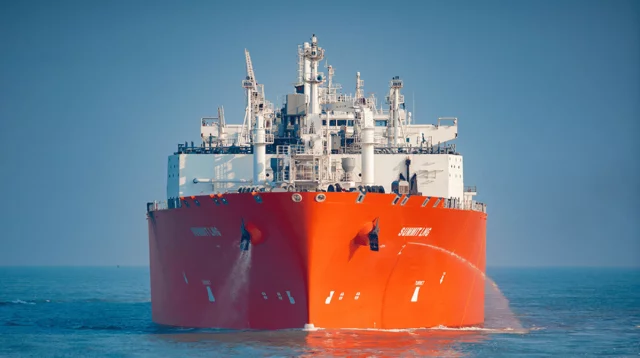
Summit has called on the authorities to reconsider the decision to cancel the Build, Own, Operate and Transfer (BOOT) agreement for the Summit LNG Terminal-2 (SLNG-2) project. The company claims that if the previous agreement is reinstated and the project is implemented, Bangladesh could save approximately $1.1 billion in the long term. At the same time, the country’s energy security would also be strengthened.
Summit made the appeal in a letter sent to Petrobangla on Monday (September 7). A senior Petrobangla official confirmed the matter to The Financial Express.
According to Summit’s calculations, if SLNG-2 is implemented under the BOOT structure, ownership of the Floating Storage and Regasification Unit (FSRU), mooring system and subsea pipeline would be transferred to Petrobangla after 15 years of the project without any additional expenditure.
On the other hand, under the Build-Own-Operate (BOO) structure currently being considered, Petrobangla would not receive ownership of these infrastructure facilities. Summit claims that this could result in a long-term financial loss of approximately $883 million for Bangladesh.
Summit also noted in its letter that there is a significant difference between the two structures in terms of FSRU rental costs. According to the company, the proposed third FSRU under the BOO model could have a daily charter or rental cost of $342,000. In contrast, the rental rate stipulated for the SLNG-2 project was $300,000 per day.
According to Summit’s calculations, savings of approximately $230 million could be achieved over 15 years solely in FSRU rental costs.
Summit also said preparations for implementing the project have progressed considerably. The company claims that approximately $20 million has already been invested in the project. In addition to completing the necessary surveys, it has also procured some important equipment for the project.
In this situation, the company has urged Petrobangla to quickly reinstate the FSRU-related agreement and allow the SLNG-2 project to move forward. According to Summit, implementation of the project would not only provide economic benefits but also diversify the country’s LNG supply system.
In the letter, Summit also highlighted its LNG supply agreement with Summit Oil and Shipping Company Limited as one of the key advantages of the project. Summit claims it has arrangements to supply 1.5 million tonnes of LNG annually from various countries, including the United States, Australia, Mozambique and Canada.
According to the company, the opportunity to source LNG from multiple countries would reduce dependence on a supply system reliant solely on the Middle East. This would also help reduce the risk of potential disruptions caused by supply shortages in the international market or geopolitical developments.
According to information from relevant sources, during the interim government’s tenure, Petrobangla cancelled the Terminal Use Agreement (TUA) and Implementation Agreement (IA) signed with SLNG-2 in October 2024.
Under the plan, a subsidiary of Summit Group was supposed to construct an FSRU with an annual capacity of 4.5 million tonnes through SLNG-2. The BOOT-model project was planned to be completed by 2026 and operated for the following 15 years.
Under the agreement, the terminal’s storage capacity was set at 170,000 cubic metres. With the capacity to supply approximately 600 million cubic feet of gas per day, it was expected to become Bangladesh’s third FSRU.
Bangladesh currently has an FSRU owned by Summit. Located in Maheshkhali, the terminal operated by Summit LNG Terminal Company Limited has an annual capacity of 3.75 million tonnes. It began commercial operations on April 30, 2019. Under the existing agreement, the terminal is scheduled to remain operational until 2033.
In addition, Bangladesh has another FSRU owned by US-based Excelerate Energy Bangladesh Limited. Its commercial operations began on August 19, 2018, under a 15-year agreement. Initially, it had an LNG regasification capacity of 3.75 million tonnes per year.
Later, after renovation work was completed in January 2024, the capacity of Excelerate Energy’s FSRU was increased to 4.5 million tonnes annually.
Following Summit’s latest call for reinstatement of the SLNG-2 project agreement, stakeholders are now watching for decisions from Petrobangla and the government regarding the project’s future.

Please Login to comment in the post!
you may also like

- Nov 04, 2026
LPG Prices in Bangladesh Higher Than in Neigh...

- Oct 31, 2026
Gold Prices Reduced by Tk 1,633 per Bhori in...

- Oct 31, 2026
Higher Salaries Under New Pay Structure to Be...
- Oct 25, 2026