- Nov 04, 2026
Strict law in Iran to prevent foreign 'infiltration', surveillance on education, media, and culture
- Aug 20, 2026
- International
International Desk. PNN
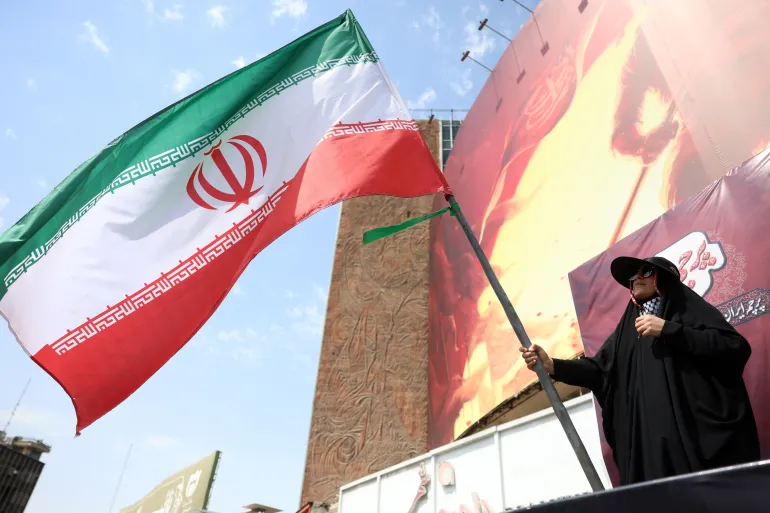
Iran's hardliner-controlled parliament has approved the core principles of a strict new law under the banner of preventing foreign "infiltration." If enacted, the proposed law could significantly expand state control over communications with foreign countries and entities, academic collaboration, media, research, non-governmental organizations (NGOs), and cultural activities.
The general principles of the bill were approved during an online parliamentary session on Sunday. On Wednesday, an updated draft containing 33 articles was also released. However, it is not yet final law; in addition to final approval in parliament, it requires ratification by the Guardian Council, the country's constitutional oversight body. The entire process could take anywhere from several weeks to a few months.
Iranian hardline MP Ruhollah Nejabat claimed that the bill was initially approved earlier this year to counter the "influence" of foreign powers. However, the issue has re-emerged in the spotlight against the backdrop of the expiration of a memorandum of understanding with the United States and rising military tensions surrounding Iran.
The proposed law seeks to bring publishing, statistical exchanges, scholarships, scientific collaboration, research, media, economic transactions, legal consultations, and artistic-cultural activities involving foreign entities under the umbrella of "foreign involvement."
The plan outlines categorizing foreign nations into three tiers to execute varying levels of surveillance over interactions with them. The United States and Israel are expected to be placed on the most stringent surveillance list.
To facilitate this, a proposal has been made to launch a specialized online portal under the Ministry of Interior. Activities involving foreign connections—even the exchange of reports, data, or statistics—may have to be registered on this platform.
Organizing workshops, training sessions, or courses funded by foreign sources could subject individuals to imprisonment. The proposal also mandates that NGOs, political parties, and various organizations obtain registration or prior authorization when receiving foreign funding, contracts, training, or other benefits.
The proposed law directs the Ministries of Education, Science, and Health to incorporate awareness regarding "enemy infiltration" and media literacy into textbooks and curricula. Consultation with the Ministry of Intelligence and the Supreme Council of the Cultural Revolution is mandated in this regard.
New restrictions may also be imposed on collaboration with foreign universities, research institutions, or researchers. This has sparked deep concern among Iranian academics. Even government representatives have noted that the law's implementation risks hindering international cooperation and scientific research.
One of the most controversial provisions of the bill relates to the media. It mandates registration and prior permission for any communication or collaboration with foreign media outlets.
Severe penalties are stipulated for participating in interviews or discussions without authorization with any foreign media considered "opposition" or "hostile" by the Iranian government. Depending on the nature of the offense, punishments could range from several months to several years of imprisonment.
Furthermore, if it is proven that information, analysis, or policy advice was intentionally provided under foreign direction that damages national security or public trust in the state, sentences of up to 30 years in prison have been proposed.
Cultural endeavors—including films, music, and books produced under foreign funding or direction—are also proposed to be brought under the purview of this law. Penalties such as fines, professional bans, and the suspension of projects are outlined for works that question religious tenets, project a negative image of Iran, or promote "anti-Islamic culture."
However, certain foreign activities conducted by the military, the Ministry of Intelligence, and political officials are proposed to be exempted from the registration requirement.
The Iranian government has taken a stand against the proposed law. President Masoud Pezeshkian's legal advisor, Majid Ansari, told state media that the government "explicitly opposes" this law.
According to him, the law could impose severe restrictions on scientific endeavors and obstruct Iranian academics from connecting with international peers. Simultaneously, it could damage Iran's image in international media and intensify the country's long-standing "brain drain."
Ansari believes the proposed provisions could also conflict with the constitution, civil rights, and individual liberties.
Divergent views on the proposed law have also emerged within the Iranian media. Nournews, affiliated with the Supreme National Security Council, stated that rather than preventing infiltration, the law could further constrict the freedoms of the media, political parties, and ordinary citizens.
Conversely, the hardline newspaper Kayhan defended the bill, arguing that those without secret ties to foreign entities have no reason to fear the law. State broadcaster IRIB's Jam-e Jam also praised the proposal as a "revolutionary decision."
The reformist newspaper Shargh, however, criticized it, labeling it an "anti-communication law."
Legal expert and university professor Cambyz Norouzi stated that the proposed law is inconsistent with fundamental citizen rights. In his view, many articles of the bill could undergo modifications before final parliamentary approval. Nonetheless, the fact that lawmakers have rallied behind such sweeping restrictions remains a cause for concern.
An Iranian university researcher also expressed apprehension, noting that many provisions might prove difficult to enforce in practice. Even so, such a law establishes a precedent for creating even stricter regulations in the future, fueling growing anxiety, particularly among students and academic circles.
The topic is also generating extensive discussion across Iranian social media platforms, with many expressing outrage alongside satire and sarcasm in response to the proposed legislation.
Overall, the primary concern now being widely debated is that this proposed law—under the guise of countering foreign "infiltration"—will not only tighten Iran's security apparatus but also impose severe new pressures on civil liberties, education, research, and press freedom.

প্লিজ লগইন পোস্টে মন্তব্য করুন!
আপনিও পছন্দ করতে পারেন

- Nov 04, 2026
Republicans Suffer Major Defeat as Democrats...
- Nov 04, 2026
Democrats Win Control of Both Chambers of US...
- Nov 04, 2026
Abdul El-Sayed Set to Become First Muslim US...
- Oct 31, 2026