- Apr 04, 2026
Palestinian Finance Minister: Government’s Total Debt Reaches $14.6 Billion
- Dec 26, 2025
- International
International Desk: PNN
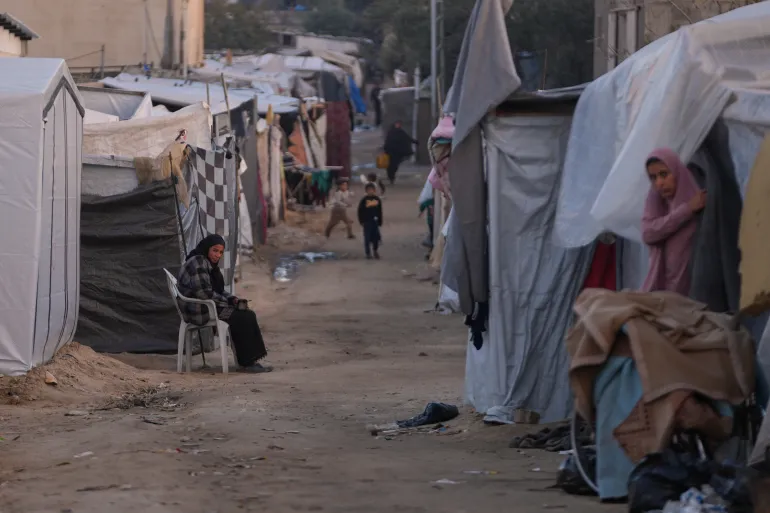
The Palestinian economy is facing a severe downturn due to Israel’s stringent measures on Gaza and the West Bank, restrictions on movement and trade, and a sharp decline in domestic and foreign financial resources.
The government is struggling to cope with the growing financial crisis. According to official statistics and expert analysis, the economy is approaching a critical point that could affect the functionality of state institutions and their ability to perform basic duties.
A joint report by the Palestinian Central Bureau of Statistics (PCBS) and the Palestinian Monetary Authority (PMA) indicates that in 2025 the economy went through a severe recession. Gaza’s gross domestic product (GDP) dropped by 84% compared to 2023, and the West Bank’s GDP decreased by 13%. This shows that recovery prospects are limited, and it is difficult to regain productive capacity under current circumstances.
Nearly all economic activity in Gaza has ceased, and severe contraction has occurred in many sectors of the West Bank. Commercial transactions have declined compared to 2023, and unemployment in Gaza exceeded 77% in 2025.
Finance Minister Mohammed Al-Amour stated that Israel has withheld about $4.5 billion of Palestine’s cleared revenues, severely impacting the Palestinian Authority’s operations. As of November 2025, the government’s total debt reached $14.6 billion, equivalent to 106% of the 2024 GDP.
The debt includes: $4.5 billion to the IMF, $3.4 billion in the Palestinian banking sector, $2.5 billion in unpaid salaries for government employees, $1.6 billion owed to the private sector, $1.4 billion in external debt, and $1.2 billion in other financial liabilities.
Minister Al-Amour said this has increased the budget deficit and severely limited the government’s ability to cover ongoing expenditures and critical obligations.
Official statistics show that in Q2 2025, GDP fell 29% compared to 2023, and per capita GDP decreased by 32%. The construction sector contracted by 41%, while industry and agriculture declined by 29%. Wholesale and retail trade fell by 24%.
Tourism suffered the most. Since Israel’s renewed military actions in Gaza, daily losses have averaged $2 million. Direct and indirect losses to the tourism sector, including hotels, restaurants, travel agencies, and guides, exceeded $1 billion.
Al-Amour said the government is taking immediate measures to strengthen social protection, assist citizens in Area C of the West Bank, and support small and medium enterprises and productive sectors. The government also aims to develop a digital and green economy and improve the business environment, with around 2,500 new companies registered annually.
Semir Hajbun of Al-Quds University noted that all sectors, including tourism, have gone through prolonged crises, reducing the energy required for economic recovery. Financial expert Haitham Daraghmeh said that withheld revenues have nearly halted economic activity. With foreign aid suspended and domestic revenues at a minimum, the government cannot pay salaries or cover other expenses. Currently, the government functions almost like an “ATM,” lacking the capacity to invest or stimulate the economy.
The World Bank has warned that failure to pay salaries and meet obligations fully could lead to complete economic collapse. Analysts caution that if revenue blockades, lack of international financial aid, and political instability continue, the Palestinian economy could face a long-term crisis and potentially collapse.

প্লিজ লগইন পোস্টে মন্তব্য করুন!
আপনিও পছন্দ করতে পারেন

- Apr 04, 2026
Iran executes two opposition group members; o...
- Apr 04, 2026
Fire at gas facility in UAE, 1 dead

- Apr 03, 2026
Israel’s Attacks in Lebanon Devastate Healthc...
- Apr 03, 2026