- Jul 03, 2026
OpenAI’s New Era: From Math Competitions to AI Agents
- Aug 04, 2025
- Technology
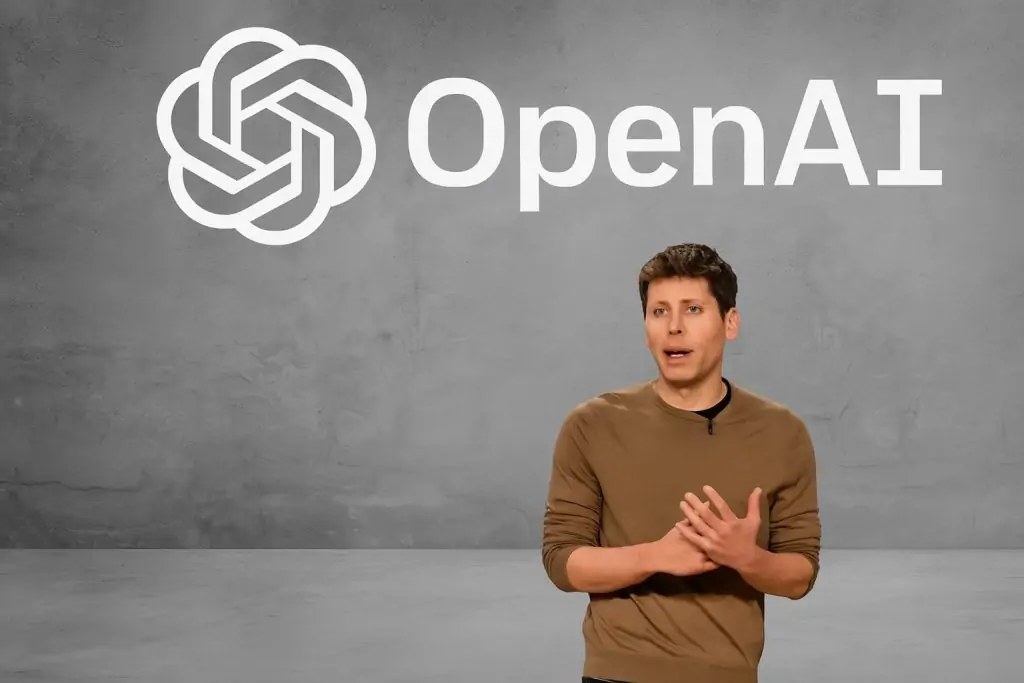
After joining OpenAI in 2022, researcher Hunter Lightman observed his colleagues launching ChatGPT, which rapidly became one of the world’s fastest-growing products. Meanwhile, Lightman quietly worked on a project aimed at training OpenAI’s models to excel in high school-level math competitions.
Today, that team, known as MathGen, is central to OpenAI’s development of advanced AI reasoning models—technology that underpins AI agents capable of performing computer tasks much like humans do.
Recently, an OpenAI model won a gold medal at the International Mathematical Olympiad (IMO), demonstrating significant improvements in reasoning ability. OpenAI believes this math-based reasoning will extend to solving other complex, domain-specific problems and eventually evolve into general-purpose AI agents.
While ChatGPT was somewhat an accidental success, the agent technology is the product of deliberate, multi-year research.
At the end of 2024, OpenAI released its first reasoning-focused model, “o1,” developed under an internal project called “Strawberry.” This project combines large language models (LLMs), reinforcement learning (RL), and test-time computation, enabling models to plan and catch mistakes effectively. This chain-of-thought reasoning is foundational to OpenAI’s agent technology.
The 21 researchers who built “o1” are among Silicon Valley’s top talents; Meta has already recruited five of them with offers exceeding hundreds of millions of dollars each.
Researcher El Kishki explains, “We teach models to use computation effectively to find correct answers. This process is what you call reasoning.”
Currently, AI agents excel at specific, verifiable tasks like coding. However, users want agents that assist with subjective tasks—like vacation planning, online shopping, or finding parking—where there isn’t a clear right or wrong answer. Training for such tasks is now a core research focus, with some promising leads.
Lightman notes, “Training for these tasks is now a key part of our research. We have found some encouraging directions.”
OpenAI aims to integrate these new technologies into GPT-5, making AI agents smarter and better at understanding and anticipating user needs—without requiring manual configuration.
The big question remains: will OpenAI be the first to build this agent-driven future, or will competitors like Anthropic, xAI, Google, or Meta get there first? Only time will tell.
scorce: techcrunch

প্লিজ লগইন পোস্টে মন্তব্য করুন!
আপনিও পছন্দ করতে পারেন

- Jul 03, 2026
Anthropic moves toward developing its own AI...

- Jul 01, 2026
Wayve Offers $85 Million Employee Share Sale...

- Jul 01, 2026
US Eases Restrictions, Anthropic’s Advanced A...
- Jun 27, 2026