- Jun 20, 2026
Nigeria’s Food Crisis: Families Fighting for the Lives of Malnourished Children
- Aug 15, 2025
- International
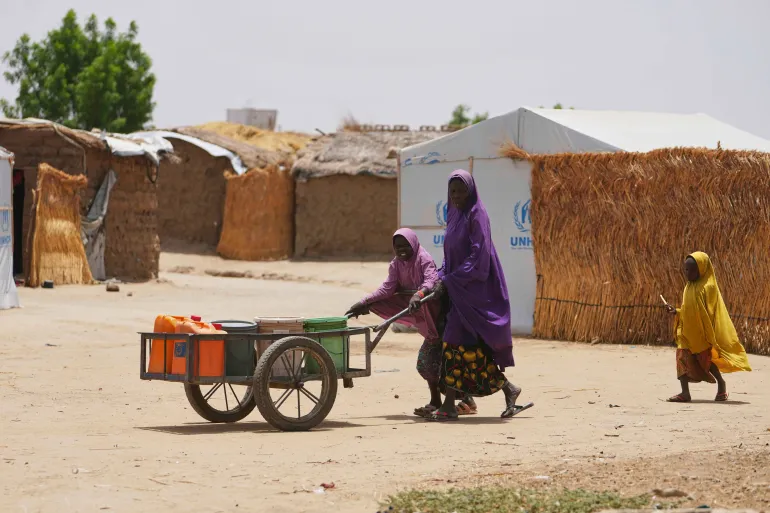
Maiduguri, Nigeria – At times, it seems as if Jamba Ali’s daughter, Atke, was born into illness.
The 30-year-old mother, Jamba Ali, sat outside a government hospital in Maiduguri, holding her two-year-old sick daughter, Amina. They had come seeking a second medical opinion, hoping for a chance at recovery.
Amina’s hair has fallen out in patches, and her brownish skin shows severe signs of malnutrition. Despite being fed protein-rich meals over a long period, her condition shows little improvement. Ali explains, “She gets sick, improves a little, and then falls ill again.”
Jamba Ali and her family have been displaced multiple times due to Boko Haram terrorism. Forced out of Damboa, they now live in Maiduguri.
Several charities that once provided nutritional treatment and support have limited or completely stopped their operations. Ali said, “Their help was truly effective. We need that support to return.”
Approximately five million children in northeastern and northwestern Nigeria suffer from severe malnutrition. Analysts say this region’s food crisis is the most severe in recent years. Prolonged Boko Haram terrorism and instability have disrupted food supplies, while bandit activities in other northern areas have also threatened food security.
Another major issue this year is the collapse of funding for aid organizations. U.S. funding has been cut by 75 percent, reducing food assistance operations by nearly half. The United Nations World Food Programme (WFP) has already closed half of the nutrition clinics in the northeast, leaving around 300,000 children without essential nutritional supplements.
Emmanuel Bigenimana of WFP said, “We distributed the last grain in July. Now, during the cold season, there are no food stocks before the next harvest.”
Although northeastern Nigeria has fertile land, food production has sharply declined due to Boko Haram attacks, climate change, and decreasing fertility. As a result, children’s nutrition and overall livelihoods are under threat.
Families like Jamba Ali’s struggle daily for food, healthcare, and safety. The urgency for international assistance and local initiatives to address this crisis continues to grow.

প্লিজ লগইন পোস্টে মন্তব্য করুন!
আপনিও পছন্দ করতে পারেন

- Jun 20, 2026
Somaliland president makes historic official...

- Jun 20, 2026
Australia confirms first H5N1 bird flu case o...
- Jun 20, 2026
Lebanon crisis casts shadow over U.S.–Iran pe...
- Jun 18, 2026