International Desk | PNN
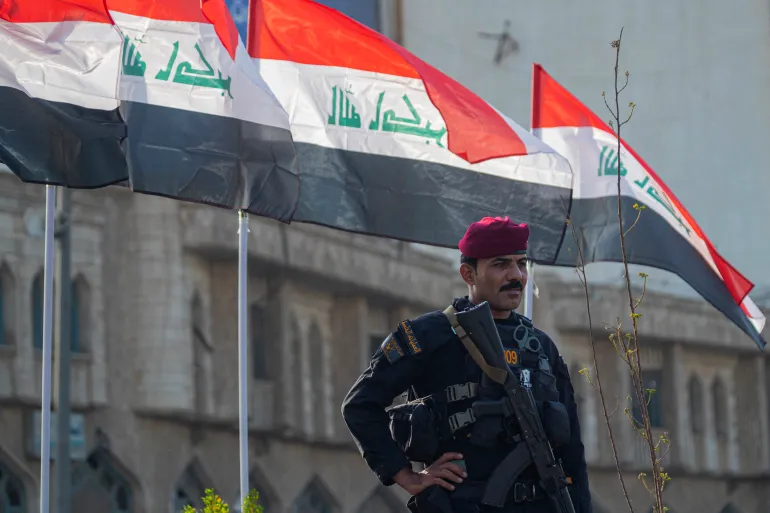
After more than two decades of military presence, the United States has formally withdrawn its remaining troops from Iraq. Several hundred US soldiers stationed in the country left on Wednesday in accordance with the scheduled deadline. They had primarily been serving in advisory and support roles for the international coalition fighting the Islamic State (IS).
Iraq has launched a four-day “Sovereignty Day” observance to mark the US troop withdrawal. The departure marks the end of an important chapter in the long foreign military presence that began with the US-led military intervention in Iraq in 2003.
For the government of Iraqi Prime Minister Ali al-Zaidi, the withdrawal is not simply the departure of foreign troops. It is also being viewed as an opportunity to further strengthen state authority over the country’s security and military decisions. The government plans to bring the weapons of various armed groups under state control by June 2027.
Speaking at the United Nations General Assembly, al-Zaidi said final decisions on matters of war and peace should remain in the hands of the state. Following the end of the international coalition’s military mission, he also said Iraq wants to shift its relationship with the United States from military cooperation toward economic and development cooperation.
However, the US troop withdrawal has raised new questions about Iraq’s security. Several powerful armed groups with close ties to Iran remain reluctant to surrender their weapons. Some of these groups have long cited the presence of US forces in Iraq as one of the reasons for maintaining their armed status.
Former US ambassador Douglas Silliman said the Iraqi government could attempt to weaken the political justification for these groups retaining weapons after the US withdrawal. At the same time, he believes the situation could increase the risk of domestic political and security tensions.
Following the conclusion of the US-led Operation Inherent Resolve in Iraq, the major question now is how the country will manage its security situation. Although Iraq’s overall security environment has improved somewhat since the recovery of territory controlled by IS in 2017, conflict and instability continue in the surrounding region.
US forces returned to Iraq in 2014 at Baghdad’s request after IS seized large areas of Iraq and Syria. The United States subsequently supported Iraqi forces in the fight against IS by providing intelligence, aerial surveillance and other military assistance.
Iraqi army, police, counterterrorism forces and various units of the Popular Mobilization Forces now have extensive experience in operations against IS. Some Iraqi security officials believe these forces can handle most internal threats even without the direct presence of US troops.
However, Iraq’s own air-defense capabilities remain limited. Some security analysts have warned that this weakness could become a major vulnerability in dealing with drone, rocket and missile attacks by Iran-aligned armed groups.
Officials in Iraq’s semi-autonomous Kurdistan Region have expressed particular concern about the US withdrawal. The region has experienced attacks by Iran and Iran-backed groups this year, and US defense systems have played a role in countering those attacks.
Alongside the troop withdrawal, the nature of relations between Washington and Baghdad is also expected to change. The two countries are seeking to shift their relationship away from military presence and toward economic cooperation, trade, training, intelligence sharing and institutional capacity building.
Iraq’s prime minister has outlined plans for economic revitalization. The government is also focusing on expanding the country’s petrochemical industry and developing new routes for energy supplies to reduce dependence on the Strait of Hormuz. During a meeting with US President Donald Trump in July, potential economic agreements involving Iraq’s oil and other sectors were also discussed.
However, analysts fear that continued regional conflict could disrupt the pace of economic cooperation. At the same time, Iraq will have to carefully manage its position amid the rivalry between the United States and Iran.
Following the departure of US troops, Iraq has entered a new phase in which greater responsibility for national security, control over armed groups and maintaining a balance among regional powers will fall on Baghdad. At the same time, Iraq’s ability to transform its relationship with the United States from a military partnership into an economic and diplomatic partnership will become another important test in the coming years.