- Nov 04, 2026
End of an Era in Turkish Politics as Ahmet Davutoglu Withdraws from Party Politics
- Aug 02, 2026
- International
International Desk | PNN
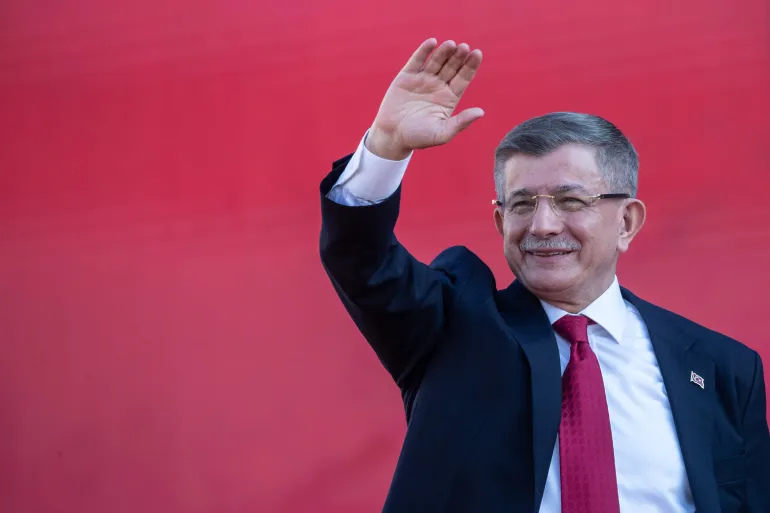
Former Turkish prime minister, diplomat and political thinker Ahmet Davutoglu has announced his withdrawal from party politics after deciding to dissolve his opposition party, the “Future Party”.
Davutoglu said the move was not a defeat but rather a decision to distance himself from what he described as Turkey’s current “toxic political environment”.
His political journey has been marked by dramatic changes. Once one of President Recep Tayyip Erdogan’s closest allies, Davutoglu became known as one of the architects of Turkey’s ambitious foreign policy. He served as foreign minister and later as prime minister.
However, he eventually became a critic of the political system that he had played a significant role in shaping.
Analysts say Davutoglu succeeded in influencing Turkey’s international outlook as an intellectual and diplomat but failed to establish himself as an independent political force.
Born in 1959 in Taskent, Konya province, Turkey, Davutoglu studied economics and political science at Bogazici University before entering academia. He taught at universities in Turkey and Malaysia.
Among students, he was popularly known as “Hoca”, meaning professor, a title that remained associated with him even after entering government.
Davutoglu gained international recognition for his “Strategic Depth” doctrine. He argued that Turkey’s geography, Ottoman history, and connections with the Middle East, Balkans, Caucasus and Central Asia could transform the country into a major global power.
After the Justice and Development Party (AK Party) came to power in 2002, Davutoglu became Erdogan’s chief foreign policy adviser. He became foreign minister in 2009 and was elected as a member of parliament in 2011.
During his tenure, Turkey attempted to expand its diplomatic influence in Africa and the Middle East, strengthen trade relations with neighbouring countries and introduce easier visa policies.
This approach became known as the “zero problems with neighbours” policy.
However, the Syrian war became a major challenge for his diplomatic vision. Turkey supported Syrian opposition groups and expected the Bashar al-Assad government to collapse quickly. Instead, the prolonged conflict created refugee crises, security threats and regional instability.
Analysts believe one of Davutoglu’s major weaknesses was his inability to balance idealism with practical politics.
In 2014, after Erdogan became president, Davutoglu was chosen as AK Party leader and prime minister.
However, disagreements soon emerged over the balance of power. Although the constitution assigned executive authority to the prime minister, Erdogan continued to maintain significant influence over party and political decisions.
Following disagreements over appointments, administrative decisions and the expansion of presidential power, Davutoglu resigned as prime minister in 2016.
He later left AK Party in 2019 and founded the Future Party.
The party attempted to attract conservative voters opposed to Erdogan but failed to achieve major electoral success.
In the 2023 elections, Future Party candidates entered parliament through the main opposition Republican People’s Party (CHP) list, but analysts say this weakened the party’s independent identity.
Davutoglu’s withdrawal comes at a time when debates over democracy, concentration of power and Turkey’s political future remain intense.
Observers say that although he failed to create a strong alternative political movement, his contributions as a thinker and diplomat will continue to be discussed in Turkish politics.

Please Login to comment in the post!
you may also like
- Nov 04, 2026
Republicans Suffer Major Defeat as Democrats...
- Nov 04, 2026
Democrats Win Control of Both Chambers of US...
- Nov 04, 2026
Abdul El-Sayed Set to Become First Muslim US...
- Oct 31, 2026