- Jun 20, 2026
Ebola outbreak in DR Congo: deaths rise above 131, risk of spread increases
- May 19, 2026
- International
International Desk | PNN
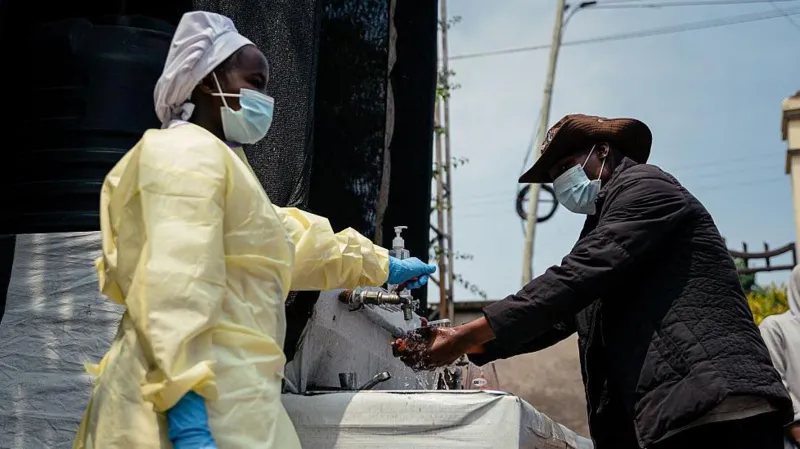
At least 131 people have died in a new Ebola outbreak in the Democratic Republic of Congo (DRC), according to local authorities. More than 513 suspected cases have also been reported. The situation is gradually spreading to wider areas, the government said.
A government spokesperson said new infections are being reported from different regions, making the situation more alarming.
Meanwhile, Ebola has also been detected in neighboring Uganda. The US Centers for Disease Control and Prevention (CDC) reported two confirmed cases and one death there.
The World Health Organization (WHO) has declared the outbreak an “international public health emergency.” It said the outbreak is caused by the Bundibugyo strain of Ebola.
WHO warned that the current situation could spread more widely than what is currently observed, with significant regional transmission risks.
New infections have been identified in several areas including Nkundé in Ituri province, Butembo in North Kivu, and the city of Goma, increasing pressure on the healthcare system and public concern.
The government said efforts are being strengthened for case detection, contact tracing, and preventive measures.
The US government has issued a Level-4 travel advisory for DR Congo. The CDC said travelers from affected regions will be monitored, tested, and possibly restricted from entry.
Monitoring is also being increased for travelers arriving from Uganda and South Sudan.
A US doctor reportedly became infected and is being transferred to Germany for treatment. Several other healthcare workers are under quarantine after exposure.
Health experts say that due to limited vaccines and treatment options, early detection, isolation, and strict hygiene measures are crucial in controlling Ebola.
WHO emphasized that unsafe burial practices have historically been a major cause of spread, so safe burial procedures are being prioritized.
The 2014–2016 West Africa Ebola outbreak killed more than 11,000 people. Lessons from that outbreak have led to increased preparedness and border surveillance.
WHO, CDC, and African CDC are jointly working on the current situation.

প্লিজ লগইন পোস্টে মন্তব্য করুন!
আপনিও পছন্দ করতে পারেন

- Jun 20, 2026
Somaliland president makes historic official...

- Jun 20, 2026
Australia confirms first H5N1 bird flu case o...
- Jun 20, 2026
Lebanon crisis casts shadow over U.S.–Iran pe...
- Jun 18, 2026