- Nov 04, 2026
‘Blue Heron’ Explores the Struggles of Immigrant Life and the Wounds of Childhood
- Aug 08, 2026
- Entertainment
Staff Report: PNN
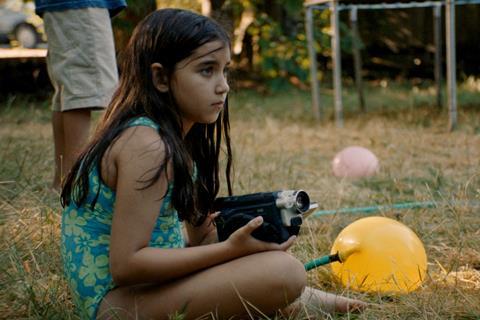
A family. From the outside, everything appears normal. But beneath that apparent normalcy lie anxiety, instability and many unspoken words. When the eldest child in the family suddenly begins to change, that pressure spreads throughout everyone. And it is this story of a family falling apart, seen through the eyes of a young child, that is portrayed in the Canadian film ‘Blue Heron.’
The film is the first feature-length work by Canadian filmmaker Sophie Romvari. Inspired by her own childhood experiences, the film has already earned praise at international film festivals. It received the Best Canadian Discovery Award at the Toronto International Film Festival and two awards at the Locarno Film Festival.
The story of ‘Blue Heron’ is set in the late 1990s. A family that migrated from Hungary to Canada begins a new life in a home on Vancouver Island. The family members try to adjust to a new country, a new environment and a new reality.
The central character of the story is eight-year-old Sasha. Through her eyes, viewers witness the various tensions within the family. Although Sasha does not fully understand the complexities faced by the adults, she can sense that something is not quite right within the family.
Through the child's innocent observations, the story of the family's instability, fear and hidden pain gradually comes to the surface.
The situation within the family becomes increasingly complicated after a change in the behavior of Sasha's older brother, Jeremy. At times he suddenly becomes angry, at other times he disappears, while on other occasions he behaves destructively. All of this leaves his parents unsure about how to handle the situation.
They become caught between different approaches, wondering whether discipline, strictness or love is the right way to respond. This uncertainty also has an impact on young Sasha.
As the adults try to find the reasons behind Jeremy's behavior and interpret the situation in their own ways, the entire matter becomes even more mysterious and frightening to Sasha. In this way, the film shows how a family's mental and emotional crisis can leave a deep impression on children.
‘Blue Heron’ does not remain confined to the story of one family. Issues such as the uncertainty of immigrant life, adapting to a new environment, mental health and childhood trauma are also woven into the story.
The filmmaker subtly explores how leaving one's homeland and starting a new life in another country can affect children. One of the most important aspects of the film is the way it shows how the crisis experienced by adults in a family can carry an entirely different meaning for a child.
According to the director, children do not view family crises in the same way adults do. For them, many events can become mysterious, confusing and, at times, frightening.
The film's filmmaking style also has distinctive characteristics. Rather than relying on major dramatic events, Sophie Romvari advances the story through silence, long takes, natural household sounds, images of nature and the characters' small expressions and gestures.
The dialogue is also deliberately restrained. As a result, the silence and behavior of the characters often communicate more than their spoken words. By using light and shadow, the surrounding environment and the child's perspective, the filmmaker creates an introspective atmosphere.
The film does not provide viewers with any easy solution or direct answer. Instead, it leaves them confronting questions about how a family survives during a crisis, how children gradually learn to understand the complexities of adults, and how emotional wounds from childhood can remain for a long time.
For Sophie Romvari, ‘Blue Heron’ is not merely a film; it is also a form of reconstruction of personal memories. Having begun her filmmaking journey with short films, the director has brought her own experiences to the big screen in her first feature film.
In an interview at the Locarno Film Festival, she said her extensive experience making short films helped her find her own filmmaking language. It was through combining that experience with a personal story that she found an opportunity to express herself through ‘Blue Heron.’
In this low-budget independent film, Sasha is played by Ayool Guven. Amy Zimmer portrays the adult Sasha. Edik Bedos plays Jeremy, while Iringo Reti and Adam Tompa portray the parents.
The film has an IMDb rating of 7.1. In addition to receiving praise at the Toronto and Locarno film festivals, the film is being screened at various international festivals. Following its two awards, including a Special Mention at Locarno, and the Best Canadian Discovery Award at the Toronto International Film Festival, interest among film enthusiasts has grown further.
‘Blue Heron’ is also scheduled to be screened at the Melbourne International Film Festival in the coming days. With its slow-paced, sensitive and deeply human approach, the film has already established a distinct place for itself in international independent cinema.

Please Login to comment in the post!
you may also like

- Nov 04, 2026
Spanish Crime Thriller ‘Collision Course’ Top...
- Nov 03, 2026
Tusshar Kapoor Threatened, Rs 5 Crore Extorti...
- Nov 03, 2026
‘Nobody Wants This’ Returns to Spotlight with...
- Oct 31, 2026