- Jun 20, 2026
Bangladesh’s Garment Sector Faces Challenges; Export Declines in Key Markets Like the US but Growth Seen in New Markets
- Aug 11, 2025
- Business
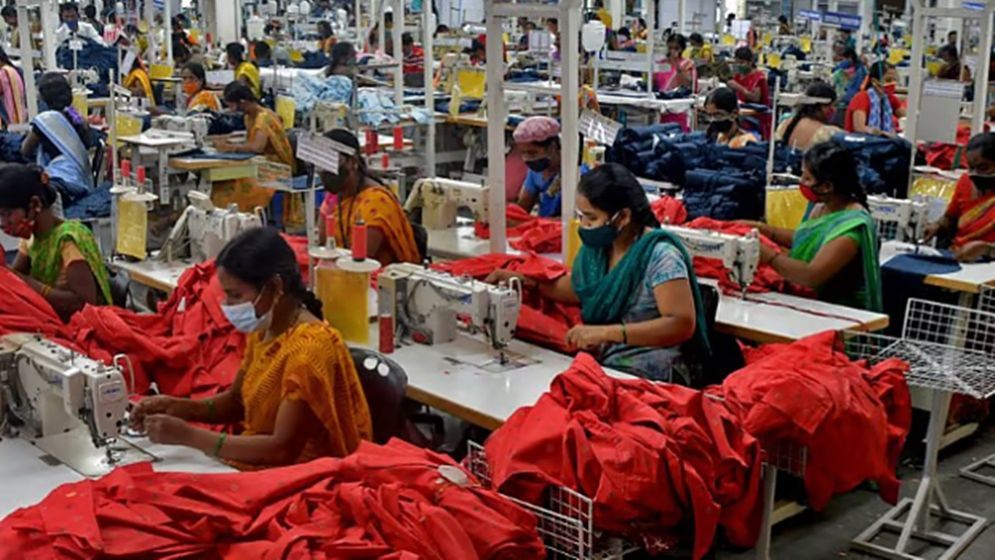
Over the past nearly two years, Bangladesh’s ready-made garment (RMG) exports to the United States have steadily declined. Export earnings have also dropped by about 8.79% in nine major markets in Canada and Europe. However, increased exports to new markets such as Japan, Australia, China, and the Middle East have somewhat improved the overall export earnings of the garment sector.
These insights come from a report by the Central Bank of Bangladesh. According to the report, during the fiscal year 2023-24 from July to June, exports of Bangladeshi garments to the US market fluctuated. Particularly, in the April-June quarter, exports dropped to $173 million, a significant decrease compared to previous periods.
Nonetheless, if the US administration continues its additional tariff policies, there still remains potential for Bangladesh’s garment exports to grow. This is because major competing countries in the US market face comparable tariff levels. For instance, India is subject to a 50% tariff, while other countries like Vietnam, Sri Lanka, and Cambodia face tariffs around 19 to 20%.
The Central Bank report highlights that although the US remains Bangladesh’s largest export market, export earnings from Germany, the UK, Spain, France, the Netherlands, Italy, Canada, and Belgium are also significant. Additionally, exports are rising in new markets such as Japan, Africa, and the Middle East, which is a positive sign for Bangladesh’s future export growth.
However, the report warns that the global economic slowdown and changes in international trade policies may pose challenges to Bangladesh’s garment exports. Moreover, restrictions imposed by the Indian government on land-based exports and the US tariff regime are causing concern among exporters.
The Central Bank suggests that to overcome these challenges, entrepreneurs need to diversify their products, reduce production costs, and improve efficiency to remain competitive.
The government has already been supporting the export sector through various policy measures to safeguard and expand Bangladesh’s ready-made garment markets.
In this context, the future of the garment sector largely depends on global market conditions and government support.

প্লিজ লগইন পোস্টে মন্তব্য করুন!
আপনিও পছন্দ করতে পারেন

- Jun 20, 2026
NBR says bond facility misuse continues despi...

- Jun 20, 2026
Four modern quay cranes arrive at Chattogram...

- Jun 18, 2026
ACI launches new tech-driven property service...
- Jun 18, 2026