- Jun 04, 2026
Sudan: Citizen-led political roadmap, 9-step agreement signed in Nairobi
- Dec 22, 2025
- International
International Desk, PNN
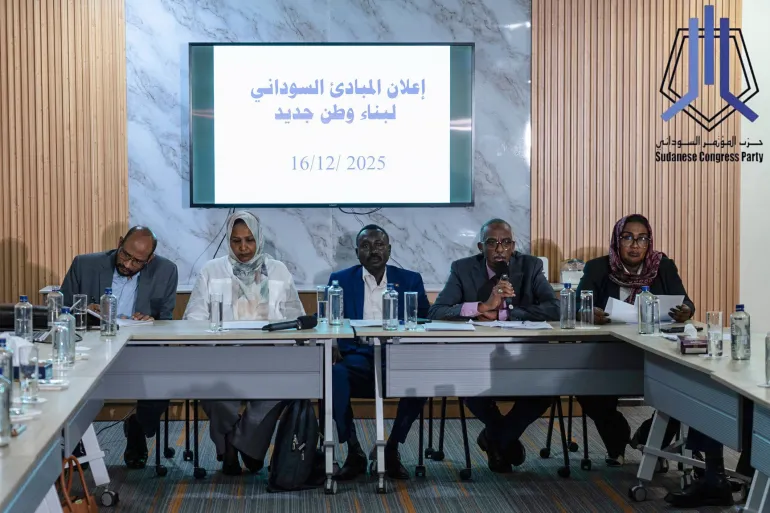
Sudanese political parties, armed movements, civil society organizations, and prominent political figures have signed a 9-step political roadmap in Nairobi. The roadmap is presented as a citizen-led initiative aimed at ending Sudan’s war and restoring democratic transition.
The roadmap aims to establish a “third pole” for citizens to maintain an equal stance against Sudan’s two armed factions—the Sudanese Armed Forces (SAF) and the paramilitary Rapid Support Forces (RSF).
Creators of the roadmap say it seeks to restore political power to citizens who have been neglected by armed groups and international mediators for months. However, it does not include explicit steps for armed forces reforms.
Signatories in Nairobi include the National Umma Party, Sudan Congress Party, Darfur Lawyers Association, Internally Displaced Persons and Refugees Coordination Committee, and the Sudan Liberation Movement (SLM-AW) led by Abdelwahid Al-Nur.
Former Prime Minister Abdalla Hamdok, who led Sudan’s interim civilian government from 2019 to October 2021, also signed the roadmap.
Researcher Hamid Khalafallah noted that although the roadmap attempts to represent citizen leadership, it fails to reflect the broader civilian movement in Sudan. The Nairobi coalition is a reformation of a previous citizen bloc, disconnected from ordinary Sudanese.
The lack of rural committees’ involvement and proceeding without local consultation makes citizens feel exploited rather than empowered politically.
A senior European Union official stated that the Nairobi roadmap is not viewed as Sudan’s sole citizen process. The EU emphasizes creating a unified and credible citizen framework under African Union leadership.
University analyst Cameron Hudson believes the Nairobi roadmap mainly aims to attract international support rather than build realistic domestic consensus. He says, “Ceasefire negotiations with armed groups or other political reforms should not be prematurely included. These should remain on separate tracks.”
The ongoing situation in Sudan leaves both SAF and RSF essential to enforce a ceasefire, but their future political participation remains a contentious issue in international strategy.

প্লিজ লগইন পোস্টে মন্তব্য করুন!
আপনিও পছন্দ করতে পারেন
- Jun 04, 2026
St. Petersburg Economic Forum Begins with Par...
- Jun 04, 2026
Indonesian Rupiah Falls to Its Weakest Level...
- Jun 04, 2026
Israel Expands Military Positions Further Ins...
- May 26, 2026