- May 08, 2026
Periodic Labs: A New Frontier for Scientific Discovery Using Artificial Intelligence
- Oct 21, 2025
- Technology
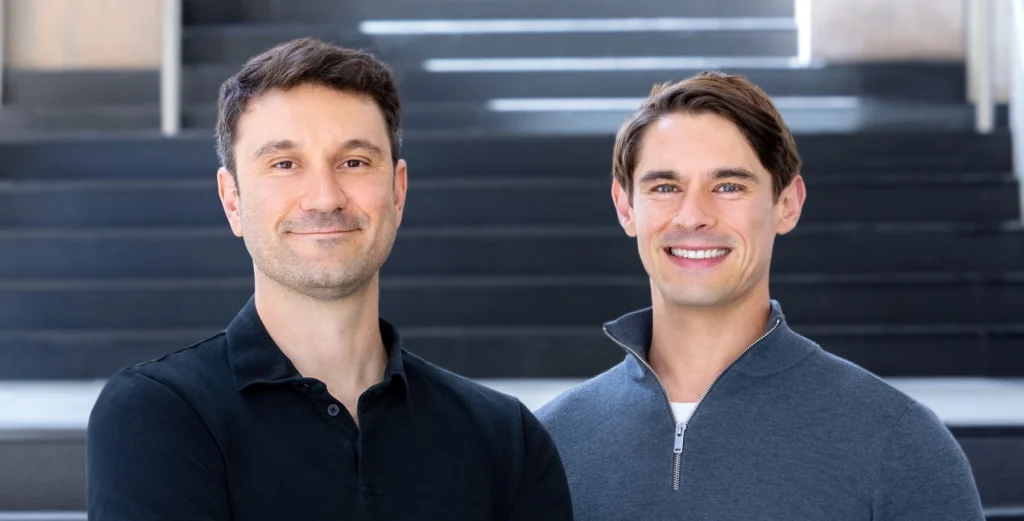
Staff Reporter | PNN:
Former OpenAI researcher Liam Fedus and his Google Brain colleague Ekin Dogus Kubuk have teamed up to launch a new startup, Periodic Labs, which secretly raised $300 million in seed funding last month. The funding round was led by Felicis and included participation from numerous top angel investors and venture capital firms.
The primary goal of Periodic Labs is to use artificial intelligence to discover new materials and superconductors. According to Fedus and Kubuk, combining robotic labs, mechanical learning simulations, and language models can enable the creation and testing of novel compounds. Fedus previously led OpenAI’s ChatGPT post-training team, while Kubuk worked as a machine learning and physics researcher at Google Brain.
Kubuk stated that robotic arms are now capable of handling powder mixing processes, and simulations can accurately model complex physical systems. Using the analytical power of large language models (LLMs), testing and results analysis can be performed efficiently.
Periodic Labs has already hired more than 25 AI and science experts, who share skills through weekly graduate-level lectures. The lab setup is complete, and simulation and experimental work for discovering new materials and superconductors has begun, though the robotic component is still under training.
Fedus and Kubuk believe that even failed experiments can yield AI-aware data, opening new avenues for scientific discovery. Through this startup, they are challenging the traditional success-based paradigm in scientific research.
Peter Deng of Felicis confirmed this early-stage investment. Other investors include Andreessen Horowitz, DST, NVIDIA Ventures, Accel, and notable individual angel investors such as Jeff Bezos, Elad Gil, Eric Schmidt, and Jeff Dean.
Periodic Labs’ first objective is to discover new superconductors, which could unlock new frontiers in high-performance technology and energy-efficient applications. While success is not guaranteed, every failure is treated as valuable data.
The startup is considered a symbol of a new era of AI-driven scientific discovery. OpenAI recently launched the “OpenAI for Science” unit to accelerate scientific research.

প্লিজ লগইন পোস্টে মন্তব্য করুন!
আপনিও পছন্দ করতে পারেন

- May 08, 2026
Lawsuit over OpenAI intensifies debate on saf...

- May 07, 2026
Perplexity AI search removed from Snapchat, $...
- May 07, 2026
Elon Musk’s xAI takes a new turn in deal with...
- May 02, 2026